Why Silence Reigns Beneath My Texts
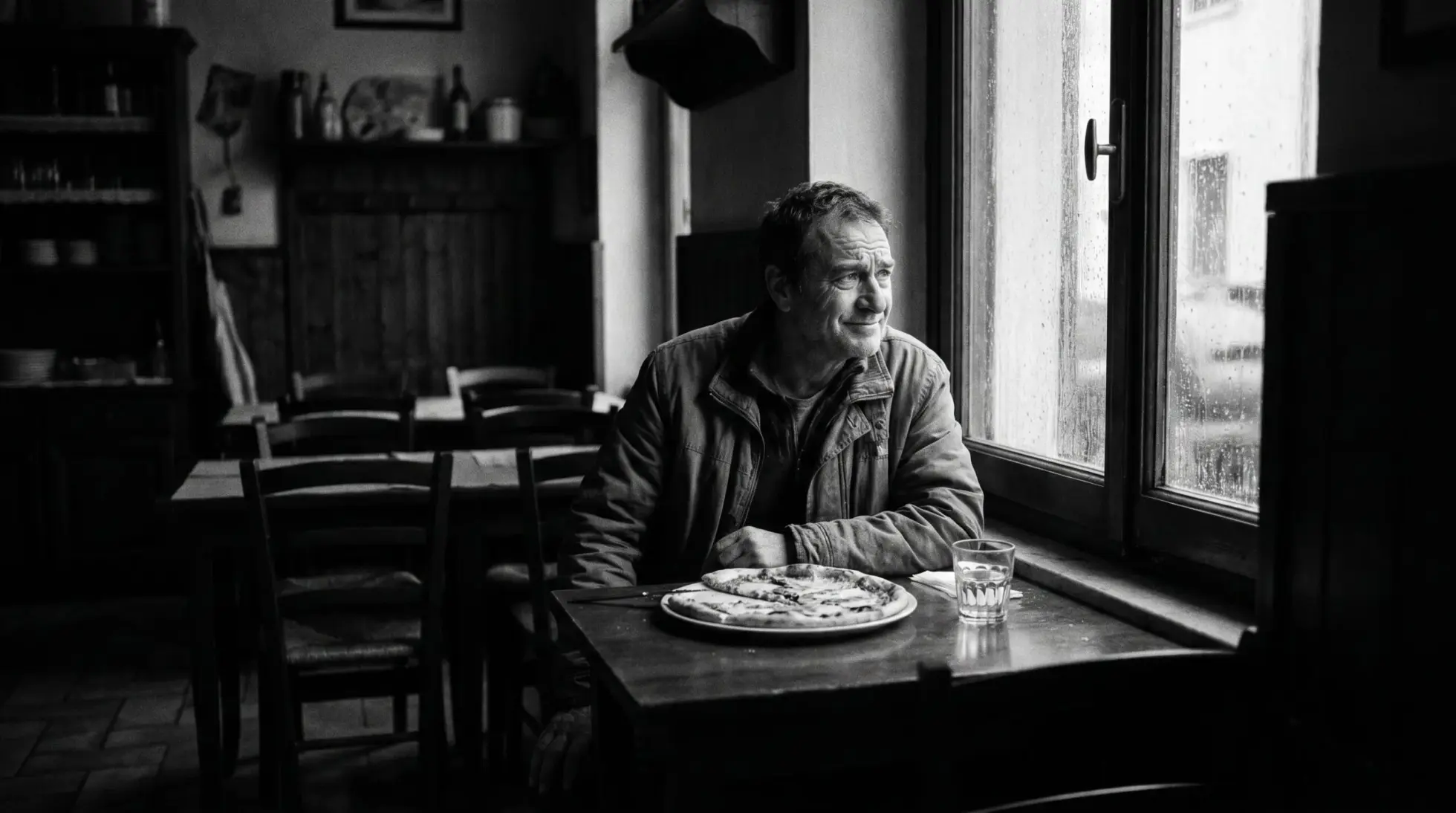
A love letter to the disabled comment function, to my pizzeria with the glass of water, to the pharmacist who tried to sell my wife sugar pellets at the price of a monthly utility bill, and to that curious creature I have been observing for years with quiet anthropological fascination, the Otto Sapiens.
Before I write another sentence, I must introduce a term that will recur throughout this piece and without which the following pages will not quite make sense. The Otto Sapiens is my own designation for that variant of Homo Sapiens which over the past 20 years has become the statistical majority in nearly every region of the Western world, which distinguishes itself by holding firm, unshakeable, and generally incorrect opinions on every conceivable question human knowledge has ever produced, and which derives these opinions in the overwhelming majority of cases from the fact that at some point, while ironing, it ran an audiobook on the topic in the background, because it was either too lazy, too tired, or too busy processing its third post-work beer to read. The Otto Sapiens appears repeatedly throughout this text, he is the leading character in nearly every comment I shall quote in the following pages, and he is, I admit openly, the actual reason why silence has reigned beneath my pieces for more than 10 years.
A pizzeria, a glass of water, and the observer
There is a small Italian pizzeria in my home town to which I have been going for years, several times a week, always the same seat, always the same pizza, always the same glass of water, and I mention this with a quiet irony because I know how monotonous it sounds at first glance. The owner now knows my order so well that he leaves the notepad in his apron pocket, nods at me, disappears into the kitchen, and returns with pizza and water without a single word being exchanged. I have not had a drop of alcohol for years, not for moral elevation, not because I fear a disease, but from a quite sober observation that I offer the reader here as a precaution. Alcohol does something to a human being that I no longer wish to participate in, and although I will develop this thought at length in a future post, because it ties into a book I am currently writing, I will at this point only place a small, unsettling question in the room. Why does a state, which is demonstrably aware that alcohol systematically degrades its citizens’ judgement, continue to allow this substance to be freely available in every supermarket, every petrol station and every kiosk? The answer to that is my next post and a book whose working title is The Hamster Wheel and which is shortly to be published. For today, it is enough to note that the social consumption of alcohol falls suspiciously precisely into those evening hours in which the Otto Sapiens, squeezed between the end of his workday and bedtime, would actually have the opportunity to pick up a book, and that this opportunity is, miraculously, never taken.
In this pizzeria, then, with the glass of water and the unchanging pizza, I sit often at the window table and observe. I observe the table to my left, where a middle aged couple is discussing the political situation in a country they could probably not locate on a map. I observe the table to my right, where a father is explaining to his 6 year old daughter why vaccines cause autism. I observe the bar, where a young man is explaining to the waitress in 10 minutes everything there is to know about Bitcoin, although it is patently obvious that he could not articulate the difference between a hash function and a pancake. And more than once, I openly admit, on such an evening a piece of pizza has fallen from my mouth, because I lost control of my masticatory musculature from laughter, while inwardly I was not laughing at all, but pausing in a mixture of dismay and quiet despair over the stupidity and arrogance of the Otto Sapiens. That is the dual nature of this piece, funny on the surface, shaken to the core, and I ask the reader to remember it as he reads on.
The beginning, in which I was still the uninvited guest at the reception
There was once a time when I ran this blog with the comment function enabled, because in the naive opening phase in which every new blogger finds himself, I nurtured the romantic notion that the written word would open a conversation, that intelligent readers would add their intelligent thoughts, that a kind of symposium would emerge in which my modest contribution might be refined by the collective wisdom of the readership, and that the internet, in its then not yet entirely forfeited promise, would be the natural habitat of this symposial refinement. I had read Plato at that point, I had internalised the Athenian idea of free discourse, and I was, in retrospect, a well educated man with the political realism of an uninvited guest who has wandered into a reception, knowing neither host nor protocol, and who assumes that the assembled company will lay down their conversations with delight in order to hear his opinion on the choice of canapés, on the placement of the flower arrangement, and on the regrettable temperature of the champagne.
What dripped onto my screen during the first 6 months was not the Athenian symposium. It was something best imagined as the phenomenon that emerges when one opens a door to a room in which every person who has ever believed himself to have something to say has been waiting precisely for the moment when he might at last be interrupted by someone with even less expertise than himself. My first piece on the ineffectiveness of high potency homeopathy, which I had written with the helplessness of a man who had just watched his wife spend, in a southern Bavarian pharmacy, the equivalent of a decent weekend dinner on a small vial of sugar pellets, received 62 comments within 48 hours. 1 of them was, with some goodwill of interpretation and after 3 deep breaths, classifiable as constructive. The remaining 61 I shall attempt to reconstruct here, because some of these sentences are remembered the way one remembers a traffic accident witnessed from the passenger seat at close range.
The high citadel of the sugar pellet
The high potency, that pharmacological miracle on which German pharmacies earn a low triple digit million euro figure each year, rests on a dilution principle which, after surpassing the so called Loschmidt number at a potency of D23 or C12, ensures that not a single molecule of the original substance remains, statistically speaking, in the finished pellet (Gesünder im Alltag, 2026, Homöopathie: Placebo oder wirksame Medizin; Pharmazeutische Zeitung, 2022, Homöopathie wird wohl erheblich überschätzt). Chemically speaking, a high potency globule consists of 100 percent sugar, and anyone who swallows it is swallowing what he might scrape off a fallen sweet if he were sufficiently desperate. The independent review literature, which in the field of clinical evidence operates as the closest available equivalent to a court of appeal, has consistently established across a series of systematic reviews of reviews that the effect of homeopathic preparations does not exceed that of a placebo, with the Exeter review of 2002 collating 17 systematic reviews into a single sober verdict (Ernst, 2002, A systematic review of systematic reviews of homeopathy, British Journal of Clinical Pharmacology, 54(6), 577-582). The Lancet had already reached the same conclusion as far back as 1997 in a foundational meta analysis (Linde et al., 1997, Are the clinical effects of homoeopathy placebo effects, The Lancet, 350(9081), 834-843), and the Australian National Health and Medical Research Council confirmed the verdict once more in 2015 after reviewing more than 1,800 studies of which only a handful met the most basic methodological standards (NHMRC, 2015). The science here is as unambiguous as science in an open discipline can ever be, and yet a German pharmacy earns from this business as reliably as if it held the patent on the sunrise.
My piece at the time laid this out in sober sentences, with citations, with reference to the Australian NHMRC report and to the position paper of the European Science Council, and the 1st comment beneath it informed me that I was a bought scribbler of the pharmaceutical mafia. The 2nd comment assured me that I did not understand the subtle vibration, which was probably true, because nobody had ever been able to explain to me what distinguishes a subtle vibration from a coarse imagination. The 3rd comment explained to me that water possessed a memory, evidence of which could be observed in the fact that at minus 18 degrees it crystallised in that hexagonal pattern which corresponded to the hexagonal pattern of a honeycomb, from which it followed that the universe possessed a consciousness structure responsive to homeopathic dilution, a chain of logic whose author presumably considered himself the Linnaeus of the 21st century. The 4th comment consisted of a single word and an exclamation mark, the word I cannot reproduce here, but it referred to an activity associated with the cleansing effect of an oral cavity after the opening of a container of intestinal lubricant. The 5th comment came from a Heilpraktikerin from the southern Bavarian region, who informed me that she had cured her son of a bilateral middle ear infection with Belladonna C200 and that I should be ashamed of myself for wanting to take from other mothers what was helping their children, an argument which by its own logic implies that I would also take the pump nozzle from a petrol station attendant if I observed that the price of petrol had risen. The 6th comment thanked the 5th comment for the valuable experience. The remaining 55 comments operated within this tonal register, oscillating between subtle energy instruction and unembellished insult, and the 1 constructive comment was attacked by the comment community with such intensity that its author eventually departed my blog with the words that he had not imagined matters this way and that I should remove him from the mailing list.
The vegan I shall never wish to be stranded with on a desert island
Approximately 3 weeks after this first incident, I had written a piece on the deficiency syndromes associated with extreme diets, in which I had pointed out that the long term supply of vitamin B12, of iron in its bioavailable haem form, of zinc, and of the long chain omega 3 fatty acids EPA and DHA in a strictly vegan diet constitutes such a demanding logistical task that, in practice, it is simply not managed by the overwhelming majority of vegans, with the corresponding haematological, neurological and cognitive consequences which would be demonstrable at any moment in a routine differential blood count, if only those affected ever consented to having one taken, which they of course do not, because they consider themselves healthier than a Finnish lumberjack on his summer holiday.
There then arose that commentator whom I have since remembered with a mixture of medical concern and morbid pleasure, because he placed his full real name beneath the comment, supplied a very German address from the southern region, and used a profile picture uploaded at a resolution which permitted me, a forensic practitioner with a now somewhat dusty eye for digital identification, a view of the face that revealed more than the author of the comment had probably intended. I subsequently googled him out of purely anthropological curiosity, found 4 further photographs from the preceding 3 years, and noted, in the quiet sorting of the images, a progressive change that would have caught the eye of any 2nd semester student of internal medicine in a practical diagnostics seminar, even if that student had drained an entire bottle of grappa the evening before to recover from his anatomy examination.
His complexion had developed, over the documented years, from the colour that the Pantone index files under the heading living adult with functioning erythropoiesis to a colour that the same index files under the heading candle wax in an insufficiently ventilated stairwell. His eyelids drooped with a slackness that the medical literature recognises as a reliable indicator of chronic anaemia, the conjunctival mucosa at the lower lid was so pale in the photographs that even the compression algorithms of the relevant platform could not brighten it further, and the corners of the mouth bore those lateral fissures which the general practitioner records in the initial consultation as angular cheilitis and which any internist recognises immediately as a consequence of iron deficiency. The man looked, in his last selfie, frankly, as though he had stopped briefly at a mirror on his way back from his own funeral, in order to verify that the event had actually taken place.
His comment beneath my piece, 2,700 words in length, explained to me that my medical observations were bought by the meat industry lobby, that the human species was by evolutionary destiny a pure frugivore, that he himself had eaten exclusively vegan for 11 years and felt more energetic than ever before, and that every one of my claims was refuted by his own living example. I sat with the coffee in one hand and the mouse in the other in front of my screen, glanced from his comment to the 4 selfies and back to his comment, and lived through one of the few moments in my adult life in which I seriously considered sending a complete stranger to his own general practitioner, with a sealed envelope inside which the words differential blood count and ferritin, immediately, please, and perhaps a sip of tomato juice as initial financing would have been written.
A gesture I refrained from in the end, because it became clear to me that this man would have dismantled my letter with the same self assurance with which he had dismantled my piece, and that the connection between the irrefutable biological reality of his mirror and the unshakeable conviction of his consciousness had apparently been interrupted somewhere between optic nerve and frontal lobe, presumably in the course of an 11-year vitamin B12 deficiency, which in advanced stages is known to compromise precisely this neuronal connectivity first. When people ask me today which person I should under no circumstances wish to be stranded with on a desert island, I think of this commentator, because I can picture vividly how, after 3 days on said island, he would spot a wild coconut palm and then, faced with the question of whether to accept the fish flopping on the beach or to starve at the coconut palm instead, would make a decision with the same clarity with which he once refuted my piece, a decision that would empirically confirm his evolutionary destiny as a frugivore once and for all, although only posthumously, and the last selfie he might have taken from the island would probably not even have functioned, because between pressing the shutter and saving the image he would already have lost his motor control.
The tinfoil hat, the crown of creation
The 3rd cohort I should not leave unmentioned, because it rounds out the picture, is that group of readers to whom I award the collective honorific of the tinfoil hat brigade, not in reference to any individual person but in reference to that type of mind that inhabits a world in which the German Federal Institute for Risk Assessment is personally controlled by Bill Gates, in which vaccines constitute a microchip distribution programme, in which chemtrails over Bavaria descend in an operation personally commissioned by Mrs Merkel, and in which the moon landing was filmed in a Hollywood studio probably adjacent to the studio in which the curvature of the earth was also staged as a NASA forgery. These readers have, I confess, become something of a hobby for me over the years, an anthropological cabinet of curiosities whose diversity I have learned to appreciate from a safe distance, but in the comment sections of my early blog they appeared not as curiosities but as a majority, which is the point at which the smile gives way to quiet horror.
I had written a piece on the mRNA platform, I had carefully distinguished the pharmacological function of a vaccine from the political debate over compulsory vaccination, I had explained the lipid nanoparticles, the translation of the mRNA into the spike protein, the subsequent antibody formation, all of it in a language that an interested 10th grade pupil would have been able to follow, provided that pupil had not already been cognitively prepared by 6 years of TikTok consumption to the point that his attention window no longer exceeded the size of an average toast crust. The 1st commentator informed me that mRNA altered DNA, because the term RNA was contained within DNA, an argumentative figure that left me with the question whether the writer, in the same breath, also held that the word lump was contained within lumpenproletariat and that the proletariat was therefore a kind of pathological mass, or that the owl was contained within bowel and that intestines therefore flew silently at night. The 2nd commentator agreed with him and added that the spike protein migrated through the body to the ovaries where it caused infertility, which is why Bill Gates was attempting, with the help of the WHO and the German federal government, to reduce the global population, which raises the question why this Bill Gates, if he was already going to decimate the world, did not simply build into his Microsoft updates a function which, after every third restart request, would link the user to the nearest swamp. The 3rd commentator corrected the 2nd commentator because the 2nd commentator had forgotten the embedded microchip, evidence of which was the alleged triggering of metal detectors at airports by vaccinated travellers, an observation which the commentator presumably derived from his own travel behaviour, which I preferred not to investigate further. The 4th commentator added that the actual objective was not sterilisation but transformation into a 5th column of reptilian beings, at which point the discussion shifted definitively into that sphere in which the arguments only come into contact with reality in homeopathic dilution.
I sat in front of my screen, my breakfast, a simple slice of Bavarian meatloaf in a roll from a Bavarian butcher, lay half on the desk and half in my lap, and I recall the moment of biomechanical futility with which the roll slipped from my hand, because my motor apparatus was simply incapable of simultaneously reading such a comment and retaining a bite. This has remained a recurring event in my life ever since. I sit at supper, I switch on the television, and some format has invited a studio guest who explains with the matter of factness of a weather forecast why the sun is in truth not a star but an electromagnetic projection, and my slice of cheese ends its life journey on the living room carpet. Or I open a German daily newspaper whose print circulation has been in free fall for 15 years and which attempts to brake this free fall by inserting on every second page the experience report of a Heilpraktikerin who at home, with semi precious stones beneath her pillow, treats slipped vertebral discs, and my jam lands on its target, the breakfast bread, only by accident, because my hand has forgotten in its disbelief what it was meant to be doing. Or I open the app of that social network whose name consists of a single letter and whose owner takes a peculiar delight in the fact that his platform has become an arena in which gravity operates in reverse and the stupidest content floats to the top like an oil slick on a puddle in a back alley after a thunderstorm. In each of these moments, the food slips from my hand, and from the outside it looks as though I had lost the bite from laughter, while in truth, as I indicated at the beginning of this piece, I am inwardly simply shaken by the stupidity and arrogance of the Otto Sapiens.
The Einstein quote that is not by Einstein
That morning, in a mixture of resignation and professional curiosity, I looked up in a biographical reference work that famous quote ascribed to Albert Einstein, the one that states that 2 things are infinite, the universe and human stupidity, and the speaker is not entirely certain about the universe. What I learned in the process was a small philological detail that makes the matter only more beautiful. Einstein, according to the current state of research, never said this sentence. It originates in the writings of the German Gestalt therapist Fritz Perls, who in the first edition of 1942 still attributed it to an unnamed great astronomer and who only in his autobiographical writing of 1969 retroactively placed it in Einstein’s mouth, because, as he himself admitted, he liked to boast of his fleeting encounters with prominent figures (Perls, 1969, In and out the garbage pail; Quote Investigator, 2010, Two things are infinite, the universe and human stupidity). The fact that the most famous sentence concerning the infinity of human stupidity was produced by a man whose own vanity drove him to attribute his witticism to a more famous one is one of the most beautiful self demonstrations that intellectual history has ever delivered. Human stupidity has, in this single transaction, both produced the sentence and immediately confirmed it empirically, and the Otto Sapiens, who today reads this quote on coffee mugs from the Swedish furniture warehouse, never sees himself in this self explanation, only the others.
What the research says
It would be intellectually dishonest to treat the subject purely anecdotally when the psychological literature has accumulated a substantial tradition of relevant findings. The Dunning Kruger effect, described in 1999 by David Dunning and Justin Kruger in the Journal of Personality and Social Psychology, systematically documents that persons with limited competence in a given domain particularly strongly overestimate their own competence in that domain, while competent persons tend to underestimate theirs (Kruger and Dunning, 1999, Unskilled and unaware of it, Journal of Personality and Social Psychology, 77(6), 1121-1134). Translated to a blog with an active comment function, this means that the readers qualified to leave a substantial comment generally do not, because they do not consider themselves sufficiently qualified, while the readers unqualified to leave a substantial comment invariably do, because they consider themselves the natural advisers to the author. The comment section is therefore not a neutral collecting site of readership but a systematically distorted filter that screens out the valuable voices and amplifies the worthless ones, a social experiment which, had it been designed in a laboratory, would have been terminated immediately on ethical grounds.
A Finnish replication of the Dunning Kruger effect, conducted with representative samples of the voting age population in 2008 and again in 2020, before and after the era in which social media reshaped the political information landscape, found that the proliferation of easily accessible information has not narrowed but widened the gap between what people know and what they believe they know, because the abundance of confirming content locks the poorly informed user into his own information bubble and supplies him there with a self consistent worldview that no longer encounters disconfirming evidence (Rapeli, 2024, Illusion of knowledge: is the Dunning-Kruger effect in political sophistication more widespread than before?, Journal of Elections, Public Opinion and Parties, 34(3), 573-583). The internet, in other words, did not persuade the Otto Sapiens to remove his tinfoil hat, it provided him with an evening news bulletin consisting exclusively of fellow tinfoil hat wearers, and supplied him additionally with a YouTube algorithm that assures him without pause that he is the only awake citizen in a nation of sleepers. The Otto Sapiens accepts this assurance gratefully, opens another beer, and continues scrolling, in the quiet certainty that the world has not yet discovered him, it is simply not yet ready for his insights.
The anatomical localisation of the problem
When I sit at the breakfast table on an ordinary weekday morning, 10 years after the deactivation of the comment function, pour my coffee and glance at my phone, I read, because I would prefer not to lose all sense of reality in my retirement, a selection of headlines from German, English, American, Swiss and occasionally Italian sources, and I permit myself, occasionally, a glance at the lower regions of the relevant articles, into that area which calls itself reader debate and which grows there like black mould on the damp wall of a poorly ventilated council flat. What I read there has a curiously constant quality, regardless of which subject is at hand, regardless of which country the medium hails from, regardless of which political orientation the medium officially professes to represent. It is always the same sediment, always the same rhetorical components, always the same fury against the same imagined enemies, always the same certainty among those who know the least, and always the same absence of those who know the most.
The Otto Sapiens, for it is him we are talking about again, is in his everyday life a surprisingly uniform appearance. He pursues from 8 in the morning until 6 in the evening an activity whose intellectual demand he would himself, if he is honest, describe as moderate, he comes home in the evening, opens his beer can with that satisfied click that German acoustic research has described as the transitional sound from tension to slackening, presses with his remaining free hand on the remote control the button that projects into his living room the jungle camp or a comparable construction from the northerly competing channel, and surrenders himself for the following 3 hours to a cognitive sedation whose effect resembles the anterograde amnesia following a benzodiazepine. He derives his political information from a mixture of commercial breaks and WhatsApp forwards from a second cousin uncle, whose sourcing consists of headlines no one but the uncle himself has ever verified for substance. He consumes his sport exclusively via screen transmission, his only remaining form of self propelled movement on weekday evenings consists of manoeuvring himself from the sofa to the refrigerator and back, and his cognitive recreation on weekends consists of comparing, in a Swedish furniture warehouse, bedroom wardrobes by the criterion of their storage efficiency, an activity which he would himself, if asked, describe as a welcome break from the hectic pace of daily life.
What he possesses are affects, reflexes, repetitions of what he has overheard somewhere, an instinctive tribal affiliation to a political or ideological team, and the unshakeable certainty that this team is the right one, and that anyone who does not belong to it must be either paid, bought, bribed or mentally confused. This is not a question of character, the Otto Sapiens is generally a friendly person who calls his mother punctually on her birthday and puts his bulky waste out for collection on the appointed day, it is a question of the intellectual workload of a life that, beyond its contractually defined 8-hour corridor, no longer offers a single incentive to exert oneself, because exertion in a society that has told him from the kindergarten to the federal election campaign that his opinion is just as valuable as anyone else’s amounts to a waste of energy. At this point, I would like to indicate in only half a sentence what a forthcoming post and a soon to be published book of mine with the working title The Hamster Wheel will develop in fuller detail, namely that this entire setup, the 8 hours of work, the evening alcohol, the private television and the weekend visit to the Swedish furniture warehouse, in its totality constitutes a remarkably precisely constructed system whose function appears to consist in keeping the Otto Sapiens lifelong in a state in which he develops neither the energy nor the vocabulary nor the patience to ask who actually placed this hamster wheel around him.
The comment section of a blog is now the one location in which this Otto Sapiens comes into contact with persons who, by professional necessity or personal inclination, conduct a different kind of cognitive labour, and the contact unfolds, predictably, not in the direction the romantic vision of a free internet had hoped for. The Otto Sapiens feels attacked when he sees himself confronted with his own lack of knowledge, and his reaction is not concession but counterattack, garnished with that moral indignation the Dunning Kruger effect reliably produces. A blog with an active comment function is therefore less a symposium than an arranged encounter between persons of unequal cognitive equipment, in which the numerical majority of those with the lesser equipment dictates the tone of the meeting, and in which the author who has organised the meeting watches as his own living room is colonised by guests whom, at a private gathering, he would have shown to the door with the note that the kitchen had unfortunately already closed and that the buffet had, due to an unexpected delivery failure, regrettably been cancelled.
A short detour to China, which the reader should take more seriously than expected
At this point a detour suggests itself, which I would be reluctant to omit, because it lends the topic a point which has been rolling through the news agencies over the past weeks and which has placed the average Otto Sapiens into a small, half hearted enthusiasm. The Cyberspace Administration of China, acting jointly with the National Radio and Television Administration and the Ministry of Culture and Tourism, brought into force on 25 October 2025 a sharpened enforcement of the 2022 Code of Conduct for Internet Anchors, obliging every content producer on Chinese platforms such as Douyin, Weibo and Bilibili to present formal qualification certificates as soon as he comments on medicine, law, education or finance (Cyberspace Administration of China, 2025, Provisions on the Qualification of Online Content Creators in Professional Fields; National Radio and Television Administration and Ministry of Culture and Tourism, 2022, Code of Conduct for Internet Anchors). Anyone who cannot produce a corresponding university degree, licence or state certification is blocked, and a fine of up to 100,000 yuan can be imposed against the platform that fails to verify. The measure runs in parallel with a 2-month campaign of the same agency, launched on 22 September 2025, against what the regulator calls “excessively pessimistic sentiment” online, in the course of which Weibo alone closed more than 1,200 accounts for the so called dissemination of rumours about the economy and the welfare programmes of the state (Kuo, 2025, China Punishes ‘Excessively Pessimistic’ Social Media Users, New York Times, 7 October 2025).
I freely admit that my first reflex on reading this news was a quiet inner smile, because such a measure, on the surface, resolves precisely what the irritated reader of my preceding lines may have wished for, namely a wholesale silencing of those Otto Sapiens voices which have dominated the tone of the internet for 20 years. Anyone who detected in the ringing of that inner smile a touch of satisfaction should, however, before indulging in that feeling, pause for a moment and think, because what is walking in here through the back door is precisely the temptation against which I actually wrote this piece. The Chinese solution removes the problem of the unqualified commentator by closing his mouth, and it does so not by means of a private decision of the author whose living room it is, but by means of an order from the state whose living room it is not. The difference between these 2 procedures is exactly the difference that separates a free order from an autocratic one, and anyone who does not feel it has not finished thinking.
I switch off the comments beneath my texts because I do not want my virtual living room to become a public toilet. The Chinese state switches off the voice because it does not want its citizens to think about it, and the dressing of this measure in the vocabulary of quality assurance is one of the most elegant language regulations that late Stalinism has ever produced. My procedure is a private matter, because it concerns only access to my desk. The Chinese procedure is a state matter, because it concerns access to all desks, and the Otto Sapiens who takes pleasure in such a measure should remember that he himself, with his WhatsApp uncle and his audiobook wisdom, would in a Chinese variant of discourse be classified as unqualified, and that his own account in this system would be silently blocked just as the Heilpraktiker commentator’s was, who once recommended a Belladonna therapy to me for my misunderstood appearance. Whoever wishes with enthusiasm to see the mouths of others closed has not yet grasped that the same mechanism, once established, will eventually close his own mouth as well.
The historical moment of my capitulation
There was a concrete moment in which I deactivated the comment function for good, and I remember it because it possessed that tragicomic quality which lends itself well to recounting. I had on the previous evening written a piece on human sincerity as an evolutionary adaptation, in which, cautiously and with reference to the palaeoanthropological literature, I had pursued the hypothesis that the human inclination to truthfulness might possess a social function and might not primarily represent an epistemological virtue. It was a nuanced text, supplied with citations, free of provocative edges, intended to invite intellectual discussion. What appeared the following morning beneath the text was a comment by a female reader who used her real name and who explained to me in 584 words that my theory was wrong because she herself, the reader, had never in her life told a lie. She continued by noting that even when her mother in law asked her about the flavour of the Sunday roast, she always told the truth, that she always supplied the police with correct information, that she declared every cent on her tax return, and that she therefore furnished proof that human sincerity was an ontological constant of the human condition.
I found myself hovering between cheerful admiration and quiet bewilderment. Admiration for the immaculate self image of this woman, which was superior to any empiricism, which was sealed against any possibility of correction, which had developed in a world without mirrors to a radiance of such force that one ought really to have registered it with UNESCO as intangible cultural heritage. Bewilderment that it was apparently no longer even necessary to be anonymous to perform, in the comment section of a stranger’s blog, the intellectual feat of attempting to refute a palaeoanthropological hypothesis with one’s own person as the sole empirical evidence, a procedure roughly as convincing as refuting the theory of relativity by pointing out that one’s own train home was on time. That morning, in front of a coffee which had by then grown cold, I clicked into the administrative panel of my blog and disabled, with 3 consecutive mouse clicks, the comment function for all existing and future posts. I remember placing the coffee in the microwave afterwards, pressing the button, listening to the warm hum, and hearing, for the first time since the opening of this blog, that silence which has since become its trademark.
Silence as an aesthetic decision
Anyone who has something to communicate to me today writes me an email. My address is findable by anyone who looks, and anyone who cannot find it has already failed the 1st of those tests to which I like to subject my readership. Anyone who writes me an email has in general also passed the 2nd filter, because composing an email has an activation threshold that the spontaneous comment in a comment section does not possess. Anyone who takes upon himself the labour of typing a sender, a subject and an addressee, of placing his name beneath the text, and of clicking send, has subjected himself, whether he knows it or not, to a minimal self examination as to whether what he wishes to say justifies the investment of effort involved, and it is precisely in this self examination that the Otto Sapiens fails in 19 out of 20 cases, because he simply does not consider it worthwhile to invest 3 minutes of effort which he would happily expend on a sausage from the bakery. The result of this self examination is that the emails I receive are of a quality which has roughly as much in common with the former comment section as a Cabernet from Bordeaux has with reheated radiator water. They are actual letters, with actual thoughts, from actual readers who have something to say, and I answer them, as a rule, because they deserve it.
This silence beneath the texts is therefore not a silence of refusal but a silence of filtration, and it is the only reasonable response to the reality of a medium which must, for pragmatic reasons, cease to understand itself as a symposium and begin, for the same reasons, to understand itself as the desk of the author, at which visitors are welcome when they have knocked and presented their card. He who knocks in this manner will generally be invited in. He who kicks the door from the outside and storms into the kitchen to share his opinion on the management of my marriage will be informed politely but firmly that my kitchen is open this evening for invited guests only, and that the next public complaints office can be found in the comment section of a tabloid of his choice, where he will find ample company.
The polemic one must expect
I know that this piece will unsettle some readers, and I have built the unsettlement into its construction. There will be readers who feel personally addressed by the description of tinfoil hat wearers, of vegans in advanced stages of iron deficiency, of homeopathy believers, and of average consumers of German private television, and some of these readers will lapse into an intellectual indignation that constitutes a classic symptom of the Dunning Kruger effect and that, in the absence of a comment section beneath this text, will have to seek other avenues to discharge itself. That will, presumably, be an email to which I shall not reply, or an entry in another forum which I do not read, or a spontaneous speculation regarding my alleged financial entanglements with the pharmaceutical industry, the Mossad, the Bilderberg group, or, in particularly creative cases, with all 3 simultaneously, plus the reptilians from the 4th tinfoil hat commentator, which, given the fact that I have not received a single euro from a pharmaceutical company in 30 years and have not received anything from the other organisations mentioned since birth, I shall acknowledge with the same cheerfulness with which I once acknowledged the comment of the 5th commentator beneath that first piece.
Whoever does not feel addressed has passed the test, in the sense that he is either not a homeopath, not a tinfoil hat wearer, not a militant vegan and not a habitual consumer of German private television, or that he belongs to one of these groups while possessing that rare metacognitive faculty which Dunning and Kruger described as the precondition of self insight, and which can receive the polemical blow with a certain cheerfulness, because he knows that it is meant for him, or precisely not for him alone. These readers are the only readers at whom the present text is seriously aimed, and I suspect that they form a small but loyal minority, whom I welcome warmly to my virtual writing desk, and whom I reassure by noting that the disabled comment section beneath this text does not concern them, but concerns those other readers who probably abandoned this sentence offended back in the 3rd paragraph and have since gone to find, in the comment section of a tabloid, the gratification they could not find here.
What follows in the next post, briefly indicated
Before I close this piece with the announced point, a brief preview, because I have made an indication at one point which would otherwise remain in the air without resolution. If a state continues to make available in every kiosk precisely the substance about which it knows from countless studies that it systematically degrades the judgement, the attention and the long term memory of its citizens, then one must ask whether this apparent inconsistency is not in truth a very consistent policy that produces precisely the result that is politically desired. The Otto Sapiens, whose evenings follow a predictable choreography between post-work beer, television programme and audiobook trickle, is not the failure of a society, he is its functioning product, and the hamster wheel in which he moves is not the result of his own laziness but the result of an architectural construction designed to keep him there. This thesis I will develop in my next post, and it is also the central thesis of a book on which I am currently working, whose working title is The Hamster Wheel and which will find its way into the public in the coming weeks. Anyone who finishes this piece with a slight unease about the Otto Sapiens should be told that the actual unease only begins afterwards, because the question is not why the Otto Sapiens is the way he is, but who has an interest in him remaining so.
Why the food keeps slipping, and why the door stays closed
When one tallies the morning’s balance at the writing desk, it is sadly amusing. My breakfast, my lunch and my supper have slipped from my hand over the past 10 years with a regularity which a statistician would dignify with the term of robust correlation, because the frequency of these events is largely congruent with the frequency at which I have accidentally switched to a television programme, opened a daily newspaper, or scrolled through the recommendations of that algorithm which has spent the past several years tirelessly attempting to prove that the human mind, if fed long enough with 12 to 15 second video clips, can be regressed to a state which under other circumstances would require a neurological diagnosis. Whoever sees me laughing at my window table in the pizzeria, because a piece of mozzarella has just fallen from my mouth, should not mistake the laughter for cheerfulness, it is the motor side effect of an inner shaking which has known no pause for years.
Anyone who wishes to reach me knows where to find me. Anyone who merely wished to inform me of his opinion without my having asked for it should be told, with all due politeness, that I have already read his contribution, in the comment section of someone else’s blog, more than a decade ago, and that I have, for reasons of intellectual hygiene and the economical management of my remaining lifespan, decided not to receive that contribution a second time. The silence beneath my texts is therefore not the silence of absence but the silence of the recovered living room door, behind which, on a quiet afternoon, with a cup of coffee, a slice of meatloaf in a roll and an undisturbed screen, I sit and write what must be written, without anyone refuting me with the certainty of that woman who has never in her life told a lie, without anyone explaining to me that my full named correspondent with the angular cheilitis at the corner of his mouth has empirically proved the human evolutionary destiny of the frugivore, and without my supper, while writing this sentence, slipping from my hand one last time, because on this occasion, exceptionally, I had not even bothered to pick it up. The Otto Sapiens is welcome to continue spilling his audiobook wisdom across the internet, in other places, in other forums, beneath other posts, I will not be there, and if he wonders why there is nothing here to respond to, he is welcome to answer that question himself, provided the audiobook on the subject has already been released.
References
- Cyberspace Administration of China (2025, 25 October). Provisions on the Qualification of Online Content Creators in Professional Fields. Beijing: CAC. Joint enforcement guidance issued together with the National Radio and Television Administration and the Ministry of Culture and Tourism, sharpening the 2022 Code of Conduct for Internet Anchors.
- Ernst, E. (2002). A systematic review of systematic reviews of homeopathy. British Journal of Clinical Pharmacology, 54(6), 577-582. https://doi.org/10.1046/j.1365-2125.2002.01699.x
- Gesünder im Alltag (2026, 8 February). Homöopathie: Placebo oder wirksame Medizin? Retrieved 18 May 2026 from https://www.gesuender-im-alltag.de/homoeopathie-wirkung-studien-kritik-placebo/
- Kruger, J., & Dunning, D. (1999). Unskilled and unaware of it: How difficulties in recognizing one’s own incompetence lead to inflated self-assessments. Journal of Personality and Social Psychology, 77(6), 1121-1134. https://doi.org/10.1037/0022-3514.77.6.1121
- Kuo, L. (2025, 7 October). China Punishes ‘Excessively Pessimistic’ Social Media Users. The New York Times. Print edition 9 October 2025, Section A, Page 7.
- Linde, K., Clausius, N., Ramirez, G., Melchart, D., Eitel, F., Hedges, L. V., & Jonas, W. B. (1997). Are the clinical effects of homoeopathy placebo effects? A meta-analysis of placebo-controlled trials. The Lancet, 350(9081), 834-843. https://doi.org/10.1016/S0140-6736(97)02293-9
- National Radio and Television Administration and Ministry of Culture and Tourism (2022, 8 June). Code of Conduct for Internet Anchors. Beijing: NRTA & MCT. 18 articles, including 31 prohibited categories of behaviour and the requirement that creators in professional fields hold a relevant practice certificate.
- NHMRC (2015). NHMRC Information Paper: Evidence on the effectiveness of homeopathy for treating health conditions. Canberra: National Health and Medical Research Council.
- Perls, F. S. (1969). In and out the garbage pail. Lafayette, CA: Real People Press.
- Pharmazeutische Zeitung (2022, 21 March). Homöopathie wird wohl erheblich überschätzt. https://www.pharmazeutische-zeitung.de/homoeopathie-wird-wohl-erheblich-ueberschaetzt-132069/
- Quote Investigator (2010, 4 May). Two things are infinite, the universe and human stupidity. Retrieved 18 May 2026 from https://quoteinvestigator.com/2010/05/04/universe-einstein/
- Rapeli, L. (2024). Illusion of knowledge: is the Dunning-Kruger effect in political sophistication more widespread than before? Journal of Elections, Public Opinion and Parties, 34(3), 573-583. https://doi.org/10.1080/17457289.2023.2214734
Disclaimer: This article reflects the author’s own research and opinion as of the publication date shown above; later findings or legal changes may have overtaken it, so always check that date. Sources are cited for independent verification, and no liability is accepted for third-party studies. This is general information, not medical, legal, or professional advice: for medical questions see a doctor, for legal questions a lawyer, and in an acute crisis contact emergency services or a crisis helpline.
About the header image: it is AI-generated. Cheaper than a photo shoot, and I have made my peace with the age of AI. Everything inside the article is real, the diagrams, the skulls, the findings, and every word. The machine gets the opening shot and not one inch past it.

Where the 1.43 trillion goes, and why the state cannot fully account for its distribution by nationality
Germany's social budget reached 1,430.95 billion euros in 2025, which works out to 45,375 euros per second. For…

Stupidity would be forgivable, ignorance is not
In 2025 Germany took in 2,140.2 billion euros in taxes and social contributions, ended the year 119.1 billion…

Murphy’s law was the answer to the question of why nobody died
Murphy's law is not a shrug: it is why a physician on a rocket sled could tell a…