The Sleepless Question About the Ship of State
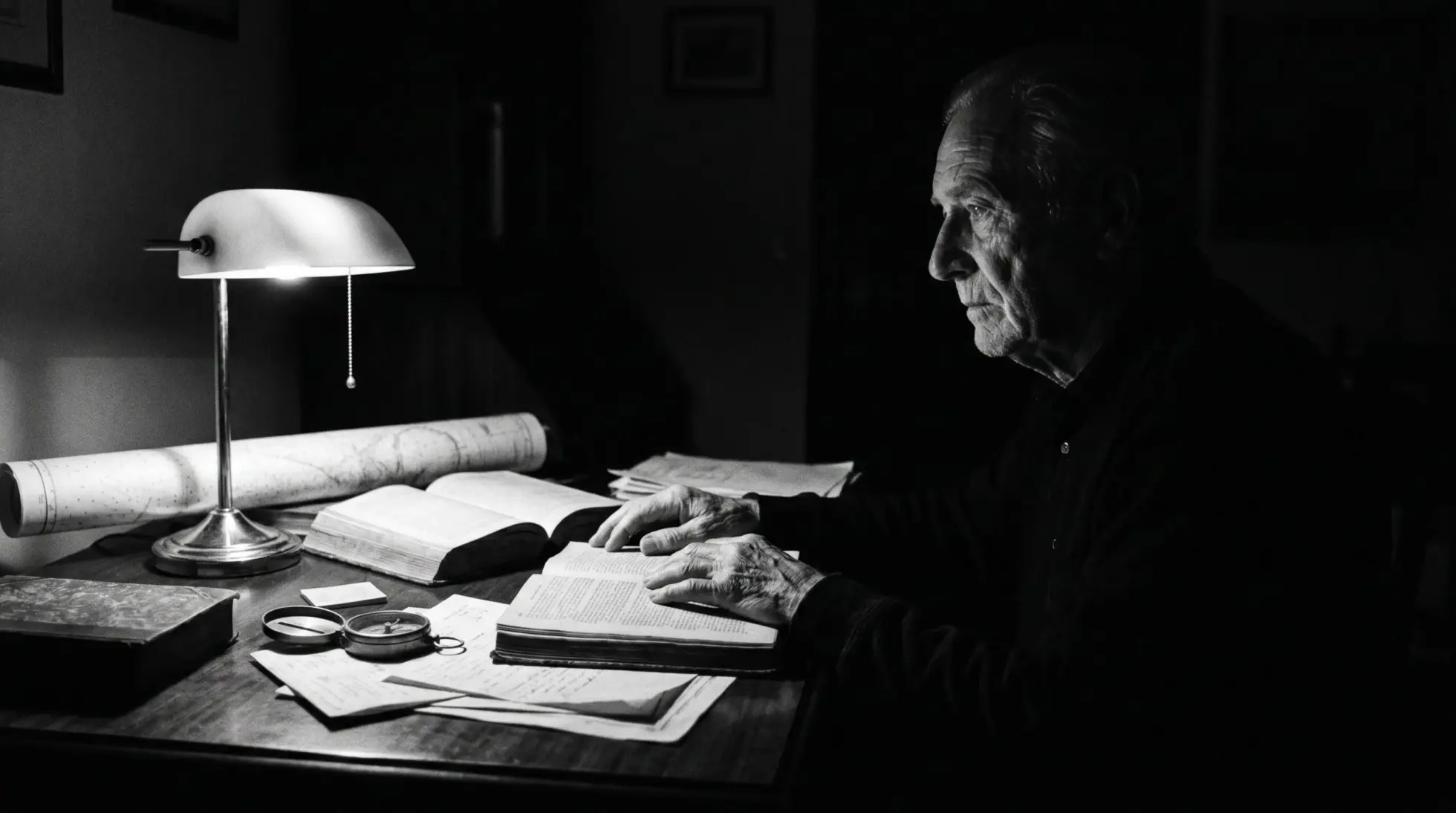
A nocturnal reflection on whether the human animal, as we currently find him, is built for the form of government we keep insisting is the best one available, told without partisanship and without country names.
There are nights in which the body refuses the long descent into sleep and the mind reaches instead for whatever thought has been sitting half formed in the antechamber of consciousness for weeks, and last night the thought that finally lifted itself off the cushion and demanded a hearing was the oldest political question I know, the question of whether democracy, in the actual form that human societies have managed to construct in the early decades of this century, still serves the function that its earliest advocates had in mind. I am not a man who participates in the daily theatre of social media, I do not enter the comment threads under articles, I do not argue with strangers about the leaders of countries I have never lived in, and I have come to a quiet, deliberate position that political quarrels in the public square cost considerably more energy than they ever return. This text is therefore not a contribution to anyone’s quarrel, it is the slow attempt to think a question through in the only currency I trust, which is the written word, and to do so on the rauscher.xyz that has, since the closing of my forensic practice in Germany, become the place where I keep my own writing alive.
The question stands at the centre, and it is uncomfortable enough on its own that it does not require ornament. Is the human animal, as we encounter him in the laboratory of his daily behaviour, in the patterns of his information consumption, in the structure of his attention, and in the rhythms of his political emotion, actually built for the form of government that we have inherited and refined over the past 2 centuries. The honest answer, when one resists the temptation either of cynical dismissal or of patriotic reassurance, is that the evidence is at the very least mixed, and that the question deserves a serious examination rather than a slogan in either direction.
The original warning that nobody listened to
Long before any modern political scientist sat down with a dataset, the most famous teacher of the western canon had already articulated, with the directness of a man who knew his time was short, the precise weakness that he believed democracy carried in its bone marrow. Socrates, as recorded by Plato in the 6th book of the Republic, used the image of a ship at sea to make his case, and the image has lost none of its precision in the 24 centuries that have followed. The owner of the vessel, in this allegory, is the people themselves, big and strong and well meaning but somewhat deaf, somewhat short sighted, and entirely untrained in the actual art of navigation. The sailors around him squabble for the rudder, each of them flattering him with promises of safe passage, none of them having ever opened a chart of the stars. The true navigator, the man who has studied the seasons, the winds, the heavens and the slow craft of steering a vessel through a storm, is dismissed by the sailors as a stargazer and a useless dreamer, because his discipline cannot be acquired in an afternoon and his methods do not flatter (Plato, ca. 380 BCE, Republic, Book 6, 488a-489d, translation Desmond Lee 1955).
The argument that Socrates pressed against his fellow Athenians was simpler than the rhetorical machinery has sometimes made it appear. Democracy, as practiced in Athens at the close of the 5th century before the common era, treated every opinion as equivalent, and it gave the same political voice to the man who had studied a question for 30 years and to the man who had encountered it for the first time on the day of the vote. Socrates argued, with the kind of brutal analogy that survives translation because it draws its force from the unchanging facts of human biology, that when one is ill one does not put one’s treatment to a vote in the marketplace, one goes to a physician, and the proposition that complex affairs of state should be resolved by the loudest voice in the assembly was, in his view, as absurd as it would be to vote on the appropriate treatment for a fractured femur. Talented orators replace skilled thinkers, feelings replace facts, and the ship sails toward whatever shore the loudest voice has gestured at most recently.
The final irony of his argument was that the very system he had spent a lifetime criticising convicted him in a vote of his fellow citizens and sentenced him to death by hemlock in 399 BCE, an outcome that allowed the system to confirm his thesis in the most theatrical way available to political history. The crowd chose the comfort of removing a man who insisted on asking inconvenient questions, and the man chose to drink the cup rather than to leave the city he loved, and the philosophical record of the western world has been arguing with this single episode ever since.
What survives of the argument in the 21st century
It would be easy and lazy to dismiss the Socratic critique as the resentment of an intellectual aristocrat against a system that had failed to recognise his merit, and the next 25 centuries have offered enough counter arguments that anyone who wishes to defend democracy without engaging Socrates can simply pick up a textbook on the 18th century enlightenment and read his fill. The more uncomfortable approach is to ask whether the structural objection still finds purchase in the data of the present, and the answer of contemporary political science is, in short, yes, with qualifications that should give every defender of democracy pause.
The most influential recent restatement of the Socratic position belongs to the political philosopher Jason Brennan, whose book Against Democracy, published in 2016 and translated into German as Gegen Demokratie in the following year, did what good political philosophy has always done, which is to take an old objection and reformulate it in the vocabulary of an age that thinks itself too sophisticated to listen to its ancestors (Brennan, 2016, Against Democracy, Princeton University Press). Brennan proposed a taxonomy of citizens that has, in the years since, become a standard reference for anyone who wants to discuss the cognitive architecture of voting populations honestly. He divides the democratic electorate into 3 categories, which he labels hobbits, hooligans and vulcans. The hobbit is the politically apathetic citizen who consumes little political information, holds few firm opinions, and would generally rather be left alone. The hooligan is the politically engaged citizen who follows politics with the passion of a sports fan, who consumes information in heavily filtered streams, who can recite the slogans of his preferred party with fluency, and who regards the supporters of the opposing party as varying combinations of stupid, evil and dangerous. The vulcan is the citizen who actually performs the cognitive labour that democratic theory implicitly assumes of every voter, namely the sober gathering of evidence from competing sources, the disciplined recognition of one’s own cognitive biases, the willingness to update one’s beliefs in the face of new data, and the absence of tribal loyalty as a driver of political opinion.
Brennan’s empirical argument, which draws on a substantial body of survey research from American and European political science, is that the vulcan is a vanishingly rare species, that the population of any actual democracy consists overwhelmingly of hobbits and hooligans, and that the hooligans, by virtue of their willingness to vote and to advocate, set the terms of public discourse in ways that no rational planner would choose. The implication of this taxonomy is genuinely uncomfortable for the defenders of the democratic project. Democratic legitimacy theory tells us that the will of the people deserves respect because it represents an aggregation of considered judgements, but if the actual constituent units of that aggregation are mostly tribal passions held by citizens who have never seriously studied the questions before them, then the aggregate result is not the wisdom of crowds but the noise of crowds with occasional signal.
The cognitive shadow that Dunning and Kruger threw across politics
A second strand of the contemporary literature is even harder to argue with, because it does not concern itself with normative questions at all and operates entirely on the empirical level of cognitive psychology. The Dunning-Kruger effect, first articulated in 1999 in the Journal of Personality and Social Psychology, describes the systematic tendency of individuals with limited competence in a domain to overestimate their own competence in that domain, while individuals with high competence in the same domain tend to underestimate theirs (Kruger and Dunning, 1999, Unskilled and unaware of it, Journal of Personality and Social Psychology, 77(6), 1121-1134). The effect has been replicated across dozens of cognitive domains since, from grammar to logical reasoning to driving safety, and the political application of it has been examined explicitly by political scientists who found that voters with the least factual knowledge of politics are systematically the most confident in their own political analysis, and that this confidence is amplified rather than dampened by partisan identification (Anson, 2018, Partisanship, political knowledge, and the Dunning-Kruger effect, Political Psychology, 39(5), 1173-1192).
A Finnish replication, conducted before and after the social media revolution, suggested that the proliferation of accessible information has not closed the gap between what people know and what they believe they know, and may in fact have widened it, because the abundance of confirming content allows the low information voter to construct a self consistent worldview in his own information bubble without ever encountering disconfirming evidence (Rapeli, 2024, Illusion of knowledge, Journal of Elections, Public Opinion and Parties, 34(3), 573-583). When one combines this finding with the social media architecture of recommendation algorithms that reward engagement over accuracy and emotional intensity over deliberation, the picture that emerges is not one of an electorate growing more thoughtful with the spread of information, but of an electorate growing more confident in beliefs that may or may not correspond to anything verifiable. There are exceptions, of course, and the literature has its sceptics who note that some of the Dunning-Kruger findings may be statistical artefacts of regression to the mean (Hall and Smith, 2026, They know what they know and it ain’t much, Political Research Quarterly, advance online publication), but even the sceptics generally concede that the broad pattern of political overconfidence among the least informed is a real and consequential feature of modern democratic life.
The data of the present, presented without national identifiers
The V-Dem Institute at the University of Gothenburg, whose dataset v16 covers 179 countries for the year 2025 and whose historical coverage reaches back into the late 18th century, published its Democracy Report 2026 on 17 March of this year, and the findings are difficult to misread. Nearly a quarter of the world’s countries are currently undergoing what political scientists call autocratisation, 6 of the 10 newly autocratising countries are in Europe and North America, and the global average of liberal democracy by population weighting has now fallen back to the level it last occupied in 1978 (Nord, Good God and Lindberg, 2026, Unraveling The Democratic Era, V-Dem Institute, Democracy Report 2026). The number of countries classified as autocracies first surpassed the number classified as democracies in the year 2024, for the first time in over 20 years, and the trajectory of the so called third wave of autocratisation shows no sign of reversing.
I have chosen, in this passage, to avoid naming specific countries, not because the information is unavailable but because the moment one names a country one invites the reader to reach for his tribal affiliations and to argue about whether his own side is being unfairly criticised, and the larger pattern is what concerns me here. The pattern is that established democracies are deteriorating in measurable ways, that the deterioration concentrates on freedom of expression, on judicial independence, and on the mechanisms of accountability that prevent the concentration of executive power, and that these are precisely the dimensions on which Socrates would have predicted the failure of any system that places the loudest voice on equal footing with the most considered one. The data confirms a thesis that was articulated in an Athenian marketplace 24 centuries before any of its current contributors were born, and the confirmation should provoke a deeper reaction than partisan satisfaction at whichever country one happens to dislike most.
The defenders, and the one defender who got closest to the truth
It would be a misuse of one’s time to write at length about the weaknesses of democracy without acknowledging that some of the most thoughtful minds of the past 2 centuries have defended the institution with arguments that deserve to be engaged seriously. The most famous of these defences was offered, almost in passing, by Winston Churchill in the British House of Commons on 11 November 1947, and the passage is worth quoting in its full original form because the popular abbreviation has eaten away most of its nuance. Speaking against a bill that would have weakened the House of Lords, Churchill said that many forms of government had been tried and would be tried in this world of sin and woe, that no one pretended democracy was perfect or all wise, and that it had been said that democracy was the worst form of government except for all those other forms that had been tried from time to time (Churchill, 1947, Parliament Bill speech, Hansard, House of Commons, Volume 444, columns 206-207). The honesty of this formulation is what makes it endure. Churchill did not claim that democracy was good, he claimed that it was the least bad of the available options, and he prefaced his most famous line with the caveat “it has been said”, signalling that he was quoting an unknown predecessor rather than originating the thought himself. The intellectual humility of this position is greater than that of any of its modern paraphrases.
The argument Churchill was making is the one that most serious defenders of democracy still rest on, namely that all alternative forms of government have proven, in the long historical record, even worse at producing tolerable outcomes for the people subjected to them. Monarchies decay into tyranny when the wrong heir is born, oligarchies harden into a self serving class that loses contact with the citizenry below it, theocracies elevate the irrational over the empirical and turn fallible men into the voices of an infallible deity, and pure technocracies, on the rare occasions when they have been attempted, develop their own pathologies of expert capture and procedural rigidity. The defender of democracy says, in his most honest moment, that the human animal is a deeply flawed political agent regardless of the system under which he lives, and that democracy at least distributes the consequences of his flaws across the widest possible base rather than concentrating them in the hands of a single man or a small caste of supposedly wise rulers. The argument carries genuine weight and has shaped 2 centuries of constitutional design. It also has a Swiss footnote that deserves more attention than it usually receives.
The Swiss exception
Among the world’s democracies, the Swiss Confederation has, since the middle of the 19th century, run a continuous experiment in direct democratic governance that no other country has ever attempted on the same scale, and the results of that experiment deserve a careful look. Swiss citizens vote on national questions roughly 4 times each year, far more frequently than the citizens of any other state, and they have the right both to demand a referendum on laws passed by their parliament and to initiate constitutional amendments through the gathering of signatures, with the threshold for a successful initiative being 100,000 verified signatures within 18 months. The system has produced, over the better part of 2 centuries, a political culture in which the average citizen is required, by the regular rhythm of his civic calendar, to form an actual opinion on a question of national substance and to take responsibility for that opinion at the ballot box.
The empirical evaluation of this system, conducted by political scientists who specialise in it, is more positive than the conventional academic scepticism of direct democracy would predict. Swiss direct democracy has been associated with lower public spending, with improved fiscal discipline imposed bottom up by the electorate on the spending plans of the government, with higher levels of citizen satisfaction with political institutions, and with measurable improvements in subjective wellbeing among populations that exercise these rights regularly (Frey and Stutzer, 2000, Happiness, economy and institutions, Economic Journal, 110(466), 918-938). The Swiss model is not without its critics, who point to voting fatigue among the more politically apathetic, to the disproportionate influence of small rural cantons in the double majority rule, and to the system’s tendency to slow down social reforms that might be passed more rapidly in a purely representative system. These criticisms have merit and they have been documented in the literature, but the larger picture is that the Swiss have shown, over a long historical sample, that direct democracy is at least possible without descending into the chaos that Plato predicted, provided that the political culture has been built carefully from the cantonal level upward over a period long enough for civic competence to mature.
The Swiss exception suggests that the failures of representative democracy in most modern states may not be intrinsic to democracy as a category, but rather to the particular form that representative democracy takes when it is grafted onto a population that has never been given the responsibility of regular direct voting, and that has therefore never developed the civic habits that the Athenians took for granted. When citizens vote once every 4 or 5 years on a single ticket of personalities, they vote on faces and slogans, they vote on charisma and resentment, and they have neither the practice nor the incentive to develop substantive positions on the policy questions that the elected officials will then decide for them. When citizens vote 4 times a year on actual policy questions, they have no choice but to develop, however imperfectly, a working competence in the issues themselves, and the cumulative effect of this practice over generations is a political culture that bears almost no resemblance to the one most other democracies have produced.
The men who never should have held the office
There remains a part of the question that no amount of structural analysis can fully absorb, and it is the part that arrives at 3 in the morning when the philosophical scaffolding has fallen away and what remains is simply the face of whichever recent political figure has caused the deepest astonishment in the observer. I will name no names here, not out of cowardice but out of a deliberate strategic choice, because any reader will already have his own list and the point is the pattern rather than the individual entries. The pattern is that in country after country, on continent after continent, the past decade has placed at the apex of governmental power individuals whose qualifications for that office would have disqualified them from the directorship of any well run mid sized company, and the citizens who placed them there did so under no compulsion beyond the cultivated democratic right to choose freely.
The pattern is that talented orators have, with depressing regularity, defeated honest experts in popularity contests, that simple answers to complicated problems have outperformed nuanced answers in the marketplace of votes, that the candidate who made the crowd feel most strongly was applauded most loudly regardless of whether he was saying anything that corresponded to the facts of the situation, and that the resulting officeholder has often turned out to possess neither the intellectual equipment nor the temperamental stability that the office demands. The Socratic warning that the system would reward presentation rather than wisdom has been confirmed in language that the Athenian himself would have recognised without difficulty.
I have asked myself, in nights like this one, whether I am simply growing old and grumpy in a way that older men have always been when they survey the political theatre of their later years, and the answer I have arrived at is that this is partly true and partly insufficient. It is partly true because every generation regards its successors as duller than itself, and it is partly insufficient because the empirical record of democratic backsliding documented in the V-Dem dataset is not an artefact of my age, it is a measurable feature of the past quarter century that any honest observer must acknowledge. The two phenomena, the personal disappointment of an ageing observer and the documented institutional decline of his historical moment, happen to overlap in time, and the overlap does not prove that either causes the other, but it does suggest that the disappointment is at least partially earned.
What true democracy might look like
When I ask myself, in a spirit of genuine inquiry rather than rhetorical provocation, what a system would look like that actually deserved the name democracy in the sense that the word implies rule by the people, the answer drifts away from the model that most democracies have settled on. A government in which the citizens cast a vote every 4 or 5 years for a personality, after which the personality and his party negotiate coalitions with smaller parties whose electoral results were dismal, and the resulting government then enacts policies that no individual citizen ever voted for and on which no citizen will ever have the opportunity to vote, is a procedure that contains democratic elements without quite reaching the threshold of democracy. The genuine version of the thing would involve referenda on the substantive questions, would force the citizenry to study the issues and to take responsibility for the outcomes, and would leave the elected officials in the role that Athenian democracy assigned them, namely as administrators of decisions taken by the citizenry rather than as quasi monarchical decision makers whose decisions the citizenry cannot revoke for the duration of the electoral cycle.
Whether the human animal, in the form in which contemporary information environments have shaped him, is capable of this is a question I cannot answer with confidence. The Swiss experiment suggests that under the right cultural conditions and over the right historical timescale, yes. The Athenian experiment suggests that under the wrong conditions, no. The current dataset of the V-Dem Institute suggests that the conditions in most modern countries are drifting in the wrong direction. These 3 pieces of evidence point in different directions, and a thoughtful person should be wary of any commentator who claims to know with certainty what the next 2 decades will reveal about which of the 3 pictures is the most accurate one for the world as it is, rather than as we might wish it to be.
What I write at the desk when the night will not lift
I write these lines because I no longer practice the profession that occupied the better part of my adult life, because writing has remained the activity through which I keep my mind in some semblance of working order, and because the rauscher.xyz blog has become the only public space in which I still allow myself to think out loud. I do not expect to convince anyone of anything by these paragraphs, and I am wary of the kind of polemical contagion that animates so much contemporary political writing, and I would rather end with a question than a slogan. I write also because the question, once it has lifted itself out of the antechamber of consciousness and demanded a hearing, will not return to its cushion until it has been written down in sentences that hold their shape under daylight, and the holding of that shape is the actual labour, not the having of the thought.
The question is whether the form of government we have inherited, refined and exported as the universal solution to the problem of human collective life, is something that the actual human, with his actual cognitive equipment and his actual emotional architecture, can sustain over the long term without producing, as Plato predicted, a sequence of charismatic deceivers who lead the ship onto rocks that the navigator could have seen from a distance. The honest answer, in my reading, is that we do not yet know, that the evidence is genuinely mixed, that the Swiss case provides a flicker of hope while the V-Dem case provides a deeper flicker of alarm, and that anyone who claims certainty in either direction is either selling something or has not read the data. Those who still believe that the system, in its current form, will correct itself simply because it always has, may want to look more closely at the trajectory of the past 25 years and ask whether the past, in this particular case, is really a reliable guide to the future. The ship is at sea, the sailors are quarrelling, the navigator is being ignored, and the rocks, wherever they are, are not announcing themselves with the courtesy of a foghorn.
References
- Anson, I. G. (2018). Partisanship, political knowledge, and the Dunning-Kruger effect. Political Psychology, 39(5), 1173-1192. https://doi.org/10.1111/pops.12490
- Brennan, J. (2016). Against Democracy. Princeton, NJ: Princeton University Press.
- Churchill, W. S. (1947). Parliament Bill speech. Hansard, House of Commons, Volume 444, columns 206-207, 11 November 1947.
- Frey, B. S., & Stutzer, A. (2000). Happiness, economy and institutions. The Economic Journal, 110(466), 918-938. https://doi.org/10.1111/1468-0297.00570
- Hall, A. G., & Smith, K. B. (2026). They know what they know and it ain’t much: Revisiting the Dunning-Kruger effect and overconfidence in political knowledge. Political Research Quarterly. Advance online publication. https://doi.org/10.1177/10659129251398531
- Kruger, J., & Dunning, D. (1999). Unskilled and unaware of it: How difficulties in recognizing one’s own incompetence lead to inflated self-assessments. Journal of Personality and Social Psychology, 77(6), 1121-1134. https://doi.org/10.1037/0022-3514.77.6.1121
- Nord, M., Good God, A., & Lindberg, S. I. (2026). Democracy Report 2026: Unraveling The Democratic Era? Gothenburg: V-Dem Institute, University of Gothenburg. Retrieved 17 March 2026 from https://www.v-dem.net
- Plato (ca. 380 BCE / 1955). The Republic, Book 6, 488a-489d. Translation Desmond Lee. Harmondsworth: Penguin Classics.
- Rapeli, L. (2024). Illusion of knowledge: is the Dunning-Kruger effect in political sophistication more widespread than before? Journal of Elections, Public Opinion and Parties, 34(3), 573-583. https://doi.org/10.1080/17457289.2023.2214734
Disclaimer: This article reflects the author’s own research and opinion as of the publication date shown above; later findings or legal changes may have overtaken it, so always check that date. Sources are cited for independent verification, and no liability is accepted for third-party studies. This is general information, not medical, legal, or professional advice: for medical questions see a doctor, for legal questions a lawyer, and in an acute crisis contact emergency services or a crisis helpline.
About the header image: it is AI-generated. Cheaper than a photo shoot, and I have made my peace with the age of AI. Everything inside the article is real, the diagrams, the skulls, the findings, and every word. The machine gets the opening shot and not one inch past it.
Where the 1.43 trillion goes, and why the state cannot fully account for its distribution by nationality
Germany's social budget reached 1,430.95 billion euros in 2025, which works out to 45,375 euros per second. For…
Stupidity would be forgivable, ignorance is not
In 2025 Germany took in 2,140.2 billion euros in taxes and social contributions, ended the year 119.1 billion…
Murphy’s law was the answer to the question of why nobody died
Murphy's law is not a shrug: it is why a physician on a rocket sled could tell a…