The Most Dangerous Drug in the World Is Legal, Licensed, and Taxed.
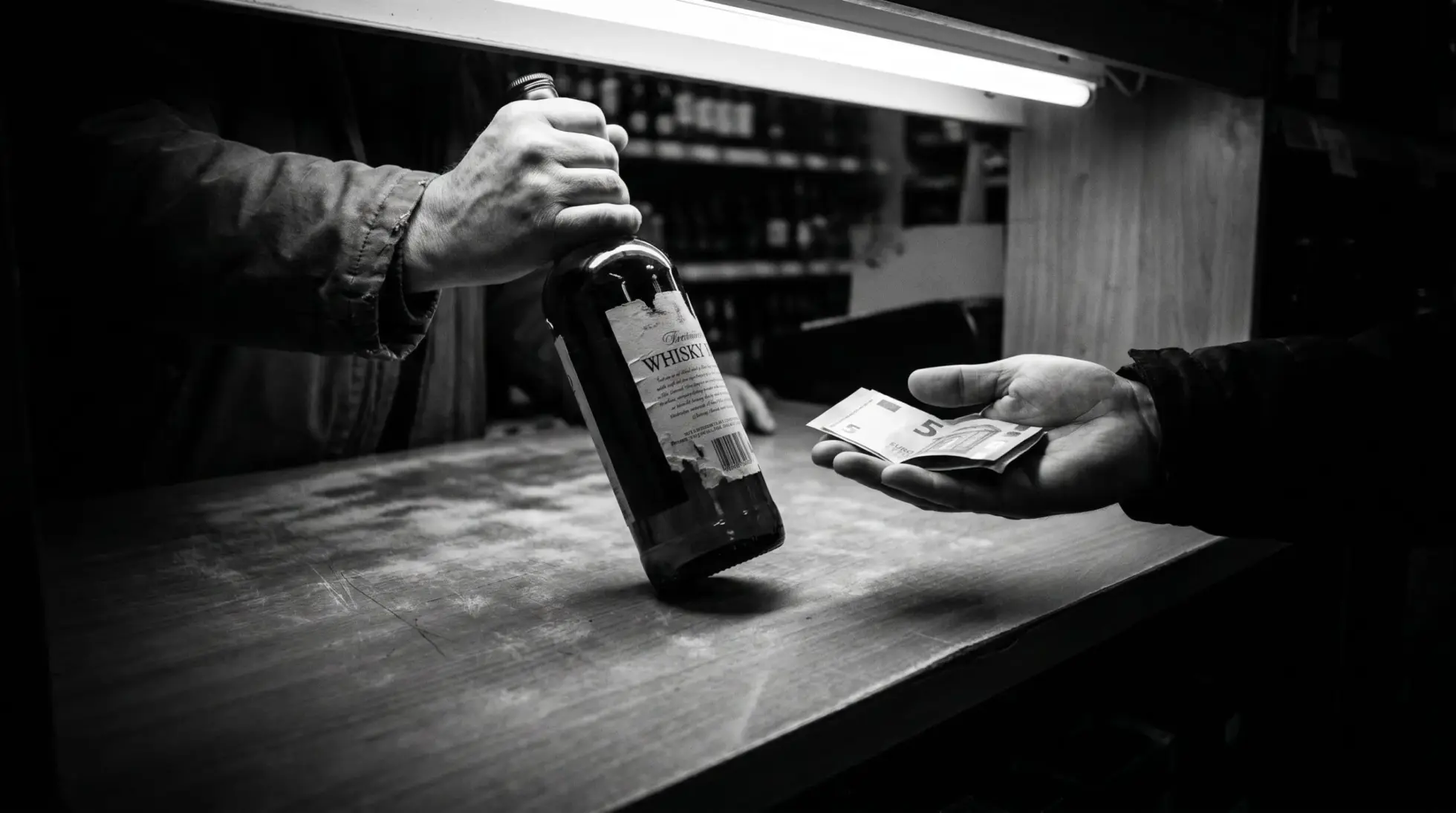
On a ban built on a dead teenager and an ignored expert report, on 44,000 alcohol deaths a year next to the mushroom that scored five for harm, and on the strange arithmetic of a state that is dealer and judge at once
I am sitting at my desk reading an Instagram post about a study from the University of Padova. Psilocybin in microdoses. Fatty liver, diabetes, insulin resistance, all improved, with no psychedelic effects, through a liver receptor nobody had been watching.
For years now, I have read every publication on psilocybin and Alzheimer's. Neurogenesis, BDNF upregulation, reduced neuroinflammation in the hippocampus. Not because I have an academic fondness for mushrooms. Because my mother declined rapidly within 2 years and no longer recognizes me.
The woman I know is leaving herself in slices. The woman who taught me how to behave, who carried me through a childhood that was anything but easy, is no longer reliably present when I look into her eyes. She has run off, once, twice, was found, was brought back. Now she has to go into a nursing home. This is not a metaphor. It is the end of a process against which medicine, with all its approved drugs, all its guidelines, all its research billions poured into amyloid antibodies, could do essentially nothing. And let us not call it medicine, I call it the pharmaceutical industry.
And I sit at my desk with a stack of peer-reviewed studies and ask myself whether there had been something that would have helped. Whether there is perhaps still something that helps. And why I am not allowed to have that question examined in a clinical setting, because the substance in question sits on a list next to heroin.
I lay this question before humanity now, not as an accusation, but as a finding anyone can check for themselves.
9,000 Years Before the Ban
In the caves of Tassili n'Ajjer, in present-day Algeria, people painted images on rock roughly 9,000 to 7,000 years ago. Shaman figures, bodies studded with mushroom-like structures, floating shapes, geometric patterns of the kind that people who know a psilocybin trip would describe generations later. The US Forest Service calls Tassili n'Ajjer the oldest known petroglyph depicting the ritual use of psychoactive mushrooms. Whether these were really Psilocybe mushrooms is disputed among archaeologists. That the images show something of extraordinary meaning to these people is not.
In Spain, at Selva Pascuala near Villar del Humo, people painted a row of 13 mushroom-like objects beside a bull 6,000 years ago. The species the mycologist Gastón Guzmán identifies is Psilocybe hispanica, a mushroom that grows on animal dung. The image is not a still life. It is a record.
In Mexico the Mazatec maintained the Velada for centuries, a nocturnal healing ceremony led by a curandera. Maria Sabina, the most famous among them, who initiated R. Gordon Wasson in 1955 and thereby brought the knowledge into the Western world, used 13 to 26 fresh pairs of mushrooms in these ceremonies, a serious dose, not a snack. This was not recreation. It was a treatment for severe psychological crises, under ritual control, with a clearly defined role for the guide.
Siberian shamans of the Koryak and Evenki used Amanita muscaria ritually, also in high doses. There is a practice documented several times in the ethnographic record: reindeer ate Amanita, and the reindeer's urine was collected and drunk, because muscimol is excreted renally and remains pharmacologically active in the urine. It sounds absurd. It is factually correct.
The Eleusinian Mysteries in Greece lasted over 2,000 years. The most important religious ceremony of the ancient world was attended by Plato, Sophocles, Cicero, Marcus Aurelius. There the kykeon was drunk, a barley brew. Albert Hofmann, the discoverer of LSD, together with the ethnobotanist Wasson and the classicist Ruck, argued with pharmacological precision in 1978 that ergot alkaloids supplied the psychedelic component, chemical relatives of LSD. This is a hypothesis. But it is held by serious scientists, and it poses a question to the present: whether the intellectual foundation of Europe was possibly, in part, the work of people who had ritual experiences with psychedelic substances.
The pattern is the same across all cultures, all continents, all eras. Psychedelic substances were not consumed casually. They were deployed in exceptional situations, in severe psychological distress, in existential disorientation, in illness that could not be treated otherwise. Always under supervision, always with control, always with respect for what happens in a person's mind.
What the 20th century did with this is a story of its own.
1971 and the Ban That Came From Fear
In 1971, 185 states signed the UN Convention on Psychotropic Substances. Psilocybin landed in Schedule I, the highest prohibition category: no recognized medical use, high potential for abuse. Since then a mushroom that has grown in nature for millennia and been used by humans for at least 9,000 years sits on the same list as heroin.
This is not science. It is politics.
Professor David Nutt knows this better than most. He was Britain's top drug adviser, one of the most respected psychopharmacologists in Europe. In 2010 he published a study in the Lancet together with the Independent Scientific Committee on Drugs that rated 20 substances across 16 harm categories, 9 for harm to the user, 7 for harm to others (Nutt et al., 2010). The result was unambiguous: alcohol received an overall harm score of 72 out of 100. Heroin: 55. Crack cocaine: 54. Crystal meth: 33. Tobacco: 26. Cannabis: 20. MDMA: 9. LSD: 7. Psilocybin mushrooms: 5.
Five points. The lowest number on the entire list. Alcohol is more than 14 times as harmful.
Nutt was then asked by the British Home Secretary to step down from his advisory post. He had not delivered the politically convenient result, but the scientifically correct one. For drug policy that was a problem. For science it was simply the result of the measurement, and Nutt has never retracted it.
The Mushroom and the Brain, Concretely
Why does psilocybin interest me for Alzheimer's? Because the mechanisms are now well described. After conversion to psilocin, psilocybin activates the 5-HT2A receptor on glutamatergic pyramidal cells in the deep cortical layers. This releases BDNF, Brain-Derived Neurotrophic Factor, one of the most important growth factors for neurons. BDNF, via the TrkB receptor, activates mTOR signaling pathways that promote neuroplasticity and neurogenesis.
Concretely: a single dose of psilocybin increases the density and size of dendritic spines on pyramidal neurons in the medial prefrontal cortex by a measured 10%, and this effect persists for weeks (Frontiers in Neuroscience, 2024).
For Alzheimer's this is relevant because in the hippocampus, the region that degrades first in Alzheimer's, exactly these mechanisms collapse. A study published in December 2025 in Alzheimer's & Dementia showed in a well-established Alzheimer's mouse model that psilocybin reduces neuroinflammation, improves the BDNF-ERK-CREB signaling chain, and stabilizes synaptic proteins (Madhu et al., 2025). The amyloid-beta plaques were not reduced, the study states this explicitly. But brain function was better.
It is an animal model. It proves nothing for humans. But it is also not nothing.
And for a disease for which there is practically no effective therapy, an animal model with positive results is at least a direction worth pursuing, a hypothesis that deserves a serious clinical trial. The amyloid antibodies that have been approved slow the course by months in the best cases, at a price running into the tens of thousands, with side effects that include brain bleeds. That is the approved, legal, reimbursed medicine. The mushroom that lowers neuroinflammation and boosts neurogenesis in a mouse model sits on a list next to heroin.
I am not allowed to help my mother, and I cannot. I had to watch, with every new study that landed on my desk knowing a little more precisely what is theoretically possible and practically forbidden. Watch a person disintegrate while at the same time millions are permitted to drink their brains away with state-licensed alcohol. That is the situation. I write it down because nothing else is permitted to me.
What a Microdose Actually Is
Because I was asked this earlier today: 0.05 mg of psilocybin per kilogram of body weight, the dose in the Padova study, means 4 mg of pure psilocybin for an 80-kilogram person. Converted into dried mushroom powder with a psilocybin content of roughly 0.8 to 1%, that comes to about 0.4 grams. That is a microdose. The Stamets standard is 0.1 to 0.3 grams, the Fadiman protocol similar. You begin to sense that something might be different at around 0.5 grams. Psychedelic effects in the proper sense begin for most people not below 1 to 1.5 grams.
At 0.4 grams nothing intoxicating happens. The amygdala measurably partially powers down, the fear response decreases, neuroplasticity increases. The user stays functional. No hallucinations, no loss of consciousness, no loss of control, completely normal.
By comparison: one Maß of beer at Oktoberfest contains about 26 grams of pure alcohol. Anyone who drinks 3 Maß, which surprises no one at the Wiesn, has 78 grams of pure alcohol in the blood. That is medically relevant intoxication, measurable impairment of judgment, reaction time, impulse control, in short, falling-down drunk.
One of these is legal and is dispensed with state approval in tents to millions of people. The other puts you in the crosshairs of criminal prosecution in Germany.
I do not want to leave this point without spelling it out fully, because it is the core of the whole contradiction. Let us place two people side by side. The first buys a bottle of vodka at the supermarket, drinks it over the evening, abuses his family, falls down the stairs, and wakes with gaps in his memory. Completely legal. Nobody rings his doorbell. The second possesses 0.4 grams of dried mushroom powder, which he takes in a tiny amount in the morning to make his treatment-resistant depression more bearable, with no high, no impairment, fully able to work. He is committing a criminal offense under the Narcotics Act. With a corresponding quantity, a house search follows. Passing it to a fellow sufferer would stand legally on the same level as heroin trafficking.
This is not exaggerated. It is the law as it stands, and it is exactly backwards to what pharmacology knows about both substances.
The Girl, the Ban, and the Mushroom They Forgot
In March 2007, Gaëlle Caroff, 17 years old, a French girl on a school trip, jumped from a building in Amsterdam. She had pre-existing psychiatric conditions. She had consumed magic mushrooms, legally available in the Dutch smartshops, and she had combined them with alcohol and other substances. When her body was returned to France, the autopsy there found no psilocybin left in her blood.
The Dutch health ministry then commissioned an independent risk analysis. The committee concluded that magic mushrooms pose such low risks to individual health and to society that a ban was not justified. Health Minister Ab Klink read the report, set it aside, and banned the mushrooms in December 2008 anyway.
It was the first time in Dutch history that a minister explicitly ignored a report from his own scientific committee.
And then the delicious part: the mushrooms were banned. Truffles, the underground sclerotia of the same fungal genus, with the same active compound, were not banned, because nobody had thought of them. The truffles are legal in the Netherlands to this day, and the state even collects tax on them. Anyone who today orders Dutch psilocybin truffles over the internet from Germany, however, finds themselves on German soil fully within the scope of the Narcotics Act. Possession is a criminal offense. Passing it on or selling it sits on the same legal level as trafficking in heroin. There are prison sentences for it.
This is not an oversight. It is the legislative consequence of a political ban that rests on an ignored expert report and was justified by the death of a girl in whose blood the autopsy found no trace of the banned substance.
The Numbers the State Knows and Ignores Anyway
Let us turn to what the state actually permits, licenses, taxes, promotes, and celebrates.
44,000 people die in Germany each year from the consequences of alcohol consumption (Federal Institute for Public Health, 2026). This is a number published regularly, in official statistics, on government websites, in the Jahrbuch Sucht. It has been there for years. An estimated 22,000 new cancer cases each year in Germany alone trace back to alcohol. The societal damage: nearly 57 billion euros a year.
2.2 million adults between 18 and 64 in Germany met the medical criteria for alcohol dependence in 2024. Another 1.7 million met the criteria for alcohol abuse. Together that is nearly 4 million people whose lives are pathologically governed by a substance you can buy at the nearest supermarket, sometimes right next to the gummy bears.
Worldwide, according to the WHO, 2.6 million people die each year from the consequences of alcohol, 4.7% of all deaths (WHO, 2024). 13% of those dead are young people between 20 and 39. No other legal consumer product kills at this level.
I had an acquaintance. He was 31 years old, he was not a weak person, he was someone with wit and energy who, somewhere between 22 and 25, had stopped really reckoning with himself and instead drank a bottle and a half of whisky every day. What was left at the end was no longer a functioning brain. This is not a figurative exaggeration: you could no longer speak with him in the sense in which you speak with someone who still reacts to what you say. He died of liver failure. 31 years old. Nobody prosecuted him for it. Nobody prosecuted the merchant who sold him the whisky. Nobody prosecuted the corporation that produced it. He simply died, and the figures for that year rolled on.
He is not the exception. He is the number behind which, in Germany alone, 44,000 others stand, per year, every year, reliably, while the federal budget books 2.1 billion euros from the alcohol tax.
At the same time the Federal Statistical Office recorded for 2024: 10,372 suicides in Germany, 7.1% more than the average of the last 10 years, a trend rising since 2021 (Destatis, 2025). An unreported number that experts consider substantial is not even included in this. 10,372 people who saw no other way out. Many of them mentally ill, many with depression, PTSD, anxiety disorders, addiction, loneliness.
The pattern is known: standard therapies of antidepressants and psychotherapy do not help a substantial share of those affected, or not sufficiently. What has been observed in clinical studies with psilocybin made psychiatry take notice: marked and partly weeks-long improvements in treatment-resistant depression after a few guided sessions, with no daily intake, no dependence, no dose escalation. The FDA took this seriously enough in 2018 to grant psilocybin-assisted therapy for treatment-resistant depression Breakthrough Therapy status. That is an acceleration classification for substances that show clear advantages over existing treatments in early studies.
With PTSD it looks similar. Trump's Executive Order names the veteran suicide rate explicitly as justification: more than 6,000 veterans have died by suicide each year for over 20 years. These people received the standard therapies. They did not help them. For this specific group, for whom conventional psychiatry fails, psilocybin could be a tool that exists, that works, that is safe, and that nonetheless remains banned.
What Psilocybin Does to the Brain, What Alcohol Does to the Brain
Here a brief comparison, without agitation, just the mechanisms.
Psilocybin activates serotonin receptors, promotes neurogenesis, raises BDNF, reduces the activity of the amygdala, the structure that processes fear and threat, and strengthens synaptic connections in the prefrontal cortex, the structure responsible for impulse control, planning, and judgment. In microdoses it alters neither consciousness nor the capacity to act.
Alcohol blocks NMDA glutamate receptors and activates GABA receptors, which leads to central nervous depression. Chronic consumption literally shreds neurons, reduces white matter density, accelerates cognitive decline. Acetaldehyde, the breakdown product of ethanol, is directly genotoxic, meaning it damages the genetic material in cells. This is why alcohol is co-responsible for at least 7 types of cancer. The risk curve begins to climb with the first sip. There is no safe amount of alcohol where cancer risk is concerned.
One promotes neurogenesis. The other destroys neurons. One is banned. The other earned the federal government 2.1 billion euros in alcohol tax revenue in 2025 (Destatis, 2026).
Medicinal Mushrooms Nobody Bans
There is a second category I do not want to leave unmentioned, because it shows how large the field is that we are only beginning to understand, and because it proves that not all mushrooms are banned, only the most interesting ones.
Hericium erinaceus, Lion's Mane, is a white, shaggy mushroom that grows on dead hardwood and from a distance really does look like a miniaturized lion's mane. It contains hericenones and erinacines, two classes of compounds that demonstrably stimulate the synthesis of NGF, Nerve Growth Factor, and BDNF. NGF is decisive for the survival and function of cholinergic neurons, exactly the nerve cells that die off massively first in Alzheimer's. Clinical studies in people with mild cognitive impairment show improvements in cognitive tests with regular consumption. The effect sizes are moderate but consistent, and the substance is harmless, legal, and available in any health food store.
Ganoderma lucidum, known for millennia in Chinese medicine as Reishi, contains triterpenes and beta-glucans with well-documented immunomodulatory properties. Grifola frondosa, Maitake, shows interesting effects on insulin sensitivity and blood sugar in preclinical models. Lentinula edodes, the Shiitake, contains lentinan, a beta-glucan used in Japan as an approved cancer therapeutic.
These mushrooms are legal. You can buy them in a health food store, as a capsule, as a powder, as a dried product. Nobody is prosecuted for it. But their pharmacological investigation has gone barely funded for decades, for a simple reason: you cannot patent a mushroom. A mushroom that grows in nature and has been known for centuries cannot be proprietized. No patent, no exclusive market right, no incentive for a pharma company to invest 800 million dollars in clinical trials. The money goes into synthetic molecules that can be protected. The mushroom keeps growing on its dead wood, and the research gap remains.
And now I turn the thought around, because only then does it show its full ugliness. You cannot patent a mushroom. But a compound that marginally resembles the active principle, differs chemically enough to be protectable, produces no psychedelic effect at high doses, and may in the end bring the most severe side effects, that you can patent, and on that you can earn billions. Nobody can tell me that an industry of this size and this financial power would not be powerful enough to ensure that inconvenient studies disappear into drawers and that a harmless mushroom ends up on a prohibition list next to heroin, where it does not stand in the way of the patentable competition. I cannot prove it, I state it as what it is, my conviction. But what is happening here is, in my judgment, no bureaucratic oversight. It is a heinous crime against precisely the people who could be helped.
This is no accident. This is structure. This is stupidity.
Trump, Ibogaine, and the Strange Return of the Psychedelics
On 18 April 2026, Donald Trump signed an Executive Order instructing the FDA to accelerate psychedelic therapies, with a focus on PTSD and veteran suicide (CBS News, 2026). In the Oval Office sat Joe Rogan and a former Navy SEAL. The order names ibogaine, MDMA, psilocybin, and LSD as substances to be reviewed faster. Federal research funds of about 50 million dollars are earmarked.
Here is the funny part: ibogaine, the substance in focus, is pharmacologically considerably more dangerous than psilocybin. It prolongs the QT interval in the heart rhythm, can cause life-threatening ventricular arrhythmias, at least 27 deaths are documented in the literature. A Stanford study of 30 veterans in Mexico, the only notable human experimental work, had no placebo group.
Psilocybin has no known cardiac risks. Psilocybin has no documented deaths from direct pharmacological toxicity. Psilocybin has a broader and more solid research foundation.
But psilocybin remains in Schedule I. The Executive Order does not change that. And while the USA slowly wakes up, in Germany a person who possesses 0.4 grams of dried mushrooms stays in the same legal category as a drug dealer.
A colleague of mine, a Swiss professor of medicine whom I know well (and whom I do not name here, because he wants that just as little as I sometimes do, for good reason), said publicly how it is: we would rather let our people suffer with fear and pain in the nursing homes than give them diazepam, because diazepam is addictive. As if suffering were the better alternative to dependence. As if a person in their last 5 years of life were not allowed to be free of fear, because the medication against it is a benzodiazepine.
Where is the logic? Where is the ethics?
Oktoberfest, or: The State-Licensed Drug Orgy
I come to my favorite contradiction in this whole subject. Oktoberfest.
Roughly 6 million visitors in 16 to 18 days. Over many years more than 7 million liters of beer were poured on the festival grounds according to the final tally. That is not 7 million sips. That is 7 million liters of alcohol, dispensed to crowds, in tents, under deafening noise, in full sun or cold rain, with no medical staff, with no controlled dosing, with no information about interactions with other substances, without any of the precautions that even the most liberal psilocybin study demands for its participants.
The police report for Oktoberfest 2025 is matter-of-fact and, in its matter-of-factness, beautiful: 784 charges, 236 assaults of which 75 serious, 72 sexual offenses, 5 rapes, 1,598 police deployments (Hasepost, 2025). No homicide, the police write themselves, and you cannot help wondering at what level "no homicide" counts as a positive balance. In at least 16 cases a beer stein became a weapon.
The beer stein as a weapon. This is not metaphorical. It is a glass mug holding a liter of liquid, thrown or struck by an intoxicated person against the skull of another person. Not once, not twice. 16 times, in 16 days, at a folk festival. Oktoberfest is the largest state-licensed event in Europe at which one of the most harmful drugs in the world is dispensed on an industrial scale, with police protection, with municipal participation, with tourism branding, with the blessing of the state government and its own Wikipedia article on its centuries-long history.
Alcohol makes people aggressive. This is not an opinion. It is pharmacology. Ethanol lowers frontal inhibition, raises impulsivity, impairs the processing of social signals. Someone drunk is more likely to strike. Someone very drunk is more likely to strike with the mug. This is understood in neuroscience as well as anything in neuroscience is understood.
Consider for a moment how a corresponding psilocybin event would be received. A festival at which people, in a calm atmosphere, in a setting built for safety, take 0.5 grams of mushroom powder and afterwards talk about their depression. No rapes documented in psilocybin studies. No assaults. No beer stein as a weapon.
That would be a criminal offense. Oktoberfest gets security forces, municipal infrastructure, an international marketing budget, and millions in tourism revenue.
Polemical Warning
I am not a doctor. This is a fact I record here, not as a disclaimer, but because it belongs to the argument: I am a scientist. I read studies daily. It is also my hobby, and my profession has taught me that most people who say "I am not a doctor" mean it as an excuse. I mean it as a description of position. I read primary literature, I assess methodology, I recognize when a result is statistically significant but clinically irrelevant, and I recognize when a ban is pharmacologically untenable.
Psilocybin in microdosing is illegal in Germany. Possession is a criminal offense, passing it on stands at the level of heroin trafficking. That is the current legal situation, and I explicitly call on no one to ignore it. Anyone who comes into contact with psilocybin-containing substances in Germany, or in the USA as well, is moving in waters that must be taken very seriously under criminal law.
None of this changes the fact that the ban is pharmacologically absurd, historically poorly justified, and ethically barely defensible, compared with what this state simultaneously permits, licenses, and taxes.
What the Bookkeeping Says
In 2024 the German state earned 2.0 billion euros from the alcohol tax (Destatis, 2025). In 2025 it was 2.1 billion. That is only the spirits tax. Beer tax, value-added tax on alcohol, municipal revenue from Oktoberfest licenses and event fees come on top.
In the same year, harmful alcohol consumption in Germany caused societal costs of nearly 57 billion euros. Direct treatment costs for alcohol-related illness, costs from work absences, early retirement, police deployments, accident consequences, addiction therapy. The state takes in a few billion and spends a multiple of it.
This is called a conflict of interest. In another context, say, a pharmaceutical company that was simultaneously the regulator and the manufacturer of a dangerous substance and ignored the scientific expertise of its own advisers, you would call it unacceptable. You would demand investigations. You would demand transparency reports. You would table parliamentary questions.
When the dealer is the state, it is called tax policy.
A Workable Path, If Anyone Wants to Take It
So that this does not remain mere accusation, a concrete proposal, because the state rarely lacks for outrage and almost always for an implementable model. There is already a legal drawer into which psilocybin fits cleanly, without anyone having to reinvent the Narcotics Act. Methylphenidate, the medication for ADHD, is a stimulant that in overdose can cause tachycardia, hypertension, seizures, and in the extreme case death. It sits on the strictest schedule of the narcotics law and is prescribed on a special controlled prescription, in a defined quantity, with documented dispensing. Millions of children receive it. Nobody considers that a scandal.
Let us take this proven procedure and place psilocybin into it. A pack of 30 tablets in a harmless microdose, taken roughly every third day depending on protocol, prescribed on a controlled prescription, dispensed at the pharmacy, documented like any other controlled medication. Prevention and adjunct treatment in early dementia, in treatment-resistant depression, in anxiety disorders, in post-traumatic stress, in MS. No high, no 8-hour session, no therapist at the bedside, no black-market uncertainty about purity and content.
And the danger that always arrives as the conversation-ending argument? Let us reckon it honestly. Anyone who swallows the entire pack of psilocybin at once cannot drive that day and goes through an intense, possibly unpleasant psychological episode. Lasting physical damage: none known. Anyone who swallows the entire pack of methylphenidate at once has an acutely life-threatening medical problem. One of these the state gives to millions of children. The other it places next to heroin. Someone may explain the logic of that arrangement to me.
It would be no dramatic act. It would be an administrative process. The systems collapsing today under the load of dementia, depression, and addiction would be noticeably relieved, and it would save human lives, not in some distant future, but in the moment the first pack crosses the pharmacy counter. The state would have to invent nothing. It would only have to stop treating a substance as if it were what it demonstrably is not.
This I Nail to the Wall
Anyone who knows me knows that I have a gift. I read numbers, I see patterns in data where others see noise, and I am right uncomfortably often. So I nail this to the wall, and you will see it turn out as it always does. This compound is the solution. Not one of many, the solution for a whole class of suffering that approved medicine has been breaking its teeth on for decades.
I know the studies, all of them that exist. I know some of the trial participants. I am in contact with licensed therapists in Colorado, where guided use is legal. What they report is no cautious maybe. The fear was gone at once. The depression no longer perceptible within days. People who sat for years in a hole that no tablet and no conversation could pull them out of were back in their lives after a few guided sessions. It works. I state this as what it is, my firm conviction on the basis of everything I have read and heard.
And now the part that goes beyond the single disease. The most powerful industry in the world, in all likelihood, hates this mushroom. It hates it not because it fails to work, but because it can do too much and cannot be patented. Anyone who has once seen under the microscope what happens after a dose of psilocybin, how the processes of the nerve cells stir, form new connections, rewire themselves, in living tissue, tracked in real time with two-photon microscopy, comes away with a feeling of awe. Search for it online, the images exist, they are published, they are real. A brain rewiring itself in front of the lens.
And no, it is not only dementia. It is millions of people with multiple sclerosis, whose brains may possibly restructure themselves under exactly this anti-inflammatory action, as the inflammation-driving microglia are switched over and neurotrophic factors help rebuild the support cells of the nerve pathways. The research here is still in animal models and review papers, nobody promises a cure from one day to the next, and the honest authors write themselves that the data for MS is not yet sufficient. But the principle of action is on the table, and it is enormous. Every neurologist reading this should engage his brain at this point, provided he is still capable of self-reflection.
What We Know and Are Still Not Allowed to Do
I lay before humanity the following contradictions, matter-of-factly, without agitation, in the conviction that the bare numbers are agitating enough.
We have known since 2010, measured, peer-reviewed, published in the Lancet, that alcohol is the most harmful drug of the 20 substances examined. Psilocybin is the least harmful. The state treats them exactly the other way around.
We know that 44,000 people die in Germany each year from alcohol. No person in documented history has died from a pharmacological psilocybin overdose. There is no known lethal level for humans where psilocybin is concerned.
We know that 10,372 people died by suicide in Germany in 2024, many of them with diagnosable mental illnesses that did not respond to standard therapies. We know that psilocybin shows effects in clinical studies for treatment-resistant depression and PTSD that no prior medication achieves in this form.
We know that in Alzheimer's mouse models psilocybin reduces neuroinflammation and improves hippocampal neurogenesis. And I know that the woman who taught me what I know now lives in a home, because approved medicine had no answer.
And we know that the Dutch ban of 2008 rests on an ignored expert report, and on the death of a young girl in whose body the autopsy found no psilocybin.
That is the bookkeeping. Those are the numbers. That is the science.
I read a study this morning, about mushrooms and insulin and liver fat, on an Instagram post. I put the phone down. Then I picked it up again. Not because of the liver results.
The state that is at once the dealer of the most dangerous drug and the judge over the least dangerous one must allow these questions to be put to it. And we who watch may stop pretending this is normal.
My mother is 85. She has to go into a home now, because her brain is disintegrating from a disease that one might possibly have prevented and against which there is at least a hope, locked away next to heroin for over 50 years. I am not even allowed to have that hope examined for her in a clinical setting. Instead I drive home past a gas station where a pallet of beer stands closer to the entrance than the newspapers, and nobody considers that a scandal.
It is not normal. It is political. And politics can be changed. The only question is how many mothers have to go into a home first.
References
- CBS News. (2026, April 16). Trump to sign executive order on psychedelic drug used abroad to treat PTSD. https://www.cbsnews.com/news/psychedelic-drug-ibogaine-ptsd-trump-to-sign-executive-order/
- COMPASS Pathways. (2018, October 23). COMPASS Pathways receives FDA Breakthrough Therapy designation for psilocybin therapy for treatment-resistant depression. https://www.prnewswire.com/news-releases/compass-pathways-receives-fda-breakthrough-therapy-designation-for-psilocybin-therapy-for-treatment-resistant-depression-834088100.html
- Colognesi, M., Gabbia, D., Signor, A., et al. (2026). Low, non-psychedelic doses of psilocybin as a novel treatment for MASLD, obesity and type 2 diabetes via 5-HT2B receptor-dependent mechanisms. Pharmacological Research, 224, 108080. https://doi.org/10.1016/j.phrs.2025.108080
- Federal Institute for Public Health / kenn-dein-limit.de. (2026). Alcohol consumption in Germany: facts and figures. https://www.kenn-dein-limit.de/alkoholkonsum/alkoholkonsum-in-deutschland/
- Frontiers in Neuroscience. (2024). Psilocybin for the treatment of Alzheimer's disease. Frontiers in Neuroscience. https://doi.org/10.3389/fnins.2024.1420601
- Hasepost. (2025, October 5). Oktoberfest: peaceful balance, fewer deployments, more offenses. https://www.hasepost.de/oktoberfest-friedliche-bilanz-weniger-einsaetze-mehr-straftaten-640309/
- Madhu, L. N., Somayaji, Y., Kotian, S., et al. (2025). Psilocybin maintains better brain function in an Alzheimer's disease model with reduced neuroinflammation and improved hippocampal neurogenesis. Alzheimer's & Dementia. https://doi.org/10.1002/alz70859_100589
- Nutt, D. J., King, L. A., & Phillips, L. D. (2010). Drug harms in the UK: a multicriteria decision analysis. The Lancet, 376(9752), 1558-1565. https://doi.org/10.1016/S0140-6736(10)61462-6
- Statistical Office of Germany (Destatis). (2025). Number of deaths due to suicide rose slightly in 2024. https://www.destatis.de/DE/Themen/Gesellschaft-Umwelt/Gesundheit/Todesursachen/suizid.html
- Statistical Office of Germany (Destatis). (2026). Excise duties 2025: 149.0 million liters of alcohol taxed. https://www.destatis.de/DE/Themen/Staat/Steuern/Verbrauchsteuern/alkoholsteuer.html
- WHO. (2024, June 25). Over 3 million annual deaths due to alcohol and drug use, majority among men. https://www.who.int/news/item/25-06-2024-over-3-million-annual-deaths-due-to-alcohol-and-drug-use-majority-among-men
- erstelle einen plan, damit der austausch der texte sicher und fehlerfrei durchgeführt wird.
Disclaimer: This article reflects the author’s own research and opinion as of the publication date shown above; later findings or legal changes may have overtaken it, so always check that date. Sources are cited for independent verification, and no liability is accepted for third-party studies. This is general information, not medical, legal, or professional advice: for medical questions see a doctor, for legal questions a lawyer, and in an acute crisis contact emergency services or a crisis helpline.
About the header image: it is AI-generated. Cheaper than a photo shoot, and I have made my peace with the age of AI. Everything inside the article is real, the diagrams, the skulls, the findings, and every word. The machine gets the opening shot and not one inch past it.
Why Constant Stress Hits Your Metabolism, and Why the Miracle Root Can Hit Your Liver
Constant stress can push metabolism toward insulin resistance and belly fat. Ashwagandha can lower cortisol and in rare…
Brain Chemistry Without Myths or Esotericism, and Without Reaching for the Package Insert
A journey through the chemical language of the body and through the question of why the industry would…
The Homo Genius in the Adaptation Phase
Autism misdiagnosed for decades, prescribed the wrong medications, and told it is a developmental disorder. A forensic professional…