Brain Chemistry Without Myths or Esotericism, and Without Reaching for the Package Insert
A journey through the chemical language of the body, through the messengers that make you alert and tired, in love and afraid, and through the question of why the industry would rather sell you the symptom than the cause.
Your Head Is a City, and Nobody Ever Showed You the Map
For more than 30 years I have worked with data, with sound, with images, with bones, with human biology and criminalistics, and for just as long with the human brain. This is not a sideline and not a hobby I unpack on weekends. I read scientific studies almost daily, I devour them, and I exchange ideas with neurologists, psychiatrists and psychologists I count among my friends. The few who can really read me know that I am buried in this matter, deep enough to meet specialists as equals. In my work as a forensic practitioner I have read hundreds of forensic psychiatric reports, always with the same question in my head, was this person master of his own decision in that moment or not.
I will claim nothing here that I am not. I am not a physician, and I do not wish to be one, just one more Homo Sapiens climbing into the same hamster wheel each morning. I am also not a neurologist who stands in his practice every day and knows things about clinical reality that I never will. What I am is a Homo Sapiens of a particular build, a person who absorbs knowledge, lives on knowledge and earns his money with knowledge. Knowledge is my profession, my hobby and my way of enduring the world, all in the same breath. To that comes a quirk I never understood as a talent, only as the way I am made. I read data, and within seconds I see the pattern in it, and above all I see the spot where something does not fit. The contradiction leaps at me before I have even gone looking for it. Throw me a subject I understand too little of, and I dig into it until I reach the bottom.
There are reasons why the brain of all things became the subject that would not let me go. My mother is severely ill with Alzheimer’s disease. She lives today in a locked ward where she is spending her final time, and by the common Reisberg scale she stands at stage 7, the final stage, in which speech falls silent, the body loses control and in the end even sitting upright becomes difficult. The short-term memory is long gone, the long-term memory dissolves, and she lives in a world a healthy person can no longer enter from outside. In my criminalistic work I have also seen suicides that go far beyond what a person wishes to see, and after each of these cases the same question stood in the room. Where did it come from. What was the true cause. An imbalance in serotonin, as we have been told for decades, or something else entirely that lies deeper.
One thing I learned in the 3 years with my mother’s Alzheimer’s that is hard for relatives to hear and a comfort nonetheless. The real suffering of this illness lies in the end not with the patient but with those who watch. Whoever has no memory left and no coherent self no longer suffers from the imagination of what is coming, because the thread between yesterday, today and tomorrow is missing. The conscious suffering, the despair over one’s own decay, the anticipated dread, all of that needs an intact memory. It is the relatives who endure everything with a clear mind, who miss the person still sitting inside the body and yet no longer reachable. That is the bitter anatomy of this illness, and so far no medicine in the world changes anything essential about it.
That brings us to the real reason for this text. When at some point I had all the data lying in front of me, truly all of it, and let our own language model named Tyra evaluate the literature for 6 days straight, I was at several points simply shocked. Not only by the illnesses themselves, but by a system that with 2 classes of substances has planted a source of money in our bodies that can never run dry. In the 1960s came Valium and with it a whole family of tranquillizers that made people dependent, which was admitted openly only later. Then came the modern antidepressants, the so-called SSRIs, advertised as the clean, non-addictive solution, and today people sit stuck after years of use and cannot get off them. Only a rogue would think ill of that. To this story I devote a separate, long article still to come, because it is too big for a footnote.
Only one thing ever interests me, and it is not the symptom, it is the cause. Treating a symptom is important, nobody should suffer needlessly, but it is only half the truth. That is exactly why I am writing this text. Not so that you treat yourselves, but so that you understand what is going on in your head and what you are being prescribed when the balance tips. Your brain is the most complex structure in the known universe, around 86 billion nerve cells, wired together across hundreds of trillions of contact points, and across these contact points flows an uninterrupted conversation made of chemical messengers. Your head is a city. Nobody ever showed you the map. Today I will show it to you.
What a Messenger Actually Is, in Language That Sticks
Picture a single nerve cell, a neuron, as a citizen of this city. He has one long arm over which he sends signals, and many short little arms over which he receives them. The signal inside him is electrical, a tiny pulse of voltage that races down the long arm. At the end of that arm, though, is a gap, a tiny cleft between him and the next cell, and across this gap the electrical spark cannot jump. Here happens the trick on which all your thinking, feeling and breathing rests. The cell translates the electrical signal into a chemical one.
At the end of the arm sit small bubbles, packed full of messenger. When the electrical impulse arrives, calcium streams into the cell, the bubbles travel to the wall, fuse with it and pour their contents into the cleft. The messenger drifts across the gap and docks on the other side onto precisely fitting receiving stations, the receptors. Lock and key. If the key fits, a door opens on the receiver, and the signal becomes electrical again on the far side. Then the messenger is removed from the cleft, broken down or sucked back into the sending cell, so the cleft is free for the next signal. This whole spectacle lasts roughly half a thousandth of a second. In the time you need to read this word, it has run a million times over.
Now the decisive point at which most popular explanations turn sloppy. There is not the one messenger for happiness and the one for fear. There are 3 large families, distinguished by how fast and how far they speak. The first family are the classic neurotransmitters, the fast sprinters, who speak exactly across a single cleft from one cell to the next and act in milliseconds. The second family are the neuromodulators, who work more slowly, often not at a single spot but across whole districts, and who do not switch a single signal on or off but lift or dampen the mood of an entire region. The third family are the hormones, who tip their messenger into the blood and thereby reach organs lying meters away, slow, but throughout the whole body.
And to make it properly interesting, the border is fluid. The same molecule can be a lightning-fast transmitter in one situation and a hormone wandering through the circulation in another. Noradrenaline is exactly such a double agent. It does not come down to the substance alone, it comes down to where it is released and which lock receives it on the other side. This very layering is the reason the simple stories, dopamine makes you happy, serotonin makes you content, are almost always wrong. As an explanation, people were handed a child’s drawing where in truth a city map with thousands of lines is spread out.
Science today knows more than 100 different messengers, and new ones are found all the time. I will now go through the most important ones with you, organized by what they do. For each we clear up 4 things, always the same, so you keep the thread. Where it comes from. Whom it speaks with and in which direction. What happens when there is too much of it. And what happens when there is too little. On top of that, and this matters most to me, which illness arises when the balance tips.
The Accelerators and the Brakes, the Basic Law of the Brain
Before we get to the famous names, you need to know the most important pair in the whole head, because it is so inconspicuous that it appears in no lifestyle magazine. The 2 quantitatively most important messengers of your brain are called glutamate and GABA, and they are the accelerator and the brake of every single movement of thought. Everything else, the dopamine, the serotonin, the entire prominent kinship, are by comparison fine-tuning knobs that turn on this basic system.
Glutamate is the most important excitatory messenger, the accelerator. It takes part in roughly 90 percent of all excitatory connections in the human brain, a figure that makes the scale clear. When you form a thought, store a memory, learn something, then glutamate is talking everywhere in the head. Its most important receiver, the NMDA receptor, is a small biological marvel that opens only when 2 signals arrive at the same time, and thereby becomes the detector for precisely the simultaneity that makes up learning. What fires together wires together. That is the molecular basis for your being able to remember anything at all.
But an accelerator without a brake is a death sentence. When too much glutamate flows and the cells are over-excited for too long, excitation tips into poison. The technical term for it is excitotoxicity, and it describes one of the ugliest processes in neurology. The cell is stimulated to death. Calcium floods it, enzymes take it apart from inside, it dies. Exactly this happens in stroke, when a brain area is cut off from blood supply, in the epileptic seizure, in severe traumatic brain injury and in amyotrophic lateral sclerosis. Too much of the substance that lets you think devours your brain.
That is why the counterpart is needed, and that is GABA, the most important inhibitory messenger, the brake. GABA does the exact opposite of glutamate, it calms the cells, dampens their excitability, prevents the system from running wild. Picture GABA as the hand that turns the over-revved amplifier quieter. When this brake is missing, the brain becomes over-excitable, and that feels like anxiety, like a racing stream of thought that will not settle, and in the extreme it discharges itself in the seizure of epilepsy. A lack of GABA stands behind anxiety disorders and seizure conditions, and that is no coincidence but the same basic problem in 2 garments.
And now it gets interesting for our real subject, the system behind the system. A whole class of the world’s best-selling medicines works on exactly this GABA brake. The tranquillizers of the Valium type, the benzodiazepines, settle onto the GABA receiver and strengthen its braking effect. The brain is dampened, the anxiety sinks, sleep comes. Sounds good, but it has a price that was kept silent for decades. The brain gets used to the foreign braking aid, dials back its own, and whoever stops the drug suddenly stands there with no brake at all. The American drug authority widened its sharpest warning level by exactly this point only in 2020, dependence and withdrawal. The year 2020. Valium came in the 1960s. Work out for yourselves how long it took to say openly what was essentially known from the start.
Dopamine, Not the Pleasure Molecule, but the Wanting
Now to the most famous messenger of all, the star of every headline, the alleged happiness molecule. And I tell you right at the start, almost everything you believe you know about dopamine is a shortening that leads you astray. Dopamine is not the molecule of pleasure. It is the molecule of wanting, and that is an enormous difference.
Dopamine is made at a few small spots deep in the midbrain, above all in 2 cell groups with the lovely names substantia nigra, the black substance, and ventral tegmentum. From there 4 large pathways run into different districts of the brain, and each does something different. The first pathway steers your movement. The second carries motivation and reward learning. The third supplies the frontal brain with drive and clarity. The fourth regulates a hormone balance in the background. Four pathways, one substance, completely different jobs, and that is exactly why any statement beginning with dopamine makes you falls almost inevitably short.
The myth of the pleasure molecule comes from old experiments in which animals stimulated themselves and would not stop. People thought, there is the center of pleasure. The finer research of recent decades, above all the work of Kent Berridge, took that apart. Dopamine does not produce the enjoyment, it produces the craving. You can take the dopamine from a living creature, and it still finds sugar pleasant, it still shows all the signs of enjoying, but it no longer wants the sugar, it would no longer make an effort for it, it would stay inert with the sweet reward within reach. Enjoyment and wanting are 2 different systems. Dopamine is the wanting. It is also, and this is the second great insight, a teaching signal. It fires not when the reward arrives but when it turns out better than expected, and exactly this difference between expectation and reality is the stuff that learning is made of.
Now to the illnesses, and here it gets serious. When the dopamine cells in the black substance, the movement pathway, die off, Parkinson’s arises, with the trembling, the stiffness, the slowing. Here the deficit is the culprit. In another pathway, the one for motivation and perception, an excess of dopamine action can tip in the other direction and fuel the delusions and hallucinations of schizophrenia. The same substance, too little in one place, too much in another, 2 completely different illnesses. And in the attention disorder ADHD the dopamine signaling in the frontal brain is too weak, which is why the medicines raise it.
In Parkinson’s you see the whole tragedy of symptom treatment as if under a magnifying glass. You give the patients the precursor of dopamine so the brain can make some again, and for a while that works like a miracle, the people move once more. But the cells keep dying. You fill a bucket with a growing hole. The antipsychotics against schizophrenia in turn block the dopamine receivers, and they too pay a price, because they intervene in all 4 pathways, not only the desired one. One of the most common and most bitter late effects is called tardive dyskinesia, involuntary, often permanent movement disorders that arise from exactly the blockade that was meant to help. Studies find it on average in roughly a quarter of long-term treated patients. That is no argument against these medicines, which ease severe psychoses and save lives. It is an argument for prescribing and swallowing with open eyes.
Serotonin, the Most Famous Error in Modern Medicine
No messenger has made such a steep career as an advertising figure as serotonin. It is the alleged happiness hormone, the substance whose deficit allegedly makes depression and whose replenishment allegedly cures it. On this one simple story rests a billion-dollar market. And this story, the way it is told, does not hold up scientifically.
Let us begin with a surprise. Most of the serotonin in your body does not sit in the head at all. By a common accounting, around 90 percent arises in the gut, about 8 percent in the blood platelets and only around 2 percent in the central nervous system. The serotonin in the gut steers digestion, in the blood the clotting, and only this small remainder in the brain is responsible for the famous mood effect. In the brain it comes from the so-called raphe nuclei in the brainstem, from where thin fibers run into nearly every region and modulate there, that is, regulate the volume rather than switch individual signals. Serotonin is involved in mood, in sleep, in appetite, in pain perception, in impulse control. Involved, mind you, not solely responsible.
Now to the core, and here you must listen to me closely, because it is one of the most important scientific disputes of recent years. In 2022 a research group around Joanna Moncrieff published a large umbrella review that brought together all the major strands of research on the serotonin theory of depression. Their result, in one sentence, there is no convincing evidence that depression is caused by too little serotonin. The work struck home, it was downloaded over a million times, and it set off a storm. For if the deficit was never proven, what then have millions of people swallowed for decades and why.
I have to stay fair here, and that matters to me, because a one-sided text would have exactly the dishonesty I reproach the other side for. The Moncrieff work was sharply criticized. In 2023 a group of 36 experts around Sameer Jauhar answered with a rebuttal that accused the umbrella review of methodological weaknesses, selective selection and outdated assumptions and stressed that the serotonin system does indeed play a role in depression. The truth lies, as so often, in the uncomfortable in-between. Serotonin is involved, but the simple deficit formula is dead. And quite decisively, the one says nothing about the other. That the deficit theory wobbles does not mean the medicines do not work. They help some people a great deal. It only means that the story they were sold with was a fairy tale.
For the modern antidepressants, the SSRIs, block the reuptake of serotonin in the cleft and thereby raise its availability. They were introduced with the promise of not making people dependent, unlike the old Valium. Today we know that stopping becomes torment for many, that there is a recognized withdrawal state and that a considerable share of long-term users do not get off after years. Only recently even the one drug ever specifically approved as an infusion against postpartum depression was taken off the market. The whole field is in motion, and it is not a pretty picture. More on that in the separate article I promised you.
Acetylcholine, the Messenger My Mother Is Losing
Now comes the messenger that occupies me most personally, because it stands at the center of the illness that has erased my mother. Acetylcholine was the first messenger science ever discovered, and it has 2 very different faces.
The one face sits at the muscle. Every voluntary movement you make, every step, every blink, runs over acetylcholine, which jumps from the nerve onto the muscle and brings it to contraction. Here it is a fast, excitatory command tone. The other face sits deep in the brain, in a region called the basal forebrain, and from there it supplies the cerebral cortex and the hippocampus, the control center of memory. Here acetylcholine is the substance of attention, of learning, of memory formation. When you concentrate and take in something new, this system works at full speed.
And exactly this system collapses first and most severely in Alzheimer’s. A small core group in the basal forebrain, the nucleus basalis of Meynert, is the main source of acetylcholine for the cerebral cortex, and in Alzheimer’s it degenerates severely. The loss of this cholinergic system is among the earliest and clearest chemical changes of the disease. This is the so-called cholinergic hypothesis, one of the oldest explanations for dementia, and it holds to this day, even if it tells far from the whole story. Beside it stand the notorious protein deposits, the amyloid and the tau, and the honest truth is that the disease is multilayered and no single molecule alone explains it.
What happens with too little acetylcholine you can therefore see in Alzheimer’s with cruel clarity, memory loss, confusion, the decay of personality. What happens with too much is known from certain poisons, such as insecticides and nerve agents, that block the breakdown of acetylcholine. Then it piles up, the muscle receives constant commands, it comes to cramps, salivation, narrowing of the airways, in the worst case to death by paralysis of breathing. One more illness belongs here, myasthenia gravis, in which the body’s own immune system attacks the acetylcholine receivers at the muscle, so the command no longer arrives and the muscles tire.
And now to the truth that would not let me go for 3 years. The medicines given against Alzheimer’s, the cholinesterase inhibitors, prevent the breakdown of the remaining acetylcholine and thereby lift the sinking level for a while. They ease the symptoms, a little, for a limited time, usually measured in some months. They do not stop the disease. No person becomes healthy again through them, none. The new, expensive antibodies against the amyloid, about which so much is written, slow the decline in studies by a small, statistically measurable amount that the family at the bedside hardly notices, and they bring serious risks, swelling and bleeding in the brain. I have read every one of these studies, with the heart of a son and the eye of a person who sees inconsistencies. What I found was not a cure but expensively sold slowing. The most effective medicine against dementia lies today elsewhere, and I will come back to it at the end.
The Messengers of Stress, Noradrenaline, Adrenaline and Cortisol
There is in the body an ancient alarm system built to save you from the saber-toothed tiger, and which today mostly fires because of an email. Three messengers carry this alarm, and they mesh into each other like the stages of a rocket.
The first stage is noradrenaline. In the brain it springs from a single small cell group in the brainstem, the locus coeruleus, the blue nucleus, and from this tiny place it supplies nearly the entire brain with the signal for wakefulness, attention, alertness. It is the substance that makes you wide awake when there is a noise in the house at night. Too little of it, and you are tired, listless, unfocused, a state that belongs to depression. Too much, and you are over-excited, anxious, sleepless, hypervigilant, a core piece of post-traumatic stress disorder.
The second stage is adrenaline, the close relative. It is released above all not in the brain but from the adrenal medulla into the blood, and then it acts as a hormone throughout the body. Heart faster, blood pressure up, airways wide, sugar out into the bloodstream, all energy forward. That is the fight-or-flight reaction in its purest form, ready in seconds. A tumor of the adrenal medulla, the pheochromocytoma, can derail this release and then leads to blood-pressure crises and racing heart out of nowhere. As an emergency medicine the same adrenaline saves lives in severe allergic reaction and in cardiac arrest.
The third stage is the slow one, and it is the most dangerous, the cortisol. It stands at the end of a chain of command that begins in the hypothalamus, runs over the pituitary gland and finally reaches the adrenal cortex, which gives the cortisol into the blood. Cortisol mobilizes energy, dampens inflammation and follows a daily rhythm, high in the morning, low at night. In short threat it is a blessing. The problem is the permanent stress, the hamster wheel that never stops. Then the cortisol stays chronically raised, and that is no harmless state. Persistently high cortisol damages the hippocampus over time, that is, the memory region of all things, and thereby weakens exactly the brake that should bring the stress system back down. A vicious circle in which the stress keeps itself running.
Here too the look at too much and too little as illness is worthwhile. Too much cortisol over a long time, for instance through a tumor or through medicines, yields Cushing’s syndrome, with central obesity, round face, high blood pressure, thin skin, muscle loss. Too little yields Addison’s disease, with exhaustion, weight loss, low blood pressure, and in the acute crisis it is life-threatening. A disturbance of this whole stress axis is found in depression, anxiety and post-traumatic stress disorder, and with that the circle closes between what we call the psyche and what runs in the body as naked chemistry.
The Remaining Messengers, in Brief, So None Is Forgotten
Now I have shown you the big players in detail. But there is a whole row of further messengers you should know, and I go through them in order, more briefly, but by the same pattern, origin, task, too much, too little, illness. None shall be missing, for the brain knows no unimportant players.
Histamine is notorious in the body as an allergy substance, but in the brain a wake-maker. It comes from a single nucleus in the posterior hypothalamus, the tuberomammillary nucleus, with an estimated 64,000 nerve cells, from where it keeps the whole brain awake. Too little makes you sleepy, which is why allergy tablets of the older kind make you so tired, they block exactly this waking system. Too much in the body means allergy and inflammation, in the brain restlessness and sleeplessness. A drug that targets this system specifically is used today against the sleeping illness narcolepsy.
Glycine is the second great brake beside GABA, above all in the spinal cord. It inhibits the movement nerves and ensures that your muscles tense in coordination instead of all at once. When this inhibition falls away, for instance through the poison strychnine, which attacks exactly here, the whole body cramps to the point of fatal respiratory arrest. A rare congenital disturbance of this system leads to an exaggerated startle reaction in which infants go stiff at the slightest stimulus. At the same time glycine has a second role as an indispensable co-helper at the excitatory NMDA receptor, a messenger that brakes and elsewhere releases the gas.
Aspartate is the less famous brother of glutamate, likewise excitatory, but with a smaller role. It supports excitatory signal transmission in the central nervous system. Clinically it stands far behind glutamate, but for completeness it belongs in every accounting, because it serves the same basic principle, the pushing of neuronal excitation.
The body’s own painkillers are a whole family and deserve a shared paragraph, for they are your inner opium. The endorphins, foremost the beta-endorphin, and the enkephalins dampen pain and produce that high known as the runner’s high. They dock onto the same receivers that morphine and heroin use too, which is why these drugs reach so deep, they hijack a system you carry within you anyway. Too little means raised pain sensitivity and depressed mood, too much, for instance through opiates from outside, means breathing depression, constipation and dependence.
The dynorphins belong to the same opium family but are the dark side. Where the endorphin brings well-being, the dynorphin produces over its own receiver rather the opposite, discomfort, dejection, the flat feeling after stress. It throttles the dopamine release and is on board when stress turns into a lasting low mood, in withdrawal, in anxiety, in depression. Research here looks for new antidepressants that block exactly this substance.
Substance P is the pain reporter. It sits in the spinal cord and in the pain nerves and passes the signal pain onward into the center, on top of which it is involved in inflammation and in the gag reflex. A drug that blocks its receiver is used successfully today against the severe vomiting during chemotherapy. As painkiller or antidepressant, by contrast, the blockers of this substance have disappointed, a good example that a messenger rarely serves only a single lever.
Neuropeptide Y is one of the most common messengers in the brain at all and a true benefactor. It cranks up the appetite and at the same time dampens anxiety and stress, it is a body-made calmer and a building block of mental resilience. Whoever has little of it is more susceptible to anxiety and to the consequences of strain. Research is interested in it as an approach against anxiety disorders and in weight regulation.
Somatostatin is the great inhibitor in the hormone system. It comes from the hypothalamus, from the pancreas and the digestive tract and brakes, wherever it appears, the release of other messengers, above all of growth hormone, but also of insulin and digestive signals. In the brain it modulates excitability. Artificial copies of this substance are used in medicine against certain hormone excesses and tumors.
Oxytocin is known as the cuddle hormone, and that is not entirely wrong, but as always too plain. It arises in the hypothalamus and is given into the blood over the posterior pituitary. As a hormone it triggers the labor contractions and the milk flow during nursing. In the brain it fosters bonding, trust and the feel for social signals and dampens the fear center. A disturbance of this system is discussed in connection with social difficulties and the autism spectrum, though much of this stems from animal models and the jump to the human is to be regarded with caution.
Vasopressin is the close relative of oxytocin, almost identical in build, and arises at the same place. As a hormone it regulates the water balance and the blood pressure, in the brain it is involved in social behavior, territorial behavior and the stress answer. When it is missing or does not act, a diabetes insipidus arises, in which the body loses enormous amounts of water, a tormenting thirst, giant urine volumes. Too much leads in the other direction, to a dangerous dilution of the blood.
Nitric oxide is one of the strangest messengers of all, for it is a gas. It has no classic receiver but simply penetrates the cell walls and acts directly. In the brain it is involved in learning processes, in the body it widens the blood vessels and regulates circulation, including that of the brain. Here, by the way, some drugs against erectile dysfunction set in. Too much of it contributes under overload to the damage of nerve cells.
Carbon monoxide is the second gas messenger, and yes, it is the same gas that is deadly in the exhaust pipe. In tiny amounts the body makes it itself, in the breakdown of the red blood pigment, and uses it as a fine signal that modulates nerve transmission and the vessels. The dose here literally makes the difference between messenger and poison.
ATP and adenosine close the round, and they hang together. ATP is the universal energy currency of every cell but serves at the same time as a messenger between nerve cells and their support cells. Its breakdown product adenosine is your sleep pressure in molecular form. Across the waking day it gathers in the brain, and the more of it, the more tired you become. Exactly here works the world’s most popular stimulant, caffeine, it blocks the adenosine receivers and fools the brain into thinking it is not yet tired. Your morning coffee is molecular pharmacology at breakfast.
The body’s own cannabinoids, the anandamide and the even more potent 2-AG, are the last system on our list. They act at the same receivers as the active substance of the hemp plant, hence the name. They regulate mood, pain, appetite and the inner balance, and they do something remarkable, they send backward. While all other messengers run from the sending to the receiving cell, this system runs from the receiver side back to the sender and throttles the release there, a built-in feedback that keeps the whole network in trim.
The Hormones That Speak Up in the Head, Though They Come from Far Away
Messengers do not stop at the roof of the skull. A row of hormones with their origin deep in the body speak up forcefully in the brain, and whoever wants to understand the nervous system may not leave them out.
Melatonin is your darkness hormone. The pineal gland in the interior of the brain releases it as soon as it grows dark, and it is the signal to the body that the night has begun. It sets the inner clock and makes you tired. Whoever has it at the wrong time or too little, their rhythm falls into disorder, in shift work, in jet lag, in old age. It is not a sleeping pill in the real sense but a time-giver, a difference the advertising likes to keep silent.
The thyroid hormones are the gas regulator of the entire metabolism, and the brain is dependent on them like hardly another organ. Too little of them, an underfunction, makes you tired, slow, dejected, and in everyday life is often confused with a depression. Too much, an overfunction, makes you restless, irritable, sleepless, with racing heart. In the womb and in early childhood these hormones are simply indispensable for brain development, a severe deficit leaves lasting damage. With every unclear mental disturbance the thyroid belongs checked before one reaches for the psycho-pill, and exactly that is skipped too often.
Insulin everyone knows as the blood-sugar hormone, but it also acts in the brain, where it regulates not the sugar but circulation, inflammation and the adaptability of the nerve cells. In recent years it has shown that the Alzheimer’s brain develops a kind of insulin insensitivity, which brought some researchers to speak of a diabetes of the brain. That is so far an attempt at explanation, not a secured diagnosis, but it is one of those traces that make me prick up my ears, because it leads away from the one pill and toward the way of living.
Leptin and ghrelin are the opposing pair of hunger. Ghrelin comes from the stomach and reports hunger to the brain, leptin comes from the fat tissue and reports fullness. Both meet in the hypothalamus, the control center of appetite. The treacherous part, in strong overweight the brain often goes deaf to the fullness signal, a leptin resistance, so that despite full stores the hunger remains. And lack of sleep tips the ratio toward hunger, which explains why sleepless nights make the refrigerator dangerous.
The sex hormones finally, estrogen, testosterone, progesterone, are far more than reproductive chemistry, they act in the brain as mood- and protection-relevant substances. Fluctuations explain part of the mental shifts before the period, after birth and in the menopause. From a breakdown product of progesterone a new medicine against postpartum depression has even been developed that sets in at the GABA brake you already know, a rare case in which a mechanism was spelled out cleanly all the way to the therapy.
Alzheimer’s Seen From Inside, and What They Keep Silent About
Now I come to the part for which I essentially wrote this whole text. A trainee neurologist learns about dementia in his studies maybe a few weeks, wedged between 100 other clinical pictures, and that is no reproach, that is the curriculum. I have lived in it for 3 years, every single day, and not because I would be cleverer than a doctor, I am not. But because it is my mother and because my own risk has thereby stopped being an abstract value in a table. Whoever loses a parent to Alzheimer’s looks his own possible future in the face. That sharpens the gaze in a way no seminar in the world replaces, and it takes from you at the same time any appetite for pretty stories.
What Alzheimer’s really is cannot be pressed into a single sentence, and that is exactly the first lie you are spared. It is not the one broken thing. There is the loss of the cholinergic system I told you about with acetylcholine, the early drying-up of that messenger of attention and memory. There are the notorious protein clumps, the amyloid between the cells and the tau inside them, matting the cell skeletons. There is a smoldering inflammation in which the brain’s cleanup cells, the microglia, run off the rails and destroy more than they protect. And there is the circulation, the microscopically small vessels that calcify further with every year of poor blood pressure. Pure textbook Alzheimer’s pathology without any vascular involvement is the exception rather than the rule. It is a collapse on 5 fronts at once, and whoever sells you a single culprit sells you the child’s drawing again.
That is exactly why the drug situation is as thin as it is. The cholinesterase inhibitors that are prescribed lift the sinking acetylcholine level for a limited time, measured in months, and they stop nothing. The new, expensive antibodies against the amyloid, lecanemab and donanemab, slow the decline in the approval studies by 27 to 36 percent on the measuring scales, which sounds like a lot and at the bedside is a difference of under one point on a many-step scale that the family hardly notices, bought with brain swelling, bleeding, constant monitoring exams and costs in the five-figure range. And they work only in the early stage. For a person at stage 7, like my mother, this whole hyped branch of research is simply without relevance, there is nothing left to slow that could still be slowed. I have read every one of these studies, with the heart of a son and the eye of a person who sees contradictions, and what I found was not a cure but expensively sold delay. The approved medicine had at its core nothing for my mother.
And now to what they keep silent, because nobody earns from it. The strongest lever against this disease lies not in the pharmacy, it lies in prevention, decades beforehand. A large review in 2024 named 14 influenceable factors that together could prevent or postpone around 45 percent of dementia cases. That is the largest number in the whole field, and it gets by without a single patent, which is why nobody advertises it loudly. The heaviest chunks in it are heart and vessels, the high blood pressure in midlife, the diabetes, the overweight, the smoking, the lack of movement, for what harms the vessels harms the brain. On top of that the untreated hearing loss that deprives the brain of stimuli and drives it into isolation, one of the most underestimated levers of all. On top of that the sleep, for the brain flushes out its waste in deep sleep at night, the amyloid too, over exactly that system I showed you with adenosine. Bad sleep here is not symptom, it is driver, and it is a bitter irony that of all things the common sleeping pills of the Valium type suppress real deep sleep rather than produce it.
One of these 14 factors is alcohol, and here a circle closes that I have drawn to its end elsewhere. The legal, licensed, taxed drug that stands in every supermarket next to the gummy bears is not only by hard data the most harmful intoxicant of all in its own right, it is at the same time an accelerant of exactly that disease which erased my mother. While the state earns from it, the cells die. I have laid out in a separate, long article why of all things the most dangerous substance is freely available and the substance with perhaps the greatest promise against Alzheimer’s lies banned next to heroin, and I link it here because it belongs to this story like a fist to the eye ( The most dangerous drug is legal). Psilocybin, the active substance of certain mushrooms, raises in animal models the growth factor BDNF, fosters the formation of new nerve connections and dampens exactly that inflammation I spoke of above. It is an animal model, it proves nothing yet for the human, but it is also not nothing. And the harmless, freely available lion’s mane, an edible mushroom, demonstrably cranks up the nerve growth factor NGF, which of all things keeps alive those cholinergic cells that die first in Alzheimer’s. My demand is not that anyone treat himself with mushrooms, that would be foolish and is forbidden. My demand is that this trail finally be allowed to be investigated clinically instead of being locked away. This demand stands, and it will keep standing.
Remains the hardest question, how to help a person who is already in the middle of the disease, and here the truth turns hard. In the final stage it is no longer about slowing, it is about dignity. Whoever can no longer speak expresses pain through restlessness, through aggression, through vocalizing, and exactly this unrecognized pain is routinely misread in care as challenging behavior and covered over with antipsychotics that demonstrably raise mortality in dementia patients. That is one of the greatest silent treatment errors of all. A colleague of mine, a Swiss professor of medicine, once said the real scandal openly, roughly like this, we would rather let our people in the homes suffer with fear and pain than give them a tranquillizer, because it might make them dependent. As if the suffering were the better alternative to the dependence. As if a person in his last 5 years of life were not allowed to be free of fear, because the remedy against it is a benzodiazepine. In a dying, severely demented person the worry about an addiction career is absurd, and yet it rules. What truly helps are things without a price tag, the recognizing and treating of pain, the familiar music from youth that fades last, the right light, the corrected glasses, the fitted hearing aid, and above all the calm closeness of a familiar person. For the emotional memory and the feel for whether someone sits kindly beside you outlast the language and the facts by years. That is no esotericism, that is the neurology of emotional memory, and it is the only thing that still reaches my mother today.
A Warning Before You Do Something Foolish With This Knowledge
Now comes the part in which I warn you about me and about this text. You have just read a long list of messengers, each with its too much and its too little, and I know the temptation that sets off, because I have seen it in a thousand people. In a moment one or another of you will go through his own life and come to the conclusion that he surely has too little dopamine, too little serotonin, too much cortisol, and tomorrow he orders the matching powder or runs to the doctor and demands the matching prescription. If you do that, I have done everything wrong.
For that is exactly the trap. You cannot fill up your serotonin with a capsule from the health-food store, and most of what stands on the shelf as a mood lifter is expensive urine. The body is no mixing desk with sliders you pull at will. It is a finely balanced network of feedback loops, and whoever turns one screw misadjusts ten others. That is exactly the thinking error on which half the pharmaceutical industry and the whole supplement branch earn their money, the simple story of the one substance that is missing and the one pill that replaces it. I have written you this whole text to destroy exactly this story, not to sell it to you in new packaging.
And do not fool yourselves about the intentions behind it. A system that first sells you the simple deficit theory and then the remedy against the deficit has no interest in your understanding how complicated the matter really is. It has an interest in the capsule you buy again tomorrow. The Valium in the sixties, allegedly harmless, then addictive. The SSRIs after it, allegedly non-addictive, and now people sit stuck. I do not claim that someone planned this at the drawing board. I only say, only a rogue would think ill of that, and I leave the thinking to you.
What Truly Helps, and Why Nobody Wants to Sell It
While I write this to its end, I sit in a park in Prague, beside a quiet pond, on a bench that apparently only I have discovered, and the mosquitoes before me. It is just past 9 in the evening, the sun hangs flat over the water, and I am being eaten alive while I drink from a bottle of water I bought at the kiosk by the entrance. I do what I always do, I watch the people walking past. Joggers, couples, the old with their canes, young parents pushing a stroller. And something strikes me that has struck me for years and grows clearer with every year. I see few happy faces. Fewer and fewer. Perhaps that is a trace of the times, perhaps I am imagining it, but I believe I am not imagining it. I think of the 86 billion nerve cells behind each of these foreheads, of the whole finely tuned orchestra of messengers each of these people carries, and of the powders from the internet and the glasses afterward with which so many of them try to conduct it.
Here is what I have learned in 3 years at my mother’s bedside and in 30 years about the brain, and it is the most uncomfortable truth of all, because nobody earns from it. What truly keeps your messenger system in balance stands in no package insert. It is the sleep that clears away the adenosine and cleans the brain. It is the movement that brings the endorphin and the dopamine into their right tracks. It is the light in the morning that sets your inner clock, and the darkness in the evening that releases the melatonin. It is the real encounter with real people that releases the oxytocin no capsule will ever deliver. It is the doing without of what loosens the brake and tips the balance, the alcohol ahead of everything else. It is those 14 levers against forgetting I told you about, and not a single one of them is a pill. It is, I have seen it with my own eyes in the studies on dementia, exactly this way of living that lowers the risk most strongly, stronger than anything they ever wanted to sell me.
My mother no longer hears me when I tell her this. She lives in her own world, beyond language, and the only thing left to her seems to be the feeling of whether someone sits kindly beside her or not. Perhaps that is in the end the most honest lesson about all these messengers, this whole unimaginably complicated chemical apparatus in our head, with its 86 billion cells and its hundreds of trillions of connections, runs in the end down to something very simple. To the question of whether someone is there. The city map I have shown you now. What you make of it is your own affair, and that is how it should be.
About the Valium, the SSRIs and the clean business with dependence I will write next time, in detail and without mercy. Until then, sleep enough, move yourselves, and believe nobody who wants to sell you your brain in a capsule.
References
- Airaksinen, M. S., Paetau, A., Paljärvi, L., Reinikainen, K., Riekkinen, P., Suomalainen, R., & Panula, P. (1991). Histamine neurons in human hypothalamus: anatomy in normal and Alzheimer diseased brains. Neuroscience, 44(2), 465-481.
- Berridge, K. C. (2007). The debate over dopamine’s role in reward: the case for incentive salience. Psychopharmacology, 191(3), 391-431. https://doi.org/10.1007/s00213-006-0578-x
- Carbon, M., Hsieh, C. H., Kane, J. M., & Correll, C. U. (2017). Tardive Dyskinesia Prevalence in the Period of Second-Generation Antipsychotic Use: A Meta-Analysis. The Journal of Clinical Psychiatry, 78(3), e264-e278.
- Hampel, H., Mesulam, M. M., Cuello, A. C., Farlow, M. R., Giacobini, E., Grossberg, G. T., et al. (2018). The cholinergic system in the pathophysiology and treatment of Alzheimer’s disease. Brain, 141(7), 1917-1933. https://doi.org/10.1093/brain/awy132
- Herculano-Houzel, S. (2009). The human brain in numbers: a linearly scaled-up primate brain. Frontiers in Human Neuroscience, 3, 31. https://doi.org/10.3389/neuro.09.031.2009
- Jauhar, S., Arnone, D., Baldwin, D. S., Bloomfield, M., Browning, M., Cleare, A. J., et al. (2023). A leaky umbrella has little value: evidence clearly indicates the serotonin system is implicated in depression. Molecular Psychiatry, 28(8), 3149-3152. https://doi.org/10.1038/s41380-023-02095-y
- Livingston, G., Huntley, J., Liu, K. Y., Costafreda, S. G., Selbæk, G., Alladi, S., et al. (2024). Dementia prevention, intervention, and care: 2024 report of the Lancet standing Commission. The Lancet, 404(10452), 572-628. https://doi.org/10.1016/S0140-6736(24)01296-0
- Moncrieff, J., Cooper, R. E., Stockmann, T., Amendola, S., Hengartner, M. P., & Horowitz, M. A. (2023). The serotonin theory of depression: a systematic umbrella review of the evidence. Molecular Psychiatry, 28(8), 3243-3256. https://doi.org/10.1038/s41380-022-01661-0
- Madhu, L. N., Somayaji, Y., Kotian, S., et al. (2025). Psilocybin maintains better brain function in an Alzheimer’s disease model with reduced neuroinflammation and improved hippocampal neurogenesis. Alzheimer’s & Dementia. https://doi.org/10.1002/alz70859_100589
- Nutt, D. J., King, L. A., & Phillips, L. D. (2010). Drug harms in the UK: a multicriteria decision analysis. The Lancet, 376(9752), 1558-1565. https://doi.org/10.1016/S0140-6736(10)61462-6
- Rauscher, G. A. (2026). The most dangerous drug in the world is legal, licensed, and taxed. rauscher.xyz. https://rauscher.xyz/the-most-dangerous-drug-is-legal-licensed-taxed/
- Schultz, W., Dayan, P., & Montague, P. R. (1997). A neural substrate of prediction and reward. Science, 275(5306), 1593-1599. https://doi.org/10.1126/science.275.5306.1593
- Yoshikawa, T., Nakamura, T., & Yanai, K. (2021). Histaminergic neurons in the tuberomammillary nucleus as a control centre for wakefulness. British Journal of Pharmacology, 178(4), 750-769. https://doi.org/10.1111/bph.15220
Disclaimer: This article reflects the author’s own research and opinion as of the publication date shown above; later findings or legal changes may have overtaken it, so always check that date. Sources are cited for independent verification, and no liability is accepted for third-party studies. This is general information, not medical, legal, or professional advice: for medical questions see a doctor, for legal questions a lawyer, and in an acute crisis contact emergency services or a crisis helpline.
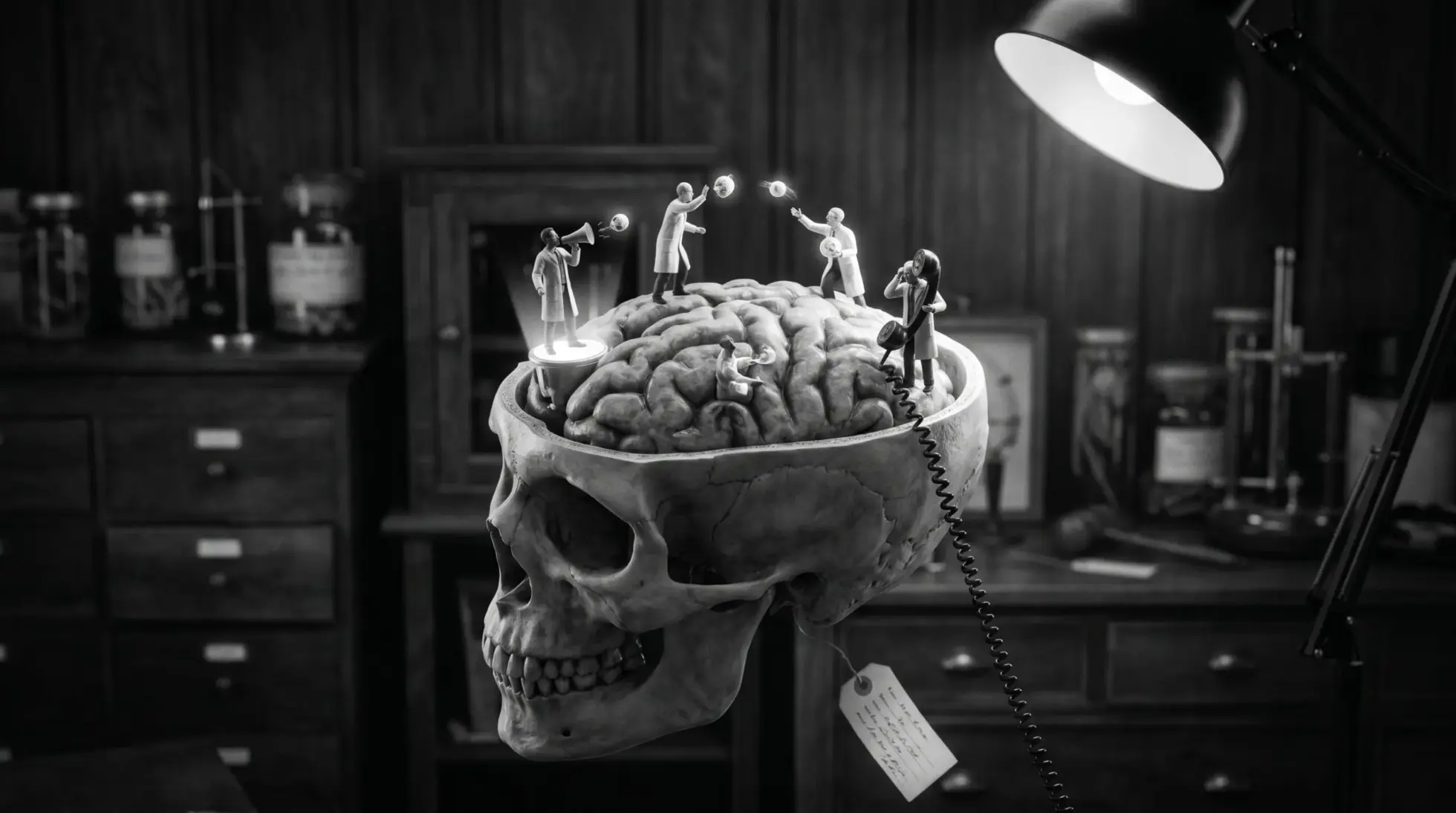
About the header image: it is AI-generated. Cheaper than a photo shoot, and I have made my peace with the age of AI. Everything inside the article is real, the diagrams, the skulls, the findings, and every word. The machine gets the opening shot and not one inch past it.
Why Constant Stress Hits Your Metabolism, and Why the Miracle Root Can Hit Your Liver
Constant stress can push metabolism toward insulin resistance and belly fat. Ashwagandha can lower cortisol and in rare…

The Most Dangerous Drug in the World Is Legal, Licensed, and Taxed.
A Padova study on psilocybin microdoses, and my mother is slipping away into Alzheimer's. Why the mushroom that…
The Homo Genius in the Adaptation Phase
Autism misdiagnosed for decades, prescribed the wrong medications, and told it is a developmental disorder. A forensic professional…