The Constructors: The Improbability of Spontaneous Life
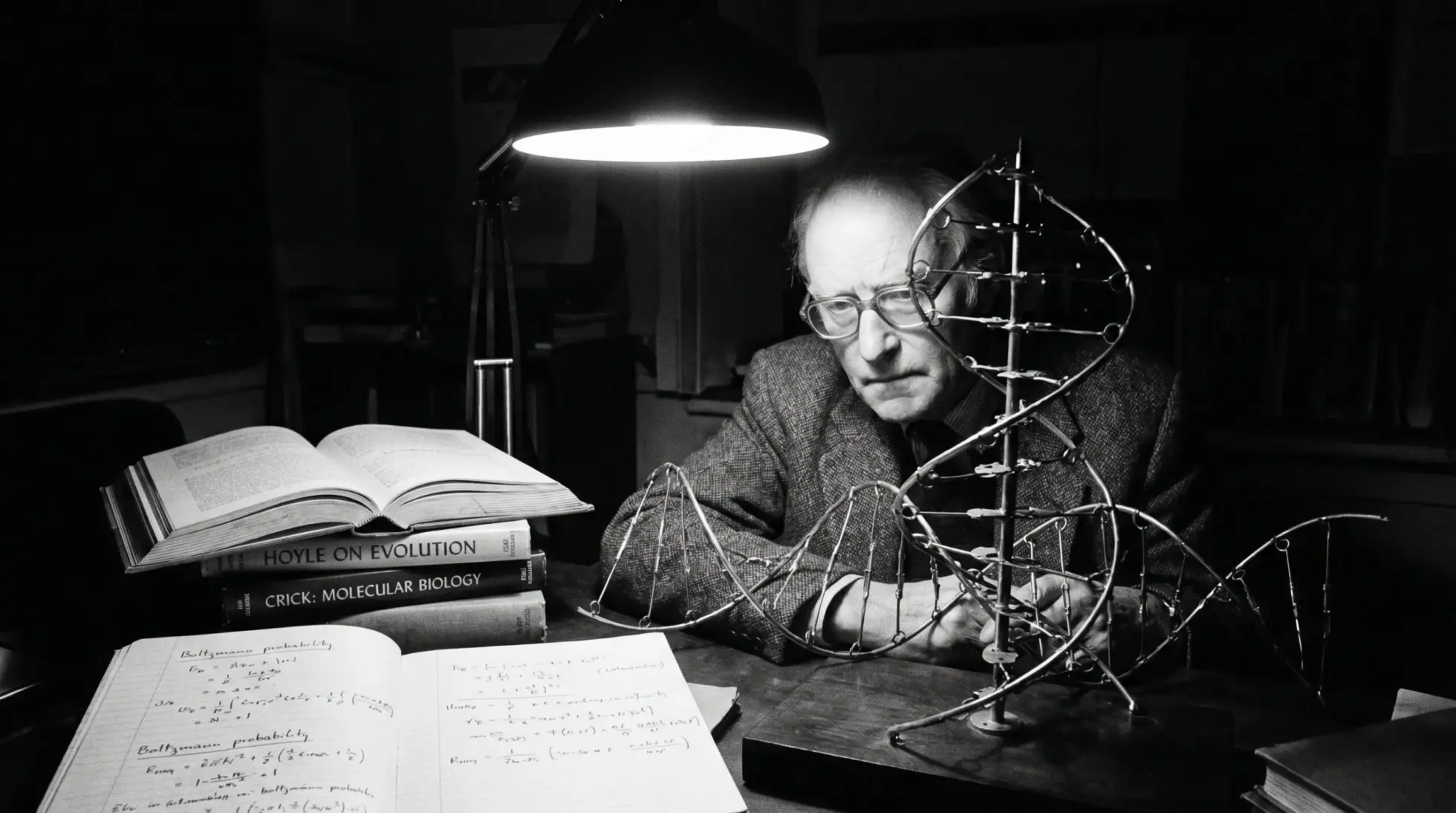
On faith, its history written in blood, the mathematical impossibility of a universe that built itself by accident, and the extraterrestrial architects that nobody in respectable science is allowed to discuss
There are people who know me exclusively from the outside. From the hard shell. From the forensic expert who dissects without sentiment, who says what he thinks, and who learned in thirty years of work in courtrooms and investigation rooms that discomfort is not an argument against truth. These people, reading this text, will be surprised, perhaps even shaken, because what follows is the most personal thing I have ever written publicly, after decades in which it sat inside me, densified, took a form that I had to name for myself first before I could name it for others.
The few who made it through the shell and met the person underneath will recognize every sentence. The physicians among them, the scientists, some of my closest friends, are smiling right now, because they know: that is exactly how he is. That is exactly what he said, over dinner, late at night, when the conversation finally arrived somewhere worth going. I am someone who tells the truth even when it hurts. Not out of sadism, but because lying through silence or polished phrasing is a form of cowardice I am not capable of.
This article will attract criticism. Very probably some people will stop reading after the third paragraph. Others will accuse me of unseriousness, naivety, or that particularly popular category of reproach that says: you cannot hold this position as a scientist. I can hold it. I do hold it. And I explain here why.
What a Two-Year-Old Experienced and Never Forgot
My parents were poor. Not poor in the romantic sense of living simply, but poor in a way that means concrete deprivation, that leaves marks, that cannot be prettified through nostalgia. Bread soup was a highlight. Meat on the table was a rarity, not a given. We lived in a social housing apartment, two rooms, and outings were rare, which is why the one summer day at a Munich public swimming pool with my mother and Aunt Linde stayed in my memory all the more completely, surely also because it was the day on which I died.
I was two years old when I drowned in a Munich public swimming pool. My mother told me later that I could not remember any of it, that this was medically impossible, that a child of that age could not retain such a thing. She was wrong. I remember everything. I remember my mother’s black bathing suit with large white polka dots. I remember Aunt Linde, as we called her, in her purple bathing suit with green and yellow accents. I remember images so precise that they cannot be reconstruction, because reconstruction does not invent colors that no one ever described to me afterward.
What I do not know is the exact sequence of what happened. How I got into the water, who pulled me out, how long I was beneath the surface, none of that was ever told to me, presumably out of that mixture of shame and speechlessness that marked that generation as a whole when it came to things that did not fit into everyday life. What I do know is the during. And the during was light. A warmth that did not resemble the warmth of a summer sun above an outdoor pool, but a warmth that arises from within and radiates outward, a kind of being-held that a child in a drowning body could not have fabricated.
It was beautiful.
That is the word that to this day most precisely describes what I experienced then. Beautiful. Not frightening, not full of awe, not religiously charged, but quiet and beautiful and familiar in a way that a child of that age, with the means of his language and his categories, could not have fabricated. I was at a place that knew me. I was someone who was known. And the only thing that could compete with the intensity of the experiencing was the knowledge that this being would not end, because it had been before me and would continue after me, and that what lay between the passes was not the essential thing, but the pause between the phrases of a longer composition.
And then I came back.
What I experienced upon waking was the exact opposite of what during had been there. It was fear. But the word fear does not capture it, because the word fear belongs to the vocabulary of ordinary experience, and what I experienced did not belong to that vocabulary. It was a fear that exceeded human scale, a fear that had neither an object nor a beginning, but was simply present in me like a second body trying to break out of the first. I cannot describe it today, six decades later, because the language with which I am attempting it is the language that handles ordinary fears, and that was not an ordinary fear.
I believe that it was the impact. The impact of that expanded consciousness upon the narrow, living, breathing body that had just escaped death. The body had survived. Something in me knew that it would actually have been somewhere else. The return was not a gift but a being-shoved-back into a tighter form.
I am asking that you genuinely pause there. Not for drama, not to generate sympathy, but because that experience raised for me the deepest question I have ever had confronted with any phenomenon. What is it that experiences, in a child who cannot yet read, to whom no philosophy had been taught, who had no vocabulary for reincarnation or continuity of consciousness or transmigration of souls, because none of these concepts had ever been mentioned in his presence? What encounters something it has never seen before, and recognizes it nonetheless as familiar?
The experience was complete. It had a logic. It implied the assumption that consciousness does not end with the ending of this body, that the continuity of experience persists through a new form, and that what we call death is a different sort of relocation than the one we usually settle for. That is not an experience one invents. It is an experience one has because it is there.
I say this not as a religious statement. I say it as an empirical observation, as a data point that fits into none of the available explanatory schemas, and for that very reason should not be looked away from. The skeptics will object that near-death experiences are neurobiologically explainable, oxygen deprivation in the dying brain, endogenous release of dimethyltryptamine, residual current in the temporal lobes. That may apply in many cases. What it does not explain is why reports of near-death experiences from completely different cultures, age groups, and religious backgrounds are so consistently structured that they form their own phenomenological class. What it likewise does not explain is why a two-year-old child, who according to every established theory of developmental psychology should not be able to form autobiographical memories of this depth of detail, today recalls with full clarity colors and patterns that no one ever described to him afterward. The black bathing suit with white polka dots. Aunt Linde’s purple bathing suit with the green and yellow accents. The memory was not reconstructed from later accounts, because my mother explicitly said I could not know this. It emerged from the experiencing itself, and it stayed.
I believe in reincarnation. I believe in the transmission of energy, in the continuity of something essential through changing forms. And I believe this not from religious feeling, not from comfort or wishful thinking, but from the connection of three observations that for me cannot be separated: first, the conservational principle that physics formulated long ago without fully drawing its consequences, namely that energy is not destroyed but transforms; second, that experience in the water, which showed me, long before I had categories for such things, that what we call consciousness is not bound to the body the way water is bound to its pitcher; and third, that incomprehensible fear upon waking, which becomes meaningful only if one assumes that something within me had registered the difference between the two states.
Why should the phenomenon of subjective experience be exempt from the conservation principle that applies to everything else in the universe? The materialists have no answer to that which is not circular. They say that consciousness is a function of the brain, because the brain is demonstrably responsible for its modulation, and when the brain stops, consciousness must stop too, because consciousness is a function of the brain. That is not a conclusion. That is a premise that declares itself to be the conclusion.
I Am Not a Simple Person, and I Never Was
I have spent my entire life trying to be self-sufficient. Not in the libertarian sense of refusing society, but in the deeper sense of wanting to know. Really know. I can swap the engine of a car, the clutch and brakes are no problem. When medical questions concern me, I sit down and read until I have understood the underlying mechanisms, not the short version, not the patient summary, but the biochemistry. When I do visit a physician, I know in most cases what he will say before he says it, and if he does not say it, I say it for him. The physicians who know me more closely and are reading this text right now are smiling, because that is literally true.
This attitude, this needing-to-know, was never an intellectual pose for me, but a kind of fundamental need that showed itself early. I had to understand how things function. How people function. How life functions. How the world functions. And eventually, on the long path through biochemistry, neurology, anthropology, paleontology, and evolutionary biology, I arrived at a result that shook me, because it was not logically explicable for me. And everything that is not logically explicable using the tools of this world, that cannot be explained from the known laws and structures of this planet, is for me the strongest available indication that its origin lies elsewhere.
God. Really. Where Does the Logic Come In?
I say this without levity, and I say it without wanting to provoke anyone: I do not believe in God. In any. Not in the God of the Bible, not in the God of the Quran, not in the God of the Torah, not in any of the many gods that human groups have invented, cultivated, and deployed for their respective purposes over the course of their history.
The reason for that is not arrogance. The reason is logic.
If a being is supposed to exist that is omnipotent, omniscient, all-good, and simultaneously the creator of this world, then this being must either have wanted the world exactly as it is, or it cannot do anything about it. Both are unsatisfying. If God wanted this world as it is, then he wanted infant death, he wanted cancer, he wanted Alzheimer’s, he wanted the atomic bomb, he wanted Auschwitz. If he can do nothing about it, he is not omnipotent. That is not a new argument, that is the problem of theodicy, which has occupied philosophers for two thousand years and to which no theology has ever given a convincing answer, only new formulations of the problem disguised as answers.
I read the Bible. I have read it carefully, more carefully than many who hold it daily in their hands. What I find in it is not coherent divine will, but human inconsistency, compiled in a document edited over centuries by many authors with different agendas, different audience expectations, and different political pressures. A God who in Leviticus orders the genocide of entire peoples, and in the Sermon on the Mount proclaims love of enemies as the highest commandment, reveals no consistent divine plan. He reveals the incoherence of the people writing in his name. That is not godlessness, that is literary criticism. And every honest theologian, speaking in a private moment, knows it.
What Faith Has Actually Accomplished
I could travel through denominations and religions here for hours, and everywhere I would encounter the same pattern. But I stay with Christianity, because it is the system that has most strongly shaped Western history and is most relevant in our context.
The Crusades, over roughly two centuries, killed hundreds of thousands in the name of a God whose center, according to the testimony of his own scriptures, was love of neighbor. The Inquisition tortured and executed people for the offense of thinking differently, some of them in the absence of other charges, for offenses that even the Bible itself does not classify as capital crimes. The witch trials that swept through Europe between 1400 and 1700 burned tens of thousands of people, between forty thousand and sixty thousand by conservative estimates, the overwhelming majority of them women, a great many of them bearers of empirical healing knowledge that church authority had learned to recast as a pact with the devil (Levack, B. P., 2013, The Oxford Handbook of Witchcraft in Early Modern Europe and Colonial America, Oxford University Press). Walpurga Hausmännin, a licensed midwife in Dillingen for some nineteen years, was burned at the stake in 1587 on confessions, extracted under torture, that she had killed dozens of the infants she delivered using a salve given to her by the devil. Whether she ever harmed a single child is lost behind the torture that produced the words. What is not lost is the structure. A woman who had spent two decades at the dangerous threshold between birth and death was recast as an agent of Satan the moment enough newborns died, which in early modern Europe they constantly did. Her empirical knowledge of the body, in a system that owned the franchise on the body, was not an asset. It was evidence.
And then, the strongest image of all: the Crusaders. Men who had fought, bled, and died for decades on papal commission, who held Jerusalem, who fulfilled the holy mandate. The Knights Templar, the most organized fighting force in Christian Europe, were arrested in 1307 at the behest of King Philip IV of France, tortured, compelled into confessions that had no evidentiary value because they were produced under torture, and burned at the stake. The Pope, the representative of that God in whose name the Templars had died for years, did nothing effective. He signed. An institution that destroys its most devoted servants for political and financial motives carries no moral authority. It carries power, and that is a different word.
Every other major religion has its version of this story. Islam has jihad and inquisition. Hinduism has caste violence. Buddhism has ethnic cleansing in Myanmar. Every belief system that comes into contact with political power shows the same structure: the religious justification of violence against those who believe differently, the co-optation of the sacred for the interests of the powerful, the instrumentalization of transcendence for very earthly purposes. That is not coincidence. It is the predictable consequence of a system that is exempt from verifiable accountability requirements, because it derives its authority from a source that by definition may not be questioned.
I say this not out of bitterness. I say it because it is historical fact, and because an intellectually honest engagement with the question of whether God exists cannot avoid asking why the institutions that were supposed to embody his will on Earth have so systematically violated the central commandments of their own scriptures.
But: Reincarnation and the Energy That Remains
I say I do not believe in God, and simultaneously I say that I believe in reincarnation and in energy transmission. That sounds like a contradiction. It is not.
God, in the sense in which he is conceived in the monotheistic religions, is a personal being with intentions, plans, wrath and grace, a being that hears prayers, that steers fates, that intervenes in history. This conception contradicts the evidence so fundamentally that I cannot maintain it.
The idea that conscious experience ceases with the death of the body and extinguishes completely contradicts the evidence in a different way. Energy is conserved. That is not esoteric, that is the first law of thermodynamics. What changes are the forms. What ceases when an organism dies is the specific biological organization of that energy. What happens with experiencing consciousness, nobody knows, truly nobody, and whoever claims to know it is lying in both directions.
What I thought as a child at the window was not wishful thinking. It was a conclusion. It was there before I had any framework into which I could have placed it. That is relevant evidence for me, not conclusive, but more relevant than the silence that materialist science gives to this question.
The Common Ancestor and the Problem of Time
In July 2024, a study by Edmund Moody and colleagues at the University of Bristol appeared in Nature Ecology and Evolution that shook the scientific community in a way that has not yet fully penetrated public reporting (Moody, E. R. R., et al., 2024, The nature of the last universal common ancestor and its impact on the early Earth system, Nature Ecology and Evolution, 8, 1654-1666). The study examined the last common ancestor of all living organisms on Earth, known by the acronym LUCA, Last Universal Common Ancestor, and delivered results whose consequences have not yet been sufficiently discussed.
LUCA lived approximately 4.2 billion years ago. Earth formed 4.5 billion years ago. That means that complex life forms appeared on a planet that had only just cooled and that was during this early phase subjected to intense asteroid bombardment, in fewer than 300 million years. That sounds like a long time. In geological scales, it is a frightening speed.
What this LUCA was is even more important. The Moody team reconstructed a genome of at least 2.5 megabases encoding around 2,600 proteins, a complexity comparable to that of modern bacteria. LUCA had a functional early immune system, a CRISPR-like apparatus for defending against viruses that presupposes considerable molecular sophistication of its own. LUCA was no primitive primordial soup, no simple self-replicating strand, no obvious intermediate stage on the way to complexity. It was already fully complex, with everything that entails.
And now I raise the question that the study poses without answering. How does an organism with 2,600 proteins and an immune system come into existence in 300 million years, on a planet under active asteroid bombardment, without stable oceanic chemistry, without the milieu that many abiogenesis hypotheses assume as a prerequisite? And why does the earliest entity we can reconstruct already appear complete, complex, fully equipped?
Here I have to be fair to the study, because being fair to it makes the problem worse, not better. Moody and colleagues are explicit that LUCA did not live alone. They place it inside an existing microbial ecosystem, which means life of some kind preceded it. That concession does not soften the puzzle. It sharpens it. The precursors one would want to point to, the simple self-replicators on the road to LUCA, are precisely the ones we cannot reconstruct, because they left neither fossils nor readable sequences. The standard answer is that the precursors existed, left no trace, and had enough time for gradual development. That is logically not refutable. It is also not provable. It is an assumption postulated from inside the framework of evolutionary theory, not an observation. The observation is narrower and harder. The earliest living thing we can actually read from the genetic record was already enormously complex.
The Number Nobody Wants to Hear
Fred Hoyle was an astrophysicist at the University of Cambridge, a declared atheist, and one of the most mathematically rigorous thinkers of the twentieth century. He had no religious agenda. He had a calculation. In his work with the astrophysicist N. C. Wickramasinghe, Hoyle calculated the probability that the roughly two thousand enzymes required for the simplest self-sustaining cellular life could arise through random chemical processes (Hoyle, F., and Wickramasinghe, N. C., 1981, Evolution from Space: A Theory of Cosmic Creationism, J. M. Dent and Sons). The result was a number: one in ten to the power of forty thousand.
To put that in context: a common heuristic, going back to Émile Borel, treats roughly one in ten to the power of fifty as the threshold below which an event can be regarded as negligible on a cosmic scale. The total number of atoms in the observable universe is estimated at approximately ten to the power of eighty. The age of the universe in seconds is approximately ten to the power of seventeen. Neither number comes anywhere close to the combinatorial wall that Hoyle had calculated.
I should be honest about what this calculation is and is not, because a hostile reader will be honest about it for me. Hoyle assumed the simultaneous random assembly of all those enzymes at once, and no serious origin-of-life researcher proposes that life was assembled that way. The calculation is a ceiling, not a mechanism. But knocking down the crudest version does not dissolve the underlying problem, it only postpones it, and Hoyle knew that. He arrived at a conclusion he himself called uncomfortable. If one proceeds directly, he wrote, without deflection by fear of the wrath of scientific opinion, one is driven toward the conclusion that biomaterials with their extraordinary measure of order point to design. No creationism, no God, no religion. An atheist with a calculation, following it where it led.
Harold Morowitz at Yale University ran a complementary calculation from a different direction (Morowitz, H. J., 1968, Energy Flow in Biology, Academic Press). He asked what would happen if one heated a large quantity of bacteria until every chemical bond broke, then let the atoms cool and re-form bonds at equilibrium. The probability that a single living bacterium would reassemble was, on his estimate, around one in ten raised to the power of one hundred billion. That is not a number anyone can picture. It is a thermodynamic way of saying that the equilibrium state of that matter is not life, and that life is held far from equilibrium by something the equilibrium calculation does not contain. Murray Eden at MIT pushed at the same wall from yet another angle, the improbability of producing functional protein sequences by random processes (Eden, M., 1967, in Mathematical Challenges to the Neo-Darwinian Interpretation of Evolution, Wistar Institute Press). Different scientists, different methods, one recurring conclusion. The numbers do not support the spontaneous origin of even the simplest life. The theory survives less because the arithmetic favors it than because the alternatives are institutionally more uncomfortable.
The Harvard biologist and Nobel laureate George Wald put the difficulty with rare candor (Wald, G., 1954, The Origin of Life, Scientific American, 191(2), 44-53). One has only to contemplate the magnitude of the task, he wrote, to concede that the spontaneous generation of a living organism is impossible, and yet here we are, as a result, he believed, of spontaneous generation. I take his honesty seriously. His escape from the contradiction was time. Given billions of years, Wald argued, the improbable becomes the inevitable, time itself performs the miracles. That is where I part company with him, and I want to be precise about where. Time multiplies the number of trials. It does not write the instructions that a trial would have to assemble in order to count as a success. The problem Hoyle and Morowitz were circling is not a shortage of attempts. It is the origin of specified information, and waiting does not turn noise into a message. That is not an argument against Wald’s integrity. It is an argument against his solution.
Francis Crick and the Confession of the Century
There is a fact in the history of science that is absent from the textbooks and absent from the talk shows in which evolution and creation are debated. Francis Crick, that Crick who together with James Watson discovered the double helix structure of DNA, one of the cofounders of modern molecular biology, published in 1973 together with the chemist Leslie Orgel in the journal Icarus an article titled Directed Panspermia (Crick, F. H. C., and Orgel, L. E., 1973, Directed Panspermia, Icarus, 19(3), 341-346).
In this article, Crick and Orgel argued that life on Earth may have been deliberately seeded by an advanced extraterrestrial civilization. Not through meteorite impact, not through random cosmic transport, but intentionally, through a technologically advanced intelligence that had developed space vehicles and brought microorganisms to Earth to establish life here. Crick did not formulate this as a certainty. He formulated it as a hypothesis worth pursuing seriously: it is possible that life reached the Earth this way.
Crick was no mystic. He was no esotericist. He was one of the most precise scientific thinkers of the twentieth century, decorated with the Nobel Prize in Physiology or Medicine. And he and Orgel were pushed toward the thesis by two findings, both of which they were careful to call weak. The first was the universality of the genetic code. The second was molybdenum. Molybdenum is rare in the Earth’s crust, present at a concentration Crick and Orgel put at only about 0.02 percent, well below chemically similar metals like chromium and nickel, yet it plays a disproportionate role in the biochemistry of all known life. If life had originated here, one might expect it to lean on the abundant elements. That it instead leans on a scarce one, which could be abundant somewhere else, struck them as a possible fingerprint of an extraterrestrial origin. The molybdenum point did not go unchallenged. Within a year, other workers pointed out that molybdenum is far less scarce in seawater than in the average crust, which weakens the comparison considerably, and Crick himself ranked it as one of two weak facts, not a proof. I treat it the same way, as a thread worth pulling, not a verdict.
In 1981, Crick gave the subject a book of its own, titled Life Itself (Crick, F. H. C., 1981, Life Itself: Its Origin and Nature, Simon and Schuster). He developed the argument that the probability of a purely Earth-based origin of life is low enough that an external source, an intelligent influence from off the planet, deserves serious scientific consideration. The codiscoverer of the structure of DNA was saying, in substance, what I am saying in this article. And it was ignored, because it fit into none of the available institutional drawers.
The Mystery of the Universal Language
There is in all of biology barely a fact so remarkable as the universality of the genetic code, and barely one more rarely discussed in its full significance. The genetic code is the rule by which nucleotide triplets, sequences of three of the four DNA bases adenine, thymine, guanine, and cytosine, are translated into amino acids that are then assembled into proteins. There are 64 possible triplets and 20 amino acids, which means the code carries considerable latitude. Multiple triplets can encode the same amino acid, and many other assignment systems would have worked just as well.
And yet: all known living organisms on Earth, bacteria, fungi, plants, animals including humans, use with minimal and well-documented exceptions the same genetic code. A triplet that encodes the amino acid methionine in a human ribosome encodes the same amino acid in a bacterium in the deep sea, in a fungus rotting a tree stump, in an octopus, in a roundworm, in an elephant.
That is not a necessity. It is a choice. Different codes would work equally well, and if life on Earth had arisen several times independently, one would expect different lineages to use different codes, the way different human cultures invented different scripts for the same task. The universality of the code is the strongest available evidence that all life on Earth traces back to a single common origin, a single founding moment in which the code was fixed and then conserved, almost unchanged, through the entire history of evolution (Koonin, E. V., and Novozhilov, A. S., 2009, Origin and evolution of the genetic code: The universal enigma, IUBMB Life, 61(2), 99-111). Recent work continues to read the deep ancestry of that code directly off the proteins that date back to LUCA itself (Wehbi, S., et al., 2024, Order of amino acid recruitment into the genetic code resolved by last universal common ancestor’s protein domains, Proceedings of the National Academy of Sciences, 121(52), e2410311121).
One language for everything. One blueprint that no later biological system departs from, because it is anchored in the architecture.
What the Ancients Chiseled Into Stone
I am someone who has spent his life analyzing images, interpreting video footage, reading traces, and drawing conclusions that have to hold up in court. When someone tells me that an image must be interpreted one way and not another because that is the consensus, I ask about the method, the procedure, the alternative hypotheses, and I ask to be shown why the consensus interpretation excludes the others rather than merely displacing them.
With that eye I look at the sarcophagus lid of the Maya ruler K’inich Janaab’ Pakal, discovered in 1952 beneath the Temple of the Inscriptions in Palenque, Mexico, dated to the seventh century of the common era. The image shows a human figure in a forward-leaning, semi-reclined position. The figure’s hands sit in a posture that creates the impression of manipulating controls. Below the figure run flame-like patterns. Around it run curved, tubular structures. The upper body is enclosed in an environment that resembles the boundary of a unit sealed off from the world outside.
Mainstream archaeology reads this image as a depiction of Pakal’s death and his journey into the Maya underworld Xibalba, in the framework of Maya cosmology and World Tree symbolism. That is a coherent interpretation, embedded in the cultural grammar of Maya imagery. I do not contest it. I note only that two coherent interpretations of one image can coexist, and that the institutional preference for one does not make the other disappear.
Whatever the sculptor carved into that lid, he had to have perceived it somehow, or received it as transmitted knowledge. If it was pure spiritual abstraction, why does the composition so strikingly resemble a pilot in a cockpit, an arrangement the sculptor could never have seen? And how do we explain that cultures with no known connection to one another, on different continents, with different scripts and different religious frameworks, independently produced figures in garments resembling protective suits, depicted flying objects, and described beings that came down from the sky?
Egyptian tomb art carries, across dynasties and sites, depictions that most scholarship classifies as mythological and that a serious minority of researchers reads as records of something the artists observed or were told. The Dendera reliefs, read by some as stylized images of deities and by others as technical illustrations of illuminating devices, have to this day received no single interpretation that accounts for all the details.
I am not saying these images prove contact with extraterrestrial intelligence. I am saying that a civilization able to build the Great Pyramid of Giza, with its astronomical alignment to the cardinal directions and its construction precision that still impresses engineers today, was no civilization of primitives to be patronized. Something made them capable of what they were capable of. Something that our models of human development have not yet fully explained.
And every archaeologist who has spent enough decades on excavation sites, who is honest with himself when no one is listening, has had that moment standing in front of a finding and thinking: this cannot actually be. And then he set it aside, because the institutional cost of not setting it aside was too high.
The Universe Was Not Built for Us, and That Is the Point
Now the simplest argument. The one on which I need to spend the fewest words, because it makes itself.
The observable universe contains, on current estimates, around two trillion galaxies. Each contains on average a hundred billion stars. Our own galaxy, the Milky Way, with its roughly two hundred billion stars, is entirely unremarkable in size and complexity, an average specimen of the most common galaxy class. The total number of stars in the observable universe is estimated at around ten to the power of twenty-four, a figure for which the human brain has no intuitive handle.
And around a large fraction of those stars, planets orbit. The Kepler space telescope and its successors have shown that planets are not the exception but the rule. For the Milky Way alone, several hundred billion planets are estimated, a substantial share of them in the habitable zone of their stars. The Drake equation, formulated by the radio astronomer Frank Drake in 1961 at the Green Bank conference, estimates the number of technological civilizations that might be active in the Milky Way right now, and depending on the parameter choices it returns anything from one to several thousand.
Anyone who, in this context, believes that Homo sapiens on the third planet of an unremarkable star in an unremarkable galaxy is the only intelligent life form that has ever existed in this structure is not making a modest claim. He is making the most anthropocentric claim available in this universe. He is saying: all of it, two trillion galaxies, ten to the power of twenty-four stars, 13.8 billion years of cosmic history, was produced so that we could sit here and scroll through our phones. That is not science. It is the exact opposite of modesty.
What I believe instead is that the universe contains intelligence we have not documented, that some of it is older than our species by timescales that dwarf the whole of human history, and that the origin of biological complexity on Earth, given what the probability calculations say about spontaneous generation, fits considerably better with what I call directed seeding than with a chemical accident in a warm pond.
The Constructors
For what I consider the most plausible reading of the available evidence, I have chosen a name: the Constructors. Not gods. Not in any religious sense. No beings that want to be worshipped, that hear prayers, that steer fates. Technologically advanced biological entities, old on timescales against which the existence of Homo sapiens is a footnote, who had developed the capacity to design biological life, transport it, and establish it at a prepared site.
I once wrote this conviction down in a manuscript I never released, because the criticism arrived before the manuscript did. That particular kind of institutional pre-emptive rejection that meets anyone who poses the problem seriously and without a prefabricated answer. I stepped back from publishing, not because the arguments had weakened, but because I had recognized that certain debates need their time.
The time is now.
The DNA molecule is, biochemically, not the product of a gradual development from simpler precursors through natural selection. That is no failing of evolutionary theory, which for what it actually describes, the change and diversification of life on the basis of life that already exists, is excellently supported. The problem sits before evolution. In the first step. In the emergence of the self-replicating system itself.
Selection requires replication. Replication requires an information system. The simplest known information system that allows replication is already substantial in its base complexity. The bases of DNA do not pair at random, and they do not pair for physicochemical reasons inherent in their own structure. The pairing of adenine with thymine and guanine with cytosine is a property of the complete system, not of the components in isolation. A self-replicating system that is supposed to grow out of such a code must have the code complete before it can replicate at all. There is no halfway state in which a half-finished genetic code replicates and gets selected, because a half-finished genetic code does not replicate.
The Constructors, as my working hypothesis has it, did not conjure this system out of nothing. They developed it somewhere else, in a different biochemical context, over timescales and with means we do not know, and brought it to the early Earth at a moment that lines up with what the LUCA research describes: about 4.2 billion years ago, within 300 million years of a habitable planet forming, as a complete, complex, functional living system, immune system included.
Evolution did everything afterward. The diversification of life, the rise of eukaryotes, multicellular organisms, plants, animals, humans, all of that is evolutionary biology, and I do not doubt it. What I doubt is that the starting point, the first 2,600 proteins, the complete replication system, the universal code, assembled itself in 300 million years on a planet under bombardment out of chemical accident.
The Single Cell That Shows Everything
There is an image, made possible by the multicolor three-dimensional super-resolution microscopy of the past years, that resolves a single mammalian cell down to the nanoscale, and anyone who looks at it without stopping is not looking carefully enough (Zhang, Y., et al., 2020, Nanoscale subcellular architecture revealed by multicolor three-dimensional salvaged fluorescence imaging, Nature Methods, 17, 225-231). What it shows is no simple bag of chemicals. It shows a city, in the full sense of the word, with specialized districts, with transport infrastructure running between them, with communication systems, energy production, waste processing, quality control, repair crews, and archives that store information at a density and precision our own engineering cannot match, all coordinated, all running at once.
The DNA in a single human cell, unspooled, would reach about two meters. Every cell in the body holds the same two meters of tightly wound information, and the body holds roughly thirty-seven trillion cells. That DNA encodes not only the proteins needed to build and maintain the body, but the regulatory systems that decide when and where each protein is made, the timing mechanisms that coordinate development, the error-correction systems that catch and repair copying mistakes, and the machinery by which the whole thing copies itself with extraordinary fidelity.
That is not the product of a tornado blowing through a junkyard, to borrow Hoyle’s own image. It is an engineering achievement of a sophistication we cannot currently reproduce, that we are only beginning to understand, and whose origin, if we take the probability calculations seriously, cannot be charged to the randomness of chemistry alone.
Homo sapiens: The Most Brilliant and the Most Self-Destructive Creature This Planet Has Ever Produced
The result of this process, Homo sapiens, is the most remarkable and the most catastrophically self-destructive thing this planet has produced. Both at once, and I mean both with the same seriousness.
We can decode the genome. We have set foot on the moon. We have built machines that run in seconds calculations a human brain would need millions of years for. We have defeated diseases, cut famine, doubled average life expectancy in two centuries. The sheer mass of accumulated knowledge that humanity holds today is beyond comparison with any earlier point.
And with all of it we fight wars over lines drawn on maps. We dismantle the ecosystems we need to survive. We repeat the same fundamental errors, generation after generation, with a consistency that would be frightening if it were not so familiar. In its cognitive capacities, Homo sapiens is the output of a construction of extraordinary sophistication. In its collective behavioral steering, it is an unfinished experiment.
I do not believe we will stop making these errors. I believe the pattern sits too deep to be corrected by the accumulation of knowledge alone. Knowledge we have. What we lack is the wisdom to use it, and wisdom is not downloadable, not transmissible by curriculum, not stably heritable in the genes. Every generation has to earn it again, and most fail.
That is not pessimism. It is a finding. And whoever is mistaken about a finding cannot treat the problem underneath it.
The Question No Believer Asks
I close with the question I always ask when people tell me that the existence of God is proven by the existence of life, by the beauty of the world, by the complexity of creation. If God created this complexity, who created God?
The question is usually waved away with the argument that God is by definition eternal, that he has no beginning, that he is the first cause that itself needs no cause. That is a philosophical maneuver, not an argument. It simply declares that the chain of explanation ends at a chosen point, without explaining why it ends there. Apply the same move to the matter of the universe and the result is identical: the universe exists, has no external origin, and the question of what came before is meaningless. Nothing has been gained.
What I find more convincing about the Constructors than about God is not that the Constructors solve the riddle. They do not. They displace it, exactly as God displaces it. But they displace it in a way compatible with the natural-scientific picture of the world: with the rise of technology through evolution over very long timescales, with the spread of life through the universe, with the possibility that intelligent forms in a universe of this age and size reach the level of technological capability we ourselves might reach in a few thousand years. They are not supernatural. They are natural, only older, further along, and beyond our current ability to detect.
That is not a creed. It is a working hypothesis that does the most justice to the evidence I have gathered. It is falsifiable, it is extensible, it consecrates nothing. And, unlike belief in a personal God who steers history, hears prayers, and judges sins, it is at least not refuted by the mere act of looking at the world as it is.
The Constructors may have made something brilliant. Whether they would be satisfied with what became of it, I do not know. But I do know that the responsibility for what we make of it sits entirely with us. No God lifts it off our shoulders. No cosmic plan justifies it after the fact. We are the result of a design that handed us the capacity to understand.
What we understand, and what we do with it, is our task. And measured against that, we are, by a wide margin, still beginners.
A second, closely related article has been in the works for several days and will appear shortly. Its title is Probability Zero, and it supplies the mathematical foundation for what is laid out here philosophically and historically. It works through, in numbers, in formulas, in comparisons the imagination can actually reach, why the emergence of the human genome by chance is not merely improbable but mathematically excluded. Anyone moved by this text will find in the next one the numbers behind the movement.
This is the position of a scientist who has spent his life gathering evidence and following it where it leads, even when it leads somewhere uncomfortable. It is not a peer-reviewed paper. It is an honest account of where a lifetime of looking has taken him. Whoever wants to object, please: with arguments, with evidence, without appeal to authority or consensus. Consensus is what currently counts as the majority opinion in science. Truth is something else.
References
- Crick, F. H. C. (1981). Life Itself: Its Origin and Nature. Simon and Schuster.
- Crick, F. H. C., and Orgel, L. E. (1973). Directed Panspermia. Icarus, 19(3), 341-346. https://doi.org/10.1016/0019-1035(73)90110-3
- Drake, F. D. (1961). Project Ozma. Physics Today, 14(4), 140.
- Eden, M. (1967). Inadequacies of neo-Darwinian evolution as a scientific theory. In P. S. Moorhead and M. M. Kaplan (Eds.), Mathematical Challenges to the Neo-Darwinian Interpretation of Evolution. Wistar Institute Press.
- Hoyle, F., and Wickramasinghe, N. C. (1981). Evolution from Space: A Theory of Cosmic Creationism. J. M. Dent and Sons. (US edition, Simon and Schuster, 1982.)
- Koonin, E. V., and Novozhilov, A. S. (2009). Origin and evolution of the genetic code: The universal enigma. IUBMB Life, 61(2), 99-111. https://doi.org/10.1002/iub.146
- Levack, B. P. (2013). The Oxford Handbook of Witchcraft in Early Modern Europe and Colonial America. Oxford University Press.
- Moody, E. R. R., Alvarez-Carretero, S., Mahendrarajah, T. A., et al. (2024). The nature of the last universal common ancestor and its impact on the early Earth system. Nature Ecology and Evolution, 8, 1654-1666. https://doi.org/10.1038/s41559-024-02461-1
- Morowitz, H. J. (1968). Energy Flow in Biology. Academic Press.
- Wald, G. (1954). The Origin of Life. Scientific American, 191(2), 44-53.
- Wehbi, S., Wheeler, A., Morel, B., et al. (2024). Order of amino acid recruitment into the genetic code resolved by last universal common ancestor’s protein domains. Proceedings of the National Academy of Sciences, 121(52), e2410311121. https://doi.org/10.1073/pnas.2410311121
- Zhang, Y., Schroeder, L. K., et al. (2020). Nanoscale subcellular architecture revealed by multicolor three-dimensional salvaged fluorescence imaging. Nature Methods, 17, 225-231. https://doi.org/10.1038/s41592-019-0676-4
Disclaimer: This article reflects the author’s own research and opinion as of the publication date shown above; later findings or legal changes may have overtaken it, so always check that date. Sources are cited for independent verification, and no liability is accepted for third-party studies. This is general information, not medical, legal, or professional advice: for medical questions see a doctor, for legal questions a lawyer, and in an acute crisis contact emergency services or a crisis helpline.
About the header image: it is AI-generated. Cheaper than a photo shoot, and I have made my peace with the age of AI. Everything inside the article is real, the diagrams, the skulls, the findings, and every word. The machine gets the opening shot and not one inch past it.

Ghost DNA and what we cannot know about where we come from
Every person alive carries genetic material from a group of humans of whom not a single bone exists.…
What Is Radiocarbon Dating? Everything About the Method That Decides Between a Murder Case and an Archaeological Find
Radiocarbon dating measures remaining carbon-14 to determine when carbon exchange ended. This article explains the method from atmospheric…

Is It Legal to Own a Real Human Skull? Yes, Subject to 3 Conditions
Private possession of a real human skull is not prohibited in Germany. Three conditions decide the question, and…