The Ibiza Video: A Journalistic Crime Story
On the 2 years between a hidden camera in an Ibiza villa and the evening the footage went public, the 14 days of verification that preceded publication, and what forensic authentication actually involves in a case like this.
When I first wrote something about this in October 2021, I had very little time. The forensic caseload was pressing, the files were stacking up, and a blog entry felt like something that could wait. I drafted a short notice, a placeholder really, pointing readers toward the Sky documentary and the fictional series that had just launched. That placeholder has irritated me every time I have looked at it since, because what sits behind it deserves considerably more than 5 minutes of copy-paste from a press release.
Here, therefore, and with apology for the delay, is the version I should have written then.
What Happened in Ibiza in July 2017
The story begins, as so many Austrian stories do, with a setup that sounds like fiction. A Viennese lawyer and a private detective with a taste for the theatrical came up with an idea: lure a senior FPÖ politician into a compromising situation, record everything, and wait for the right moment. The target was Heinz-Christian Strache, then chairman of the Freiheitliche Partei Österreichs and, at the time of the recording, on his way to becoming Vice-Chancellor of Austria. The bait was a paid decoy presenting herself as the niece of a Russian oligarch, one willing to pump millions into Austrian politics in exchange for government contracts and favorable legislation.
The meeting took place in a rented villa on the Spanish island of Ibiza in July 2017. The recording ran for approximately 7 hours. In it, Strache and his parliamentary group leader Johann Gudenus discussed, in language that left little room for charitable interpretation, the mechanics of channeling political donations through foundations to avoid audit scrutiny by the Court of Audit, the possible takeover of the mass-circulation tabloid Kronen Zeitung by an entity sympathetic to the FPÖ, the awarding of public contracts in road construction, and a media landscape Strache explicitly said he wanted to build “like Orbán.” At one point Gudenus, translating between Strache and the woman, reassured his increasingly skeptical boss: “No, it’s not a trap.” It was, of course, precisely that.
The footage sat in a drawer for nearly 2 years. The timing of the release, days before the May 2019 European Parliament elections, was clearly deliberate. On 17 May 2019 at 6 p.m., Der Spiegel and the Süddeutsche Zeitung published excerpts simultaneously. Within 24 hours, Strache had resigned as Vice-Chancellor and FPÖ chairman. Gudenus stepped down from all political functions. Within a week, the ÖVP-FPÖ governing coalition had collapsed, a parliamentary vote of no confidence against a sitting government was carried for the first time in Austrian post-war history, and Federal President Alexander Van der Bellen had appointed a caretaker cabinet of experts under Brigitte Bierlein, who thereby became Austria’s first female chancellor.
The political earthquake, as the documentary aptly describes it, continues to send aftershocks through Austrian politics years later.
The 2 Years Between Recording and Publication
What happened in those nearly 2 years between the July 2017 recording and the May 2019 publication is itself a story that the documentary reconstructs with care. The footage had been made, but no one immediately knew what to do with it. Various channels had been tried for selling or placing the material, all of them unsuccessful. Irena Markovic, the real estate agent who had made the initial connection between the makers and Gudenus, found herself inadvertently at the center of a situation she had not bargained for. The material kept changing hands in a world where everyone who saw it understood its explosive potential and no one wanted to be the one holding it when it detonated.
The Süddeutsche Zeitung journalists received the material through a conspiratorial chain that involved, at one point, viewing excerpts through polarizing filters on a screen that only specially coated glasses could make visible. Not a glamorous process. Not fast. The kind of operationally complicated information transfer that is necessitated when everyone involved has reason to be careful and no one fully trusts anyone else. Both Der Spiegel and the Süddeutsche Zeitung later confirmed they had not paid for the video. What they had done was commit to verifying it.
The Journalists Who Carried This
Bastian Obermayer and Frederik Obermaier are not ordinary journalists, and I say that as someone who has worked alongside a considerable number of them. Both work for the Süddeutsche Zeitung. Both are Pulitzer Prize winners, awarded the 2017 Pulitzer for Explanatory Reporting in connection with the Panama Papers investigation, the largest data leak in journalism history at the time of its publication. Obermayer received the initial Panama Papers material from an anonymous source and coordinated the subsequent investigation involving some 400 journalists across newsrooms in 80 countries.
When the Ibiza material came to them, they were therefore not operating from a standing start. They had already demonstrated, over years of sustained practice, what it means to handle explosive material responsibly: verify, cross-check, sit on what you have until you are certain it will hold under scrutiny. The Panama Papers had been in Obermayer’s possession for weeks before a single word was published. The Ibiza footage required the same discipline, and the same infrastructure.
That infrastructure included my contribution.
The 14 Days Before Publication
In the weeks before the 17 May publication, the Süddeutsche Zeitung and Der Spiegel commissioned me to examine the footage for forensic authenticity. I work from my institute in Bavaria, and I had been internationally connected to both publications through prior forensic work. The assignment was clear: determine whether the material was genuine, whether it had been manipulated, whether the audio and video tracks were internally consistent, and whether the technical characteristics of the recording supported or undermined the journalists’ intent to publish.
I will not describe the full forensic methodology in detail here, partly because a thorough account belongs in a separate technical piece, which I have written elsewhere on this site, and partly because the specific parameters of an authentication methodology are not details one publishes while the associated legal proceedings are still unresolved. What I can say is that the examination involved frame-by-frame analysis of encoding artifacts, synchronization of audio and video tracks, assessment of lighting consistency, examination of camera position data embedded in file metadata, and comparison of these parameters against what a multi-camera covert recording in an uncontrolled interior environment predictably produces.
The result was unambiguous. The material was genuine. There were no indicators of post-production manipulation of evidentiary content. The recording was what it purported to be: a continuous covert capture of a real conversation, at a real location, between real people who had no idea they were being filmed. Technically, the production quality was actually rather poor in places, which is exactly what you expect from a covert operation running on concealed cameras without professional lighting or audio control. The imperfections were consistent with the claimed recording circumstances, which matters more than the imperfections themselves.
I delivered my assessment. The newspapers published. The rest is Austrian history.
One thing I want to note about the authentication process, because it is rarely discussed and matters for how we understand what responsible journalism looks like in practice. The decision to commission a forensic examination before publication was itself a significant editorial choice. It created a delay. It added cost. It introduced an outside expert into a process that editorial teams often prefer to keep entirely internal. The journalists made this choice because they understood that publishing without authentication would leave them exposed to challenges that, regardless of the footage’s actual truth, could undermine the public effect of the story. They were right. The authentication held. It has continued to hold.
The Sky Documentary and the Fictional Series
In October 2021, Sky Germany released 2 productions simultaneously: the 90-minute documentary “The Ibiza Video: A Journalistic Crime Story,” directed and written by Jörg Falbe and produced by i&u TV on behalf of Sky Studios, and the 4-part fictional series “The Ibiza Affair,” produced by W&B Television.
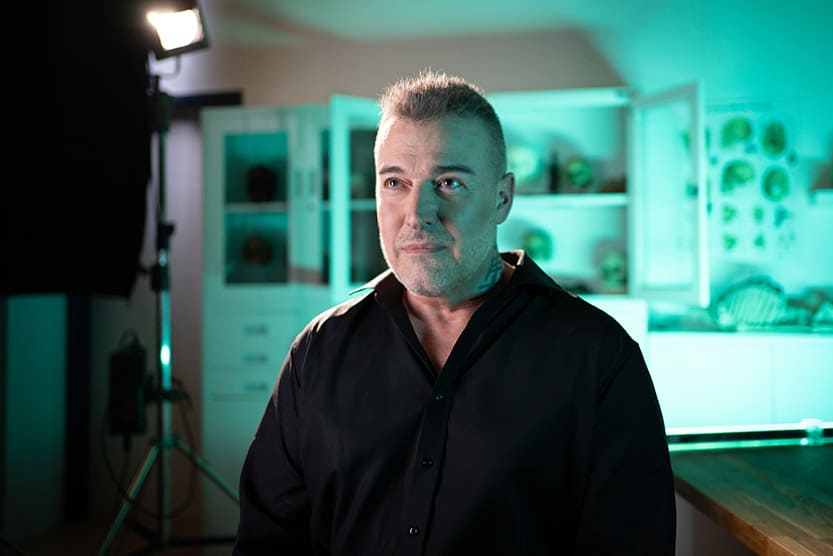
The documentary focuses on the journalistic side of the affair: how Obermayer and Obermaier received the material, what the verification process involved, and what the publication meant for Austrian democratic accountability. Head author and director Falbe reconstructed the story through interviews with several participants and experts. In addition to the 2 lead journalists, the interview roster included their colleague Leila Al-Serori, a Viennese-born journalist who had examined Strache’s political history critically; Strache’s former bodyguard Oliver Ribarich, speaking publicly about the case for the first time; Irena Markovic, who had inadvertently made the first contact between the makers and Gudenus; Hans Mahr, former political chief of the Kronen Zeitung and an intimate observer of Austrian political culture; editors-in-chief Florian Klenk and Corinna Milborn; political scientist Peter Filzmaier; political advisor Stefan Petzner, himself a former politician; and, listed last on that roster in a position I noted with a mixture of amusement and resignation, me.
Why am I listed last? I genuinely do not know. Alphabetical order would not produce that result. Chronological order of involvement would place the forensic examination well before the publication, and therefore before most of the political fallout that the other interviewees describe. My contribution was a precondition for publication, not a footnote to it. But documentary credit sequences work according to their own logic, and I have not spent a single night losing sleep over a title card.
The fictional series takes a dramatized approach to the same events, working through the conspiracy from the perspective of the makers: how the plan was conceived, how the decoy was recruited, how the logistical problem of getting a well-protected politician into a room with hidden cameras was solved. It is explicitly fictional but grounded closely enough in documented events to be substantively illuminating rather than merely entertaining.
Lucia Vogdt, Executive Producer at Sky, described the dual release as both a political document and an argument for independent journalism. Jörg Falbe, in his director’s statement, framed the documentary as a direct response to the media environment of 2021: a landscape of information overload, alternative facts, and self-appointed truth-seekers operating without editorial accountability. His central point, which I find difficult to argue against, is that the Ibiza affair was only possible because 2 journalists at a serious editorial institution were willing to hold material they could have published for weeks, submit it to external verification, and wait until they were certain.
What Video Forensics Actually Means in a Case Like This
I am occasionally asked to describe what video forensic authentication looks like in practice, usually by people whose mental picture has been shaped by crime procedurals involving analysts dramatically enhancing blurry footage on enormous screens while keyboards clatter. The reality is different, considerably slower, and, I would argue, considerably more interesting.
A covertly recorded video is a document. Like any document, it can be forged, selectively edited, or composited from multiple sources, and the sophistication of modern video editing software means that fabrications, when done carefully, can be visually convincing to the naked eye. The forensic examiner’s job is to determine whether the document is what it claims to be, not visually but structurally. The evidence is in the encoding, not the image.
For a recording of the Ibiza footage’s type, the relevant questions were these. Is the recording genuinely continuous, or are there edit points that have been concealed? Have any audio segments been replaced or overdubbed? Are the persons visible in the footage who they appear to be? And are the file’s embedded metadata consistent with the claimed recording circumstances, the location, the time, the equipment?
These questions are answered through a layered analytical process. Encoding parameters are examined for internal consistency. A genuinely continuous recording from a single device produces specific patterns in compression artifacts and frame timing that are extremely difficult to replicate artificially across an edit, because different recording sessions introduce subtle but measurable discontinuities. Audio analysis covers waveform continuity, background noise profiles, and the presence or absence of any temporal displacement between the audio and video streams that would indicate separate capture. Facial and physiognomic analysis compares visible features against reference material from known, uncontested sources, checking for composite indicators. Metadata examination reconstructs the file’s internal history: timestamps, device identifiers, encoding software signatures, and the characteristic artifacts left by post-processing tools, which remain embedded in the bitstream even when the tool has been directed to minimize its footprint.
What the Ibiza footage showed, under this examination, was a recording profile consistent with covert multi-camera capture in an uncontrolled interior space. The technical imperfections were where you would expect them. The encoding was continuous. The audio was not replaced. The people on screen were the people they appeared to be. The metadata was internally coherent. There were no indicators of content manipulation.
I have worked on cases where the forensic conclusion ran the other way: material presented as evidence that, under examination, showed unmistakable markers of post-production editing. Those conclusions matter equally, because they protect accused persons from fabricated evidence just as much as they protect the integrity of genuine recordings. Both directions of the conclusion serve the same function. The Ibiza examination produced an unambiguous result in one direction: this was real.
A Note on the Phrase That Became a Punchline
One of Strache’s initial defensive framings was the Austrian colloquial expression “b’soffene G’schicht,” roughly translatable as something said in drink that should not be taken at face value, the ramblings of a man who had had too much and whose words therefore carry no evidentiary weight. The implication was that what the video captured was exaggerated social bluster, not genuine corrupt intent.
Courts and commentators have been largely unconvinced, and the forensic examination helps explain why, without the forensic examiner having to venture into legal or political assessment.
A genuinely inebriated man improvising bravado for an evening produces a particular kind of conversation: it circles, it contradicts itself, it collapses under scrutiny, and it does not return repeatedly to specific operational mechanisms over hours. What the footage shows is something structurally different. The discussion of specific foundations, specific audit avoidance methods, specific individuals and companies as donors, specific proposed transactions in road construction and media ownership: this is not the shape of improvised pub talk. It is the shape of familiar terrain being described by someone who has navigated it before. The duration and internal consistency of that description are, from a purely analytical standpoint, their own kind of evidence.
The legal system drew its own conclusions from this. The forensic examiner’s conclusion was narrower: the footage was genuine, and the conversation it recorded was what it appeared to be.
What the Documentary Gets Right About Journalism
Falbe’s documentary makes an editorial choice I respect. It stays close to the journalistic process rather than dramatizing the political consequences. It asks how 2 reporters, working under significant time pressure and with material of extraordinary sensitivity, did what careful journalists are supposed to do: verify before publishing, even when the story is already spectacular enough to publish on face value alone.
Journalism in the information environment that Falbe describes has structural incentives against this kind of patience. Speed is rewarded. Being first matters more than being certain. The audience appetite for continuous novelty creates pressure to release before the authentication is complete, and the penalty for being wrong is sometimes smaller than the penalty for being late. Obermayer and Obermaier worked against all of these incentives.
They sat on material they could have published for weeks. They brought in outside expertise, including mine. They coordinated with Der Spiegel to ensure simultaneous publication that no single outlet could be accused of having rushed. They did not leak. They did not whisper. They waited until they were sure, and then they went.
The documentary is, in the end, not primarily about Strache or the FPÖ or even about Austria. It is about what it looks like when journalism is done with the kind of discipline that makes it defensible, not just sensational. Sensational journalism has a short half-life. Defensible journalism, verified and authenticated, tends to survive the counterattack. The Ibiza story has survived every counterattack launched against it.
I was a small and deliberately quiet part of the process that made that possible. The documentary credit lists me last, after the political scientists and the party advisors, which is its prerogative. The authentication happened before any of them entered the picture. That is simply how the sequence ran.
The Ibiza Affair as a Case Study in Forensic Media Accountability
Looking back at the case from 2026, what strikes me is not the political drama, though that was considerable enough, but the structural question it raised about how explosive video material in the digital age acquires the authority to change things. The Ibiza footage ended a vice-chancellorship, collapsed a governing coalition, and reshaped Austrian domestic politics for years. None of that was possible without the underlying factual reliability of the material. A government does not fall on footage that can be credibly contested. It falls on footage that has been verified and cannot be plausibly dismissed.
This is not a new problem in the history of political scandal, but it has become a more acute one. The technical capacity to fabricate realistic-looking video has increased dramatically over the decade leading up to 2019, and it has continued to increase since. Deepfake technology, initially a curiosity of the machine learning research community, was by 2019 already producing output sophisticated enough that non-expert viewers could not reliably detect it. This is relevant context for understanding why the forensic authentication step in the Ibiza case was not merely procedurally advisable but substantively necessary. A well-funded legal team attacking a publication in a politically charged context will always probe the evidential foundations of the material. If those foundations are not solid, the attack finds purchase regardless of the underlying truth.
The Obermayer and Obermaier team understood this. They had lived through the Panama Papers litigation threats well enough to know that the standard of evidence expected from journalism that brings down political figures is not the standard of a casual report. It is closer to the standard expected in a courtroom. Not identical, but closer. My examination was structured accordingly.
The broader implication, and this is what I find worth noting publicly, is that forensic authentication of video evidence in political journalism is not a luxury for well-resourced newsrooms. It is a baseline requirement of responsible publication when the stakes are high enough that the subject of the reporting has every incentive to challenge the evidential foundation. The Ibiza case established, in practical terms, that this kind of verification is both possible and effective. The authentication held not because it was unassailable in every particular, but because it was rigorous enough to withstand adversarial scrutiny.
What Happened Afterward
The political and legal aftermath of the Ibiza affair extended for years. Strache was eventually convicted of corruption in 2021, not for what he said in Ibiza, which described schemes that were discussed but not executed, but for a separate 2016 incident involving a donation from a private clinic owner in exchange for a favorable letter to Vienna city authorities regarding expansion permits. The conviction confirmed that the portrait the Ibiza footage painted of Strache’s political operating methods was not an aberration constructed in a single drunken evening.
Austria held early elections in September 2019, at which the FPÖ suffered substantial losses compared to its 2017 result, dropping from 25.97 percent to 16.17 percent. The ÖVP under Sebastian Kurz won the election and subsequently formed a coalition with the Greens. The Ibiza affair thus not only ended one government but substantially reshaped the subsequent one, by making the FPÖ, at least temporarily, too politically toxic for coalition partnership.
Kurz himself was later prosecuted in connection with the broader Ibiza fallout, though on different grounds: allegations of misleading a parliamentary investigative committee regarding personnel decisions at the state holding company Öbag. He was initially convicted, then acquitted on appeal by a higher court, which found that his testimony at the time should not be classified as false testimony.
The makers of the video faced their own legal jeopardy. Austrian criminal law contains provisions protecting personal privacy in recording, and the question of whether the public interest value of the Ibiza footage legally justified its method of acquisition generated genuine legal dispute. The case wound through the Austrian courts for years, producing conflicting rulings on various aspects of the legality of the operation.
The forensic expert is not the appropriate voice for adjudicating those questions. They are matters of Austrian criminal procedure, press law, and constitutional jurisprudence. What I can say is that the authenticity of the material was never seriously in dispute at the legal level, because the examination I conducted had established that foundation. The legal arguments were about how the footage was made and who bore legal responsibility for the making of it. Not about whether it was real. It was real. That question was settled before publication.
Why This Case Still Matters
The Ibiza case had a clean resolution in one respect: the material was genuine, the political consequences followed from that genuineness, and the verification infrastructure held. That is not guaranteed in future cases of this kind, and the infrastructure has become more difficult to sustain.
The proliferation of generative video technology since 2019 means that the gap between what can be fabricated convincingly and what can be authenticated reliably has narrowed. Forensic techniques for detecting AI-generated or composited video content are developing in parallel with the generation technology, but the relationship is asymmetric in a structural sense: fabrication can be optimized against known detection methods in a way that detection cannot immediately be optimized against unknown fabrication methods. This is not an argument against forensic authentication. It is an argument for taking it more seriously than the Ibiza case’s clean outcome might suggest.
What the Ibiza case demonstrated is that responsible editorial institutions, when they choose to invest in the verification infrastructure, can produce results that hold under adversarial conditions. What it did not demonstrate is that this is easy, or cheap, or something that can be improvised under deadline pressure. The 14 days between the authentication assignment and publication was not a comfortable timeline. It was tight. The pressure on both the editorial and the forensic side was real.
Journalismus that aspires to the kind of documented impact that the Ibiza case produced needs to build the forensic authentication capacity before it needs it, not after. By the time the material is in hand and the story is ready to run, there is no time to build the relationship between the editorial team and the forensic expert, no time to establish the trust that allows an examiner to work with genuinely sensitive material, and no time to develop the methodological framework for the specific type of evidence in question. That relationship existed in the Ibiza case because it had been built through prior work. That is the relevant lesson for editorial institutions watching this case from the outside.
The Sky documentary does not discuss the authentication process in technical detail, which is appropriate: its audience is not the forensic community. But it does document the fact of verification as a precondition of publication, and it places that verification, however obliquely, in the credit sequence. I am listed last there. The authentication came first.
Facts
Original title: “The Ibiza Video: A Journalistic Crime Story.” Documentary, approximately 90 minutes, Germany, 2021. Screenplay and direction: Jörg Falbe. Producer i&u TV: Axel Pfeiffer. Executive Producers Sky: Lucia Vogdt, Frank Jastfelder, Marcus Ammon. Associate Producer: Sebastian Stobbe. Interview partners: Bastian Obermayer, Frederik Obermaier, Leila Al-Serori, Oliver Ribarich, Irena Markovic, Hans Mahr, Florian Klenk, Corinna Milborn, Prof. Peter Filzmaier, Stefan Petzner, George A. Rauscher.
Broadcast dates: From 21 October 2021 on the streaming service Sky Ticket and available on demand via Sky Q. On 26 October 2021 from 8:15 p.m. on Sky Documentaries. International distribution: NBCU Global Distribution on behalf of Sky Studios.
The fictional series “The Ibiza Affair,” 4 episodes, produced by W&B Television on behalf of Sky Studios, was available from 21 October 2021 on Sky Ticket and via Sky Q on demand.
Photo credit: Insa Rauscher, i&u TV. Source: Sky Germany, transmitted via news aktuell.
References
- Obermayer, B., and Obermaier, F. (2016). The Panama Papers: Breaking the Story of How the Rich and Powerful Hide Their Money. Kiepenheuer & Witsch / Oneworld Publications.
- Pulitzer Prize Board. (2017). 2017 Pulitzer Prize for Explanatory Reporting: The International Consortium of Investigative Journalists, the Süddeutsche Zeitung and more than 90 other news organizations, for the Panama Papers investigation. pulitzer.org.
- Karner, C. (2021). “Ibizagate”: Capturing a political field in flux. Austrian History Yearbook. Cambridge University Press. https://doi.org/10.1017/S0067237820000557.
- Haus der Geschichte Österreich. (2026). 2019: Ibiza Affair. hdgoe.at. Retrieved June 2026.
- Wikipedia. Ibiza affair. Retrieved June 13, 2026.
- Presseportal.de. (2021, September 8). Sky Germany press release: Das Ibiza-Video – Ein journalistischer Krimi. presseportal.de/pm/33221/5014677.
- IMDb. (2021). The Ibiza Video: A Journalistic Crime Thriller. imdb.com/title/tt15614134/. Retrieved June 2026.
Disclaimer: This article reflects the author’s own research and opinion as of the publication date shown above; later findings or legal changes may have overtaken it, so always check that date. Sources are cited for independent verification, and no liability is accepted for third-party studies. This is general information, not medical, legal, or professional advice: for medical questions see a doctor, for legal questions a lawyer, and in an acute crisis contact emergency services or a crisis helpline.
About the header image: it is AI-generated. Cheaper than a photo shoot, and I have made my peace with the age of AI. Everything inside the article is real, the diagrams, the skulls, the findings, and every word. The machine gets the opening shot and not one inch past it.
Where Is the Guardian When Justice Loses Its Bearings? Home Searches, Smartphone Seizures and the IT Fundamental Right
A home raid over a social media post raises a longer question about proportionality, the smartphone as the…
The Perfect Crime: Potassium Chloride and the Forensic Detection Gap
A dinner question turned into a sixty-minute answer: does the perfect crime exist? Its perfection lies not in…
The Strange Death of Jeffrey Epstein, Revisited
Six years after his death at the Metropolitan Correctional Center, the forensic record on Jeffrey Epstein has been…