Evidence in the Digital Age: The Legally Secure Use of Screenshots as Evidence
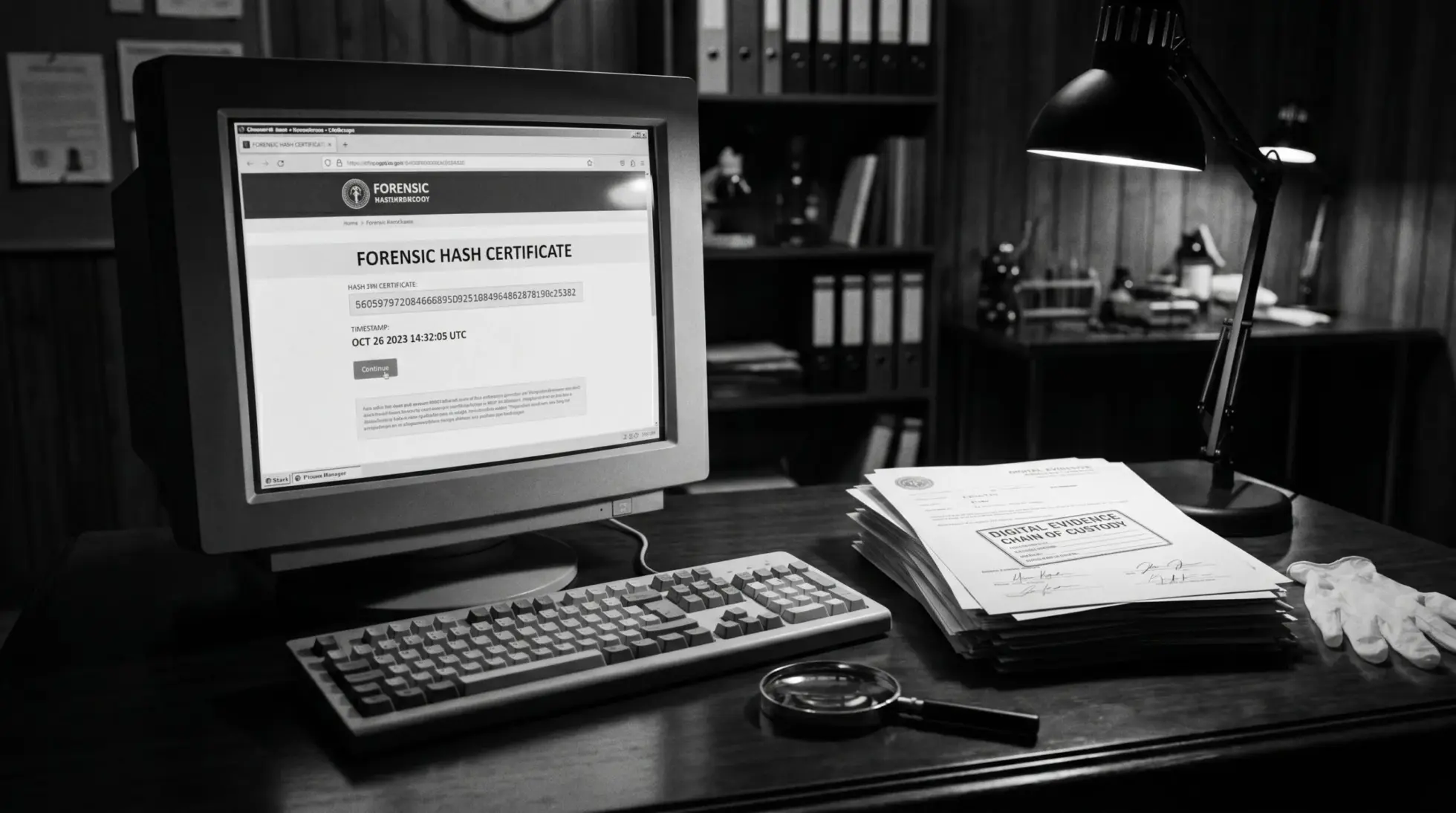
Stay one step ahead of your competition and let us document competitive, trademark-related, or similar infringements, insults, or online bullying as compelling evidence.
The increasing digitalization poses new challenges to evidence gathering. Despite the indispensable and unstoppable expansion of online presence, digital evidence remains a controversial and inconsistent field. Whether it concerns unfair competitive behavior or trademark violations, securely archiving the decisive moment is still a challenge. Of course, nowadays almost everyone knows how to take a screenshot.
Yet the screenshot as evidence harbors its pitfalls. Some know all too well how to manipulate them, be it altering the date and time stamp or even the content of the screenshot. The probative value of a screenshot is subject to the judge's free assessment of evidence, which requires a comprehensive acknowledgment of the presented facts, the submitted and collected evidence, and the overall proceedings.
What a Screenshot Is in German Civil Procedure Law
The legal classification of a screenshot is deceptively simple on the surface and considerably more complicated once you try to rely on it in a courtroom. In formal terms, a screenshot is an Augenscheinsobjekt, an object of visual inspection under Section 371 Paragraph 1 Sentence 1 of the Code of Civil Procedure (ZPO). Not a document in the technical legal sense. Not a private deed. Not a public certificate. A picture of a screen.
The distinction matters enormously in practice. A private document in German civil procedure law carries a presumption of authenticity once the signature on it is acknowledged or proven. A qualified electronic document signed with a qualified electronic signature under Section 371a ZPO enjoys a statutory presumption of integrity: the court can rely on it unless the opposing party brings concrete grounds for rebuttal. A screenshot enjoys neither privilege. It lands on the judge's desk as raw visual material, assessed under the freie Beweiswürdigung, the free assessment of evidence mandated by Section 286 ZPO, where every piece of evidence is weighed against the whole of the proceedings without any built-in presumption of authenticity.
What this means in practice: a screenshot can demonstrate almost nothing on its own. It shows what appeared on a screen at some point. It does not prove when. It does not prove where. It does not prove that nothing was altered before the capture was made. The OLG Jena, in a decision cited repeatedly in German civil procedure commentary, held that a screenshot printed on paper is not even an electronic document within the meaning of Section 371 Paragraph 1 Sentence 2 ZPO. The evidentiary weight flows entirely from context, corroboration, and the ability of the presenting party to explain precisely and demonstrably how the capture was made.
In court, the screenshot is a common and admissible piece of evidence that is examined by the judge. According to Section 371 Paragraph 1 Sentence 2 ZPO, evidence is introduced by submitting or transferring the file when a digital document is the subject of evidence. Other electronic data, provided they are equipped with a qualified electronic signature, can be treated like private documents. A screenshot in paper form only holds the status of an object of visual inspection in evidentiary terms.
Since this possibility is not available for screenshots, it is up to the judge to decide the weight to be given to this visual evidence under the free assessment of evidence in accordance with Section 286 ZPO. A proceeding based on such evidence, however, is fraught with considerable risks. In most cases, the ordinary screenshot is not granted legal certainty and thus no probative value due to its lack of forgery resistance.
The Range of Cases Where Screenshots Become Evidence
Before discussing what good documentation looks like, it helps to map the landscape of situations where digital evidence actually matters. The range is broader than most people assume until the moment they need it.
Unfair competition cases form the largest single category in our experience. A competitor runs an advertisement that makes false claims about its product, its prices, its certifications, or the extent of its service coverage. The advertisement disappears from the web within days of the complaint being prepared. Without a properly documented capture made before the takedown, the legal proceeding that follows has no evidence base. The same pattern appears in disputes over comparative advertising, in matters involving misleading statements about competitors, and in pricing-regulation cases where a brief window of non-compliant pricing must be documented before the seller corrects it.
Trademark and intellectual property disputes present a related challenge. A domain owner operates a website that uses a registered mark without authorization. The infringing use is intermittent or has been running for a defined period during which the website content matters for calculating damages. Screenshots taken without authentication documentation cannot reliably establish what the content was, when it was live, or in what form the infringement manifested.
Online reviews and defamation cases have become a significant and growing source of digital evidence work. A false or damaging review is posted on a commercial review platform. The platform removes it after a complaint, or the poster deletes it before proceedings can be initiated. A screenshot taken before deletion is the only record that the content existed, and its evidentiary value depends entirely on how it was captured. The same applies to threatening or harassing social media posts, to statements made in public online fora that are later deleted, and to any form of digital content that may be relevant to civil or criminal proceedings but is inherently transient.
Employment disputes have increasingly intersected with digital evidence requirements as more communication moves to email, messaging platforms, and workplace management software. Screenshots of internal system states, of message histories, of access logs and permission records all become relevant in disputes over performance management, termination, or workplace conduct. The same authentication challenges apply as in commercial matters.
Each of these categories shares one structural feature: the relevant digital content exists at a specific moment, may be gone the next moment, and the entire legal argument may turn on whether a credible record of that moment can be produced. Proper documentation is the only mechanism that converts a transient online event into a durable piece of evidence.
The Manipulation Problem
Let us be direct about the mechanics, because courts know them too. Every modern image editor can alter a screenshot in seconds. The timestamp can be changed. Product descriptions, listed prices, social media posts, threatening messages, any content rendered as text in a captured image can be overwritten cleanly, without leaving a visible seam, without any residual trace detectable to the naked eye. A judge who grants significant weight to a screenshot without additional authentication is effectively awarding the party with the more capable editing software.
By the time a dispute reaches the stage of evidentiary proceedings, the original website content may have been taken down, altered, or the account deleted. The only record of what was there is what the parties claim was there, backed by whatever documentation they thought to save. If that documentation consists of an image file with no cryptographic anchoring, no server log, no independent confirmation of timing, the opposing party will challenge it, and the court has no reliable way to disagree. I have seen this pattern repeat across many proceedings in my work: a party submits a screenshot purporting to show a competitor's advertisement on a specific date, the competitor denies the advertisement ran in that form, and the case collapses into a credibility contest because nothing anchors the image to a verifiable moment.
Manipulation presents itself in forms ranging from the crude to the forensically invisible. The crude case: content altered, price changed, a review's star rating flipped. More subtle: a page captured during a brief transitional state, a 10-minute window when outdated pricing was live before correction, presented as if this transient state were the permanent condition of the defendant's offer. Subtler still: selective cropping that removes context, the absence of surrounding page elements that would anchor the capture in a recognizable website architecture.
Browsers introduce a further complication. Cached content can display a version of a page that no longer exists on the server, presenting it as the current state of the website. Without documented cache exclusion before the capture, the screenshot may not even show what the defendant published. It shows what the browser remembered from an earlier browsing session, which could have occurred days or weeks before the capture was made.
Courts are increasingly aware of these vulnerabilities. The Federal Court of Justice addressed the question of screenshots and digital evidence in its ruling of 5 March 2014 (I ZR 127/12), a decision that shaped the framework within which lower courts now evaluate such material. The Saarland Higher Regional Court, in its ruling of 12 May 2020 (5 U 100/19), applied these principles in a commercial dispute context, confirming that the evidentiary weight of a screenshot depends directly on the documentation surrounding its creation. Neither decision forbids screenshots as evidence. Both make clear what is needed to make them count.
The Exceptional Case and Why It Misleads
Nevertheless, there are atypical cases. Recently, we encountered a case where the judge, in the context of a temporary injunction and a penalty request, admitted a simple screenshot as the sole piece of evidence. On what foundation this judicial decision was built remains unclear, especially since no additional expert was consulted. In the absence of an impartial evaluation, a ruling was issued in favor of a simple screenshot and against the expert assessment. This led to an undisputed penalty payment of considerable magnitude. A fair appeal against this decision does not exist. One has to ask how a decision based on evidence not recognized as legally secure can be final.
This is, mind you, the exception.
But the exception is worth examining carefully, because it gives parties a false confidence that screenshots work. They read about a case in which a judge accepted one, conclude the evidentiary threshold is lower than the rule says it is, and prepare the next proceeding with the same lack of documentation that would have sunk them in any other courtroom on any other day. The exceptional admission does not alter the general rule. Exceptions in evidence law have a way of appearing effortless from the outside and looking very different from the inside.
The structure of German temporary injunction procedure creates a context in which surprising evidentiary decisions occasionally occur. A temporary injunction is an emergency measure. The standard of proof is reduced: the applicant needs to glaubhaft machen, to make the relevant facts appear credible, rather than to prove them to the full standard of the ordinary proceeding. Under this reduced standard, a screenshot combined with a credible party statement can sometimes suffice where a contested evidentiary hearing would be required in a main proceeding. When practitioners cite the exceptional case above, they are often, without realizing it, describing an artifact of injunction procedure rather than a development in the general law of evidence. The ordinary proceeding remains demanding. The exceptional admission disappears as soon as the main proceeding begins.
What Manipulation-Resistant Documentation Requires
To make the evidentiary value of a screenshot nearly indisputable, you should prepare it properly. The risk of an unsuccessful legal battle is significant, which is why it is essential to secure evidence meticulously. In the event of failure, you bear the costs of the proceedings. If you win the legal battle, the losing party must cover these costs or, alternatively, the expenses are reimbursed as part of damages.
The path from a fragile screenshot to a document with serious evidentiary weight runs through 4 specific elements. Not exotic technical requirements. The same chain-of-custody principles that any forensic practitioner applies to physical evidence, adapted for the digital environment.
A verifiable timestamp is the first requirement. A timestamp created by the capturing device is worth little, because the device clock can be set by the user. A timestamp anchored to an external reference, a notarial protocol, a certified time authority, a blockchain attestation, or a qualified electronic timestamp under the eIDAS Regulation, carries real weight because it cannot be retroactively altered without breaking the cryptographic chain. The eIDAS Regulation at the European level created a framework for qualified electronic timestamps that, when applied to a screenshot, bring the resulting document within reach of the evidentiary presumptions normally reserved for signed electronic documents under Section 371a ZPO.
A cryptographic fingerprint of the captured content is the second requirement. A SHA-256 hash of the screenshot file, computed at the moment of capture and recorded in an immutable log, ensures that any subsequent alteration of the image will produce a different hash value when the file is verified later. The match between the original hash and the hash of the file submitted to court proves that nothing was changed between capture and submission. Without this fingerprint, the image can be altered and the alteration cannot be detected.
A documented capture process is the third requirement. Who took the screenshot, from what device, from what network address, at what time, using what software. If a third party, a notary, a certified digital evidence service, a process server, performed the capture and documented the process in a contemporaneous protocol, that protocol transforms the screenshot from an assertion into an authenticated record. The evidentiary power of the resulting package comes not from the image itself but from the documentation of how it was made.
The exclusion of cache content is the fourth requirement, and the one most often overlooked. Proper documentation requires active cache exclusion before the capture, confirmed in the protocol, so that the court can be confident the screenshot shows the live state of the content at the recorded time and not a residue from an earlier browsing session.
Without all 4 elements, a screenshot is what it has always been: a picture of a screen, taken by someone, at some unverified point, showing something that may or may not still resemble the original.
The Elevated Evidence Path: Section 371a ZPO and eIDAS
The legal framework does not leave parties with a binary choice between the ordinary screenshot and the notarial archive. German civil procedure law offers an intermediate path that significantly improves the evidentiary standing of a digital capture without requiring the full apparatus of a traditional document authentication proceeding.
Section 371a ZPO governs the treatment of electronic documents in civil proceedings. Under its first paragraph, a private electronic document signed with a qualified electronic signature is treated as an authentic private document. The practical consequence: the court presumes the document was made by the person whose certificate attaches to the signature, unless the opposing party brings specific grounds to challenge that presumption. The burden shifts. Instead of the producing party having to prove authenticity, the challenging party has to disprove it.
The eIDAS Regulation, which operates at the European level and takes direct effect in all member states, complements this structure by establishing a framework for qualified electronic timestamps. A qualified electronic timestamp, issued by a trust service provider accredited under eIDAS, creates a legally presumed link between a document and a specific moment in time. The regulation's Article 41 provides that a qualified timestamp enjoys a legal presumption that the data it attaches to existed at the time indicated in the timestamp and has not been altered since. When applied to a screenshot, a qualified eIDAS timestamp brings the resulting document close to the evidentiary status of a signed electronic document under Section 371a ZPO: the court can rely on the time of capture and the integrity of the content unless the opposing party can show a concrete ground for doubt.
This matters for the practical choice of documentation method. A notarial protocol for every screenshot is financially and procedurally prohibitive at scale, particularly in matters where many web pages need to be captured quickly. A qualified eIDAS timestamp, applied by a recognized trust service provider at the moment of capture, is neither slow nor expensive. It can be applied automatically as part of a professional digital evidence capture workflow. The resulting package is not a notarized document, but it is a document with a statutory presumption of time and integrity that no home screenshot can claim.
The certificate infrastructure behind a qualified eIDAS timestamp requires, among other things, that the trust service provider maintain accurate time synchronized to a reference source, operate under audited procedures, and hold accreditation under the eIDAS framework. When a court sees a screenshot accompanied by a qualified eIDAS timestamp and a hash certificate from an accredited provider, the combination achieves something that the isolated screenshot never can: it moves the evidentiary discussion from whether the content existed and when, a question the screenshot alone cannot answer, to whether there are specific concrete grounds to doubt the attestation, which is a much harder case for opposing counsel to make.
The market for digital evidence services in Germany has developed substantially around this legal framework. Service providers offering browser-based capture tools that automatically generate hash fingerprints, apply qualified timestamps, and produce audit protocols have become standard tools for IP litigation departments, competition law practices, and companies with ongoing monitoring obligations. The combination of a cryptographic SHA-256 fingerprint, an eIDAS-qualified timestamp from an accredited provider, and a documented capture protocol is now the recognized technical standard for what professional digital evidence documentation looks like in German civil proceedings.
The Cost of Getting It Wrong
The cost calculation here is not abstract. A first-instance commercial dispute before a German Landgericht involves court fees tied to the Streitwert, the value of the dispute, plus legal fees on both sides. In a trademark infringement matter with a Streitwert of 50.000 euros, the combined legal and court costs for a full first-instance proceeding can easily exceed 15.000 euros. If the case turns on evidentiary weight and the screenshot is rejected as insufficiently authenticated, the losing party pays all of that. Proper documentation of the screenshot before filing the action costs a fraction of that amount and can decide the outcome.
A commercial matter before a German district court can run 12 to 18 months in first instance, and longer if the evidentiary situation requires an oral hearing. A company that failed to secure its digital evidence properly can find itself locked in litigation for 2 years, unable to enforce an injunction that would have been straightforward with a properly authenticated capture. The business consequences of not being able to stop a competitor's infringing advertisement for 18 months, while the legal proceeding drags forward on uncertain evidence, can dwarf the legal costs themselves.
The question practitioners hear occasionally is why this matters now more than it did 10 years ago. The answer has 2 parts. Volume is the first: product listings, price comparisons, social media marketing claims, online reviews, domain content in intellectual property disputes, all of it generated and deleted faster than traditional evidence preservation methods were designed to handle. Sophistication of manipulation is the second: a decade ago, altering a screenshot convincingly required specific technical skills. Today it does not. The tools are free, the skills are common, and any party who chose to fabricate digital evidence would face no technical obstacle. Courts know this. Opposing counsel knows it. Documentation needs to account for it.
What Proper Documentation Looks Like
Our method of digital evidence preservation includes saving the screenshot on a secure server as well as creating additional copies. Comprehensive documentation of the used medium follows, and the exclusion of so-called cache contents that might be outdated. In doing so, the time and place of the screenshot as well as its immutability are documented in detail and archived with an expert report for potential legal disputes.
When we document a piece of digital evidence, the work begins not with the screenshot itself but with the preparation of the capture environment. The browser cache is cleared and this step is logged. The session is conducted from a network address that can be verified and recorded in the protocol. The capture is performed by a documented operator at a time synchronized to an external reference clock. The resulting file is immediately hashed, and the hash value is recorded in a contemporaneous protocol signed by the operator under date.
The screenshot and the protocol are stored on a server with access logging, where the combination of the image file and its hash can be verified at any later point. An expert report describing the capture process, its technical parameters, and the integrity of the resulting evidence is prepared and archived alongside the image. When this package is submitted as evidence, it is not just the image the court receives. It is the image plus a documented chain from the moment of capture to the moment of submission, with a cryptographic seal on the content that makes any post-capture alteration detectable.
The practical trend among German practitioners in recent years has moved toward professional digital evidence services precisely because the in-house screenshot, however honestly made, cannot survive the authentication challenge that any competent opposing lawyer will mount. A party submitting a home screenshot against a represented defendant in a commercial proceeding before a German Landgericht is, in most cases, submitting something the other side will challenge successfully without great effort. The market response to the legal framework is itself a signal about where the law has settled.
The First Step
The first step is to secure the evidence in a legally binding manner.
Every day that passes after a relevant web event, the evidentiary situation deteriorates. Pages are taken down. Accounts are closed. Servers are overwritten. The content that would have been worth capturing last week may be gone this week, altered beyond the point where a comparison to an uncertified screenshot would carry any meaning.
The scale of this problem is larger than it appears from the outside. Major social media platforms process millions of content removal requests each year. E-commerce platforms modify and delete product listings continuously. News sites edit published articles without maintaining accessible version histories. A web presence that looks stable from the outside is, at the server level, in constant flux. The window for capturing relevant content in a legally usable form is often shorter than parties realize, measured in days rather than weeks, and sometimes in hours.
Decide to preserve digital evidence as early as possible, ideally before a dispute has formally begun, at the moment when the content first becomes relevant to a potential legal claim. If you see something online that may become the subject of a proceeding, whether an advertisement, a review, a social media post, a product listing, a price comparison, a threatened infringement, the time to capture it properly is now. Not after consulting with counsel, if that consultation takes a week. Now.
If you come to us with a screenshot taken 3 months ago, we can still advise on what corroborating evidence might exist, analyze the available file metadata, and assess what evidentiary arguments can be made from the material at hand. We cannot reconstruct what proper documentation would have established at the time of capture. That window closes.
The good news is that the infrastructure for professional digital evidence capture has become accessible enough that there is no longer a significant cost barrier to using it. Capture services, notarial protocols, certified timestamping, these have become standard line items in commercial litigation budgets at companies that deal regularly with online infringement, reputation management, or digital compliance. The firms that figured this out early have a structural advantage in digital disputes: they walk into proceedings with evidence packages that survive challenge, while their unprepared opponents bring screenshots the opposing lawyer dismantles in the first pleading. The question is not whether proper digital evidence documentation pays for itself. It does, reliably. The question is only whether the decision is made in time.
References
- Federal Court of Justice, ruling of 5 March 2014, I ZR 127/12.
- Saarland Higher Regional Court, ruling of 12 May 2020, 5 U 100/19.
- Code of Civil Procedure (ZPO), Section 286 (Freie Beweiswürdigung); Section 371 (Augenschein); Section 371a (Elektronische Dokumente). Current version as of May 2021.
- OLG Jena on the classification of screenshots as Augenscheinsobjekte under ZPO Section 371, cited in: Haufe, Deutsche Anwalt Office Premium, annotation to Section 371 ZPO.
</user_query>
Disclaimer: This article reflects the author’s own research and opinion as of the publication date shown above; later findings or legal changes may have overtaken it, so always check that date. Sources are cited for independent verification, and no liability is accepted for third-party studies. This is general information, not medical, legal, or professional advice: for medical questions see a doctor, for legal questions a lawyer, and in an acute crisis contact emergency services or a crisis helpline.
About the header image: it is AI-generated. Cheaper than a photo shoot, and I have made my peace with the age of AI. Everything inside the article is real, the diagrams, the skulls, the findings, and every word. The machine gets the opening shot and not one inch past it.
We have already extracted 98 percent of your iPhone, just give us the PIN
The interrogation trick almost everyone falls for, the real difference between a warm phone and a cold one,…

At the Heart of the Scandal: How I Examined the Ibiza Video for Authenticity
It began with an email from Der Spiegel. I signed an NDA and spent weeks alone with material…

The Most Dangerous Thing About ChatGPT Isn’t the Wrong Answers. It’s the Ones That Sound Right.
On a self-experiment with human skulls, patients armed with pocket-sized expertise, and the question of why OpenAI quietly…