At the Heart of the Scandal: My Forensic Analysis of the Strache Video
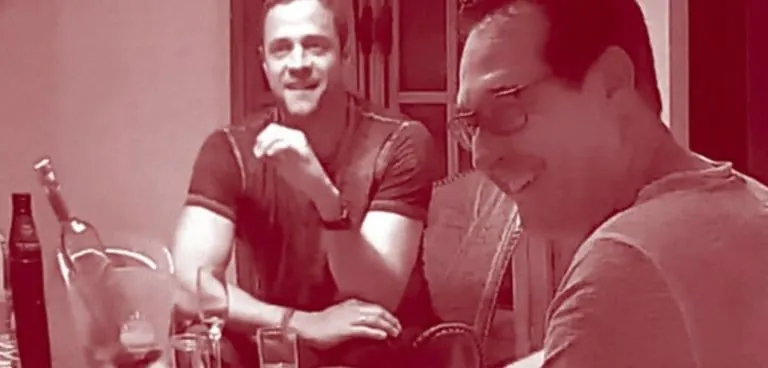
On 7 hours of secretly recorded material, the single question the editors actually asked, and what an authenticity finding can and cannot settle about a video that brought down a government.
When the request reached me in May 2019 to examine the infamous Ibiza video, I did not suspect that it would set one of the greatest political scandals in Europe in motion. The Süddeutsche Zeitung and Der Spiegel approached me, and within minutes it was clear to me that this assignment would be anything but ordinary. They laid material before me and asked a single, plain question. Is this real.
What I signed that day was a non-disclosure agreement, and I have honored it to this day. I tell here only what is public, and I tell how it felt to sit alone for weeks with material that would shake a government. The rest I keep to myself, where it belongs.
What the Video Showed
The whole thing had been recorded back in July 2017, secretly, in a villa on the island of Ibiza. It was published only on 17 May 2019, at 6 p.m., simultaneously by the Süddeutsche Zeitung and Der Spiegel, in the form of excerpts a few minutes long taken from around 7 hours of material. The footage shows two men at the top of Austrian politics, Heinz-Christian Strache, then Vice-Chancellor and federal leader of the FPÖ, and his close confidant Johann Gudenus.
Across from them sits a woman who passes herself off as the niece of a Russian oligarch and claims she wants to invest several hundred million euros in Austria. She was no niece and no investor, she was a hired decoy, and the whole scene was a carefully staged trap. The Russian businessman whose niece she claimed to be let it be known shortly after publication that he had no niece at all. Both newsrooms stressed that they had paid nothing for the material. What Strache offered her over those hours is the real explosive charge. State contracts in exchange for campaign support. A possible takeover of the country's largest daily, complete with the freely uttered prospect of then building up a few people and getting rid of a few others. And donations to be routed through a charitable association, past the court of audit and the laws on party financing. In between, almost defiantly, the assurance that everything had to stay lawful. That mixture of circumventing the law and professing loyalty to it in the same breath is the genuinely disturbing thing about the material.
The Examination
In the days after the first contact I switched into a mode I know from big cases. I was practically only ever in my Munich office, mostly at night, because at night the phone stays silent. Desk lamp, headphones, material. Nothing more was allowed in.
This discipline sounds trivial and it is not. The content of such a conversation is a temptation for the examiner, because anyone who lets himself be gripped by what is said no longer hears how it is said, and the how is precisely my subject. So one works against one's own expectation. Whoever is convinced a video is real must, at exactly that moment, search hardest for signs of forgery, because the most dangerous bias is the one that feels right. You hear a passage ten times, slow it down, set the spectrogram beside it, and only when nothing tips over do you tick it off.
A forensic authenticity examination of moving images is no button press and no software that spits out a verdict after a minute. It is multilayered detail work. On the visible layer one reconstructs the room. Where does the camera stand, at what angle, how does the light fall, where does the shadow of a glass lie on the table, does all of it fit a single, physically closed space. Whoever cuts a person into a scene afterward breaks that closure somewhere, a shadow points the wrong way, a reflection is missing. On the audible layer one checks the audio track for frequency constancy and for splices, those breaks that arise when someone inserts, cuts out or rearranges sentences. On a third layer I work with the methods of bodily measurement, with proportions, with movement mechanics, with the matching of lip movement and spoken word. That is the bolt against the suspicion that arises first with every explosive video, an artificially generated face or a disguised double. And over all of it lies the invisible layer, the metadata, the timestamps, the file formats, the traces that every re-encoding leaves in the innermost part of a file.
I went frame by frame, second by second, track by track. The deeper I dug, the clearer the result became. There was no splice, no false shadow, no tipping frequency, no trace of an editing program at a point meant to look seamless. What occupied me during those nights almost more than the authenticity question was the question of how well it had been done. The placement of the cameras, the patience with which someone here had captured an hours-long conversation without the two men growing suspicious. Whoever set this up understood their craft. That is an observation, not praise.
What Authentic Proves, and What It Does Not
Here comes the part most people skip, although it is the most important. Real and unmanipulated means: the file was not forged. It does not mean that an excerpt a few minutes long out of around 7 hours conveys the sense of the words correctly. And it certainly does not mean who set the trap and why.
Those are three different questions, and you have to keep them cleanly apart, otherwise you make yourself vulnerable as an expert. Authenticity is the one. Context is the second. Authorship is the third. The first I could answer, with great certainty. About the second anyone can argue who holds a short cut against hours of raw conversation, and Strache will do exactly that. The third lay entirely outside my brief. A forensic examiner who blends these three layers does not deliver an expert opinion, he delivers an opinion. An example makes the difference tangible. If someone cuts a question out of a long conversation and places a foreign answer beside it, not a single word is forged, and yet the splice lies. That is why I examine not only the file but also the continuity, the running hiss, the unbroken flow of conversation. This continuity was intact here, across the full length. My finding was sober and unambiguous. The material is real. No forgery, not remotely possible. Everything I had received, and the expert opinion itself, were deleted upon handover, as the agreement demands, and so it was done.
The Earthquake
Then everything happened very fast. At midday on 18 May, less than a day after publication, Strache resigned as Vice-Chancellor and party leader, in a statement that called the video a targeted political assassination and spoke of a smear campaign. On the evening of the same day, Chancellor Sebastian Kurz declared the end of the coalition, called the way the recording had come about contemptible but the content telling, and announced new elections. Within days the Austrian government was in ruins.
I sat in Munich and watched a file I had taken apart night after night set a country in motion. It is a strange feeling to stand at such a small, technical point in such a large story. I decided nothing, I published nothing, I answered only a single question, whether the thing is real. But without that answer no one could have printed. The authenticity check is the quiet point at which it is decided whether a suspicion may become a publication, and it carries the full weight of everything that comes after. Whoever errs here either condemns an innocent or lets a scandal escape as an alleged forgery. Both would be a catastrophe.
Who, Why, and Why Just Now
And with that I arrive at the question that stays open in these weeks, and I leave it open deliberately, because I do not speculate where I can prove nothing. My work answered whether the material is real, and the answer is a clear yes. It did not answer who built this elaborate piece, and it could not, because that is no forensic question. To this day it is not publicly known who installed the cameras, who hired the decoy, who paid for all of it.
The timing remains striking. The material sat for almost two years, and it surfaced, of all times, in the days before the European election, at a moment that served the political opponents of the Freedom Party to the maximum. I attach no theory to that, I tell no intelligence-service story, my reputation is too dear to me for that. I state only what anyone can see who lays the data side by side. A trap over 7 hours long and produced to a high technical standard does not arise on a whim, and it does not become public by accident at precisely that moment.
I say no more, because I know no more. I am the man who held the file in his hands, and I can say with certainty only one thing, it was real. The rest, the question of purpose and of timing, is no case for a frequency diagram and none for a cast shadow. It is the question that stays open, and perhaps the most honest result of this investigation is in the end the clean finding, followed by the admission that behind it lies a door I cannot open.
This article reflects my assessment at the level of knowledge of spring 2019, shortly after the video was published. Later developments in the case are deliberately not taken into account here. Everything covered by my non-disclosure agreement stays where it belongs.
References
- Wikipedia. Ibiza-Affäre. Retrieved 02.06.2026. https://de.wikipedia.org/wiki/Ibiza-Aff%C3%A4re
- science.ORF.at (2019, May 20). Wie das Ibiza-Video überprüft wurde. https://science.orf.at/v2/stories/2982565/
- Neue Zürcher Zeitung (2019, May 21). Strache-Video, ein Skandal mit geschickten Regisseuren. https://www.nzz.ch/feuilleton/medien/strache-video-ein-skandal-mit-geschickten-regisseuren-ld.1483270
- Rauscher, G. A. (2019). IbizaGate, I examined the StracheVideo. https://rauscher.xyz/ibizagate/
Disclaimer: This article reflects the author’s own research and opinion as of the publication date shown above; later findings or legal changes may have overtaken it, so always check that date. Sources are cited for independent verification, and no liability is accepted for third-party studies. This is general information, not medical, legal, or professional advice: for medical questions see a doctor, for legal questions a lawyer, and in an acute crisis contact emergency services or a crisis helpline.
About the header image: it is AI-generated. Cheaper than a photo shoot, and I have made my peace with the age of AI. Everything inside the article is real, the diagrams, the skulls, the findings, and every word. The machine gets the opening shot and not one inch past it.
We have already extracted 98 percent of your iPhone, just give us the PIN
The interrogation trick almost everyone falls for, the real difference between a warm phone and a cold one,…
At the Heart of the Scandal: How I Examined the Ibiza Video for Authenticity
It began with an email from Der Spiegel. I signed an NDA and spent weeks alone with material…
The Most Dangerous Thing About ChatGPT Isn’t the Wrong Answers. It’s the Ones That Sound Right.
On a self-experiment with human skulls, patients armed with pocket-sized expertise, and the question of why OpenAI quietly…